
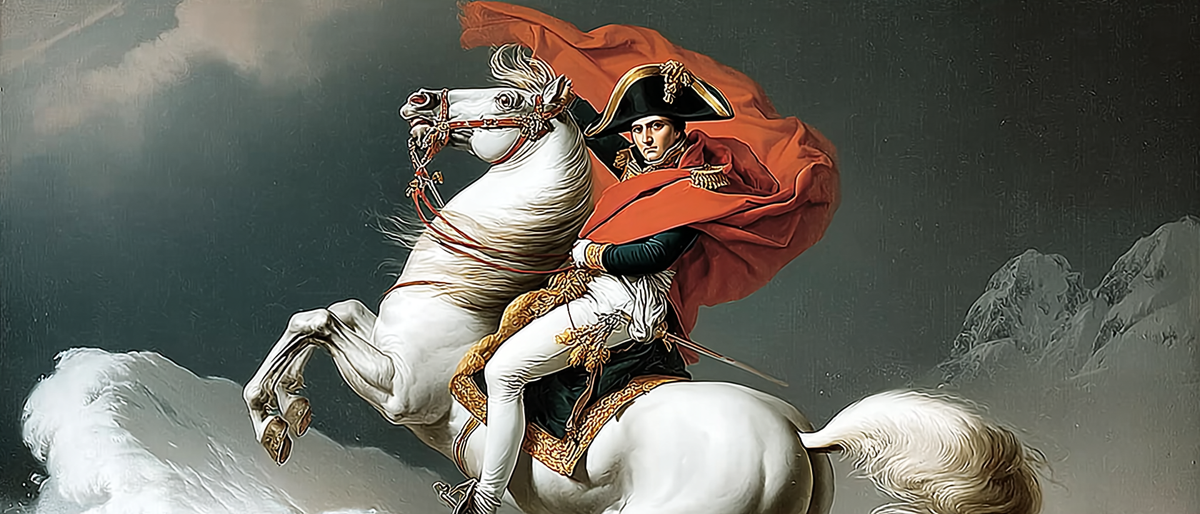
Elite Psychology, Mass Conditioning, and the Structural Failure of Revolutionary Theory
Abstract
This paper argues that the failure of Marxist revolutionary theory is not primarily economic but anthropological. Karl Marx’s account of class consciousness, historical agency, and revolutionary transformation rests on an implicit psychology of the laboring masses that millennia of hierarchical conditioning render empirically untenable. In its place, we propose a tripartite pastoral model — wolves, sheep, and shepherds — drawn from and substantiated by the elite theorists of the early twentieth century, the social psychology of Fromm and Reich, the organizational sociology of Michels and Mosca, and the comparative revolutionary historiography of Brinton and Đilas. The paper proceeds in five sections: (I) a diagnosis of Marx’s anthropological premise and its failure; (II) a formal elaboration of the tripartite model and its literary and historical antecedents; (III) an analysis of the elite-circulation dynamic and the structural impossibility of non-predatory revolution; (IV) an examination of the mass psychological substrate that sustains elite dominance across regime change; and (V) an assessment of what a post-Marxist, post-utopian political economy might realistically offer — the case for tragic realism as a research program rather than a counsel of despair.
Section I: The Anthropological Premise and Its Discontents
1.1 The Standard Critique and Its Limits
The century and a half of critique directed at Karl Marx has concentrated, with considerable energy and mixed success, on the economic architecture of his system. The falling rate of profit, the labor theory of value, the predicted immiseration of the proletariat as a driver of revolutionary consciousness, the teleological confidence in capitalism’s self-undermining trajectory — these have been interrogated, qualified, and largely refuted by the subsequent history of industrial economies.1 It is a rich and necessary body of work. It is not, however, where Marx made his most consequential error.
The deepest failure in Marx’s theoretical legacy is anthropological. Embedded in the machinery of historical materialism — beneath the analysis of surplus value, beneath the dialectic of productive forces and relations of production, beneath the grand eschatology of communism as history’s terminus — is a set of assumptions about human psychology that range from implausible to demonstrably false. Marx assumed, in short, that the laboring masses were a latent revolutionary subject awaiting activation: that correct apprehension of material conditions would generate class solidarity; that solidarity would generate organized resistance; and that organized resistance, once historically ripe, would generate transformative revolution from below.2 This is not merely optimistic. It is inconsistent with everything the social sciences have subsequently established about how centuries of hierarchical domination reshape the cognitive, emotional, and motivational structures of subject populations.
The argument advanced in this paper is not that the economic critique of Marx is wrong — much of it is right — but that it addresses the wrong level of the problem. The question is not whether capitalism produces the conditions for its own transcendence. The question is whether human beings, as they actually exist after millennia of conditioning by hierarchical social structures, are psychologically capable of the collective autonomous action that revolutionary theory requires. The evidence suggests they are not, and that this incapacity is not a contingent feature of particular historical moments but a deeply structural characteristic of human social psychology under conditions of prolonged domination.3
1.2 What Marx Actually Claimed
To assess this failure fairly, we must be precise about what Marx did and did not argue. The concept of Klassenbewusstsein— class consciousness — as it appears in Marx’s own work and as it was systematized by Georg Lukács in Geschichte und Klassenbewusstsein (1923)4 is not simply the recognition by individual workers of their exploitation. It is the emergence of the proletariat as a collective subject capable of acting in its objective class interests, as opposed to those subjectively distorted interests produced by ideological mystification. The workers, on this account, do not naturally perceive their situation correctly — false consciousness is a real obstacle — but the development of capitalist production itself creates the material conditions that dissolve ideological mystification and produce genuine solidarity.
This is a sophisticated position, and it should not be caricatured. Marx was well aware that workers in his own time frequently failed to act as revolutionary agents. The development of capitalist production, Marx argued in the Grundrisse, strips workers of all pre-capitalist social bonds and reduces them to “abstract labor” — a process that simultaneously produces the conditions for collective solidarity by making their shared interest transparently identical.5 The factory concentrates, the market atomizes, and the dynamic between these forces was supposed to resolve, ultimately, in the workers’ favor.
What is remarkable, and what the standard account tends to suppress, is how acutely Marx grasped the obstacles to this resolution in his historical writing. His analyses of concrete political events — the Eighteenth Brumaire of Louis Bonaparte most acutely — show a penetrating, even sardonic, understanding of how mass populations acquiesce in their own domination.6 The famous opening of that text — the observation that history repeats itself, the first time as tragedy and the second time as farce — is precisely an acknowledgment that the masses chose Louis-Napoleon, chose Caesarism, chose a plebiscitary dictatorship over republican self-governance. Marx understood this. What he did not do was integrate this understanding into his theory of revolutionary possibility in any systematic way. The Eighteenth Brumaire remains a brilliant exception in his corpus — an act of historical explanation that his theory of history cannot quite accommodate.
The problem, as subsequent thinkers would make explicit, is that the forces Marx expected to dissolve false consciousness — material immiseration, factory concentration, historical development — were simultaneously deepening the psychological structures that produce submission, dependence, and the active desire for authoritarian resolution. Capitalism did not create, ex nihilo, a revolutionary proletariat. It inherited, from the feudal and pre-feudal societies that preceded it, a population already conditioned across hundreds of generations to accept hierarchy, to identify upward with power, and to experience collective autonomous action as psychologically threatening rather than liberating.7
1.3 The Pastoral Metaphor and Its Analytical Purchase
The framework proposed here draws on one of the oldest organizing metaphors in Western political thought: the relationship between shepherd, flock, and predator.8 This is not merely literary decoration. The pastoral metaphor carries genuine analytical content that the more abstract vocabulary of class theory tends to suppress, and its particular virtue is that it foregrounds the psychological dimension of the ruler-ruled relationship rather than reducing it to a structural-economic one.
The typology we advance is tripartite. The first category — wolves — denotes predatory elites: those whose relationship to the laboring population is characterized by maximal extraction, systematic suppression of productive capacity beyond the threshold of bare subsistence, the outsourcing of managerial labor to intermediate agents, the use of intoxicants and spectacle as instruments of social control, and the periodic consumption of subject populations as military fodder in conflicts driven by inter-elite competition.9 The second category — sheep — denotes subject populations whose psychology has been shaped over millennia of domination to be compatible with, and indeed actively supportive of, their own subjection. This is not a description of inherent human nature but of historical product: the sheep are what the wolf-system makes, over time, of human beings with the full range of human potential. The third category — shepherds — denotes a form of elite that is structurally rare and systematically unsupported: those who extract sustainably, invest in the welfare of subject populations, exercise genuine protective function against more predatory competitors, and derive their material position from the long-term productivity of the flock rather than its short-term liquidation.
What is immediately apparent from this typology — and what distinguishes it fundamentally from Marxist class analysis — is that it locates the primary analytical problem not in the relationship between owners and workers as a structural economic dyad, but in the psychological constitution of both elites and masses as it has been shaped by the long history of their interaction. The wolves are not simply a class defined by ownership of the means of production. They are a psychological type, recognizable across epochs and systems, whose behavioral repertoire is substantially consistent whether they wear the robes of feudal nobility, the broadcloth of Victorian industrialists, or the party credentials of Soviet nomenclatura. The sheep, similarly, are not simply a class defined by their relationship to production. They are a psychological formation — a mode of human being — produced by the selection pressures of hierarchical domination over timescales that dwarf the history of capitalism.
1.4 Anticipations in the Literature
This paper does not claim to be the first to recognize the inadequacy of Marx’s implicit psychology, nor the first to identify the dynamics of elite predation and mass submission. What it attempts is a synthesis of several distinct intellectual traditions that have generally proceeded in isolation from one another, bringing them to bear on a unified analytical framework.
The Italian elite theorists of the early twentieth century provide the most direct anticipatory literature. Vilfredo Pareto’s monumental Trattato di Sociologia Generale (1916) — translated and abridged into English as The Mind and Society— offers in the concept of the circulation of elites the theoretical core of what we are calling the wolves-replacing-wolves dynamic.10 Pareto divided elites into “lions,” who rule by force, and “foxes,” who rule by cunning and manipulation, and argued that history consists essentially in the alternation of these two types as each grows complacent in power and is displaced by the other. The masses — Pareto was not tender about this — are a constant: they are acted upon, not actors. Revolution, on this account, is not a transformation of the social order but a rotation of its commanding personnel.
Pareto was watching the early years of Italian fascism when he died in 1923, and his reported equanimity about Mussolini’s rise was not ideological sympathy but the sardonic recognition of the theorist who has seen exactly what his theory predicted.11 That a social scientist could witness the emergence of fascism and respond not with horror but with the grim satisfaction of confirmed hypothesis is itself a datum about the relationship between tragic realism and political ethics — a tension this paper returns to in its final section.
Gaetano Mosca, whose Elementi di Scienza Politica (1896, expanded 1923) anticipated several of Pareto’s conclusions by two decades, contributed the complementary concept of the ruling class as an organized minority that dominates an unorganized majority not through conspiracy but through the structural advantage of coordination itself.12 A minority that is organized — that shares interests, communicates, and acts collectively — will always dominate a majority that is not, regardless of the formal political system that nominally governs their relationship. This is not a counsel of despair but a structural observation of the first importance: it explains why democratic forms do not, of themselves, produce democratic outcomes, and why the sheep’s numerical preponderance is no match for the wolves’ organizational coherence.
Robert Michels, whose Zur Soziologie des Parteiwesens in der modernen Demokratie (1911) — published in English as Political Parties— completes the triad of elite sociology with what he called the Iron Law of Oligarchy.13 Michels studied the German Social Democratic Party, the most theoretically sophisticated Marxist organization of its era, and demonstrated conclusively that its internal structure had developed all the characteristics of the bourgeois institutions it was theoretically committed to replacing: professional leadership, bureaucratic self-perpetuation, the subordination of member interests to organizational survival, and the systematic transformation of means into ends. His conclusion — “who says organization, says oligarchy” — is not merely a finding about political parties.14 It is a claim about the structural logic of collective action under conditions of organizational complexity, and it applies with equal force to revolutionary movements, trade unions, workers’ states, and any other institution that the socialist tradition has proposed as a vehicle of working-class emancipation.
Erich Fromm’s Escape from Freedom (1941), written in the shadow of European fascism and the catastrophic failure of the German working class to resist it, provides the most searching analysis of what we are here calling the sheep’s psychology.15 Fromm’s central thesis — that freedom, far from being a universal human aspiration, is genuinely terrifying to individuals shaped by authoritarian social structures, and that the psychological response to the terror of autonomy is the willing embrace of new authoritarianism — is directly relevant to our argument. The German proletariat did not fail to resist Hitler despite being free-spirited people overwhelmed by superior force. They flocked to him. They experienced his authority as resolution, as relief from the anxiety of an unstable Weimar modernity that had offered them formal freedoms they were psychologically unprepared to inhabit. This is not an aberration. It is, as Fromm argues, the predictable expression of what a long history of authoritarian conditioning does to human motivational structure.
Wilhelm Reich, whose Massenpsychologie des Faschismus (1933) was suppressed by both the Nazi regime and the Communist Party — which should itself be considered a form of endorsement — goes further than Fromm in a direction that remains, nearly a century later, uncomfortable for all political tendencies.16 Reich argued that the working class’s susceptibility to authoritarian politics was not the product of ideological manipulation that better propaganda could counter, but of a libidinal investment in submission — a deep psycho-sexual structure reproduced through the authoritarian family, which capitalism in turn reproduced as a condition of its own social stability. The implications are radical: if Reich is correct, the problem is not that workers have been deceived about their interests but that their desires— their actual, felt motivational orientations — have been formed in the crucible of hierarchical domination to be compatible with, and indeed to seek, continued domination. Political education cannot address this. It operates at the wrong level.
1.5 Thesis and Structure
The argument of this paper proceeds from these foundations to a conclusion that is simultaneously pessimistic about the revolutionary tradition and constructive about the analytical agenda that follows from taking mass psychology seriously.
Our central thesis is threefold. First, that Marxist revolutionary theory fails not on its economics but on its anthropology: the masses as actually constituted by their historical experience are not, and cannot in any politically relevant timeframe become, the autonomous revolutionary subject that Marx’s theory requires. Second, that the dynamic of elite circulation identified by Pareto, Mosca, and Michels — wolves replacing wolves under a rotating succession of revolutionary legitimations — is the empirically robust account of what actually happens when revolutionary conditions mature, and that this dynamic is structurally driven rather than contingently produced by the moral failures of particular revolutionary leaders. Third, that the shepherd figure — the rare developmental elite that extracts sustainably, invests in subject welfare, and governs with at least nominal orientation toward collective productivity — is the meaningful unit of comparative analysis for evaluating political outcomes, and that the conditions under which wolves become shepherds (or are constrained to behave as shepherds) constitute a more tractable research program than the conditions under which sheep become self-governing.
The sections that follow develop each plank of this thesis. Section II elaborates the tripartite pastoral model in formal terms, tracing its antecedents in political philosophy from Plato’s Republic through Machiavelli’s prince-as-lion-and-fox to the developmental state literature of contemporary political economy. Section III examines the revolution-produces-wolves dynamic through the comparative historiography of Brinton, the first-person testimony of Đilas, and the structural analysis of Burnham, arguing that the Napoleon problem — the revolutionary shepherd who reveals himself as the next wolf — is not a biographical accident but a systemic necessity. Section IV addresses the mass psychological substrate directly, synthesizing Fromm, Reich, and the contemporary behavioral economics of Kahneman and Thaler to argue that sheep psychology is durable but not immutable, and that the mechanisms of its partial modification are institutional and incentive-structural rather than educative or political. Section V proposes a framework we call tragic realism as the appropriate theoretical orientation for post-Marxist political economy: an analysis of human collective life that takes seriously both the depth of the obstacles and the genuine, if constrained, space for ameliorative action within them.
The argument is not cheerful. But it has the modest virtue of being honest about what a century and a half of revolutionary disappointment has actually demonstrated — and of attempting to learn from it rather than repeat it.
Notes to Section I
1 The economic critique of Marx is vast. For the most rigorous treatment of the falling rate of profit and its contested status, see Andrew Kliman, Reclaiming Marx’s “Capital”: A Refutation of the Myth of Inconsistency(Lanham: Lexington Books, 2007), and for the most influential empirical refutation, Robert Rowthorn, “Marx’s Theory of Wages,”Cambridge Journal of Economics 4, no. 4 (1980): 331–351. Friedrich Engels himself acknowledged the problem in his 1895 introduction to Marx’s Class Struggles in France, conceding that the revolutionary timetable had required revision. See Karl Marx, The Class Struggles in France, 1848, Eng trans. 1850, ed. Friedrich Engels (New York: International Publishers, 1964), 17–22.
2 The most systematic statement of this position is Marx and Engels’s Manifesto of the Communist Party (1848), Part I, “Bourgeois and Proletarians,” in Selected Works in Three Volumes, vol. 1 (Moscow: Progress Publishers, 1969), 108–137. For a sympathetic reconstruction of the theoretical logic, see G.A. Cohen, Karl Marx’s Theory of History: A Defence (Oxford: Clarendon Press, 1978), which remains the most philosophically rigorous defense of historical materialism and the clearest exposition of what its anthropological commitments actually require.
3 The claim that subject populations are psychologically shaped by long-term hierarchical conditioning is advanced from complementary directions by Erich Fromm, Escape from Freedom (New York: Farrar & Rinehart, 1941); Wilhelm Reich, The Mass Psychology of Fascism, trans. Vincent R. Carfagno (1933; 3rd ed., New York: Farrar, Straus and Giroux, 1970); and, from within evolutionary anthropology, Christopher Boehm, Hierarchy in the Forest: The Evolution of Egalitarian Behavior (Cambridge, MA: Harvard University Press, 1999), which argues that hierarchical submission is a phylogenetically ancient behavioral tendency that egalitarian hunter-gatherer societies actively suppressed through coalition-based counter-dominance strategies.
4 Georg Lukács, History and Class Consciousness: Studies in Marxist Dialectics, trans. Rodney Livingstone (Cambridge, MA: MIT Press, 1971). Originally published as Geschichte und Klassenbewusstsein (Berlin: Malik Verlag, 1923). The essay “Reification and the Consciousness of the Proletariat” is the central text for the epistemological dimension of class consciousness. Note that Lukács himself later repudiated the work, describing it in a 1967 preface as containing “a Romantic anti-capitalism” incompatible with orthodox Marxism — an instructive instance of the revolutionary tradition’s tendency to discipline honest analysis.
5 Karl Marx, Grundrisse: Foundations of the Critique of Political Economy, trans. Martin Nicolaus (London: Penguin/New Left Review, 1973), esp. 471–514. The Grundrisse remained unpublished until 1939 and unavailable in English until 1973, which partly explains why this dimension of Marx’s argument exerted less influence on revolutionary praxis than on academic Marxism.
6 Karl Marx, The Eighteenth Brumaire of Louis Bonaparte (1852), in Selected Works in Three Volumes, vol. 1, 394–487. The opening observation — “Hegel remarks somewhere that all great world-historical facts and personages occur, as it were, twice... the first time as tragedy, the second time as farce” — establishes the sardonic register of the entire analysis. For extended commentary on the tension between this text and Marx’s general theory, see Shlomo Avineri, The Social and Political Thought of Karl Marx (Cambridge: Cambridge University Press, 1968), 186–215, and Hal Draper, Karl Marx’s Theory of Revolution, vol. 2 (New York: Monthly Review Press, 1978), 385–421.
7 This is, in compressed form, the central argument of Fromm’s Escape from Freedom, 3–40, where he argues that the “positive freedom” capitalism nominally offers is experienced as unbearable by populations whose psychological structure was formed under feudal and ecclesiastical authority, producing what he calls the “authoritarian character” as a mass phenomenon. Reich makes the complementary argument in The Mass Psychology of Fascism, 3–39, locating the reproduction of this structure in the authoritarian family as capitalism’s basic social unit.
8 The pastoral metaphor has a long history in Western and Near Eastern political thought. For its systematic philosophical analysis, see Michel Foucault, Security, Territory, Population: Lectures at the Collège de France, 1977, Eng. trans. 1978, trans. Graham Burchell (New York: Picador, 2007), 115–190. For the ancient Near Eastern antecedents, see Thorkild Jacobsen, The Treasures of Darkness: A History of Mesopotamian Religion (New Haven: Yale University Press, 1976), 157–164, which traces the shepherd-king motif through Sumerian and Akkadian royal ideology.
9 The behavioral repertoire attributed to predatory elites here corresponds broadly to what Daron Acemoglu and James A. Robinson call “extractive institutions” in Why Nations Fail: The Origins of Power, Prosperity, and Poverty (New York: Crown Publishers, 2012), 73–93. The use of spectacle and manufactured consent corresponds to Antonio Gramsci’s concept of hegemony; see Selections from the Prison Notebooks, ed. and trans. Quintin Hoare and Geoffrey Nowell-Smith (New York: International Publishers, 1971), 229–239. The use of subject populations as military fodder is analyzed in Thorstein Veblen, The Theory of the Leisure Class(1899; repr. New York: Penguin, 1994), 246–275.
10 Vilfredo Pareto, The Mind and Society [Trattato di Sociologia Generale], ed. Arthur Livingston, trans. Andrew Bongiorno and Arthur Livingston, 4 vols. (New York: Harcourt, Brace, 1935). The concept of elite circulation appears primarily in vol. 3, §§ 2026–2059. For the most accessible English-language treatment, see S.E. Finer, ed., Vilfredo Pareto: Sociological Writings (London: Pall Mall Press, 1966). The lions/foxes distinction appears at § 2178 and develops Machiavelli’s predatory typology in The Prince, ch. 18, more explicitly than Pareto typically acknowledged.
11 Pareto’s relationship to Italian fascism is contested. He died in August 1923, months after Mussolini’s March on Rome, and his acceptance of a Senate appointment under the new regime has been variously interpreted. For the most careful intellectual-historical assessment, see H. Stuart Hughes,Consciousness and Society: The Reorientation of European Social Thought, 1890, Eng. trans. 1930 (New York: Alfred A. Knopf, 1958), 78–104.
12 Gaetano Mosca, The Ruling Class [Elementi di Scienza Politica], trans. Hannah D. Kahn, ed. Arthur Livingston (New York: McGraw-Hill, 1939). The concept of the “political formula” — the legitimating ideology through which ruling minorities secure the consent of majorities — appears in ch. 2, 50–69. Mosca’s priority over Pareto on several key points is argued in James Meisel, The Myth of the Ruling Class: Gaetano Mosca and the Elite (Ann Arbor: University of Michigan Press, 1958).
13 Robert Michels, Political Parties: A Sociological Study of the Oligarchical Tendencies of Modern Democracy, trans. Eden and Cedar Paul (1911; repr. New York: Free Press, 1962). The empirical focus on the SPD gives Michels’s argument particular force: if the organization theoretically most committed to internal democracy reproduces oligarchical structures, the implication for all revolutionary organizations is severe. Michels’s own subsequent trajectory — from socialist to syndicalist to eventual support of Mussolini’s regime — is itself an instance of the dynamics he analyzed.
14 Michels, Political Parties, 365. The full passage merits quotation: “The majority of human beings, in a condition of eternal tutelage, are predestined by tragic necessity to submit to the dominion of a small minority, and must be content to constitute the pedestal of an oligarchy.” This conclusion is presented not as a normative recommendation but as a sociological finding — the distinction Michels himself failed to maintain in later life, but which the analytical framework demands.
15 Erich Fromm, Escape from Freedom (New York: Farrar & Rinehart, 1941). The chapter “Psychology of Nazism,” 207–239, provides the specific case analysis; the theoretical framework is established in “Freedom in the Age of the Reformation,” 41–65. The operationalization of Fromm’s insights produced T.W. Adorno et al., The Authoritarian Personality (New York: Harper & Row, 1950). While the F-scale attracted methodological criticism, the underlying construct — that submission-oriented personality structure is a measurable, socially distributed phenomenon — has been substantially confirmed by subsequent research in political psychology.
16 Wilhelm Reich, The Mass Psychology of Fascism [Massenpsychologie des Faschismus], trans. Vincent R. Carfagno (1933; 3rd ed., New York: Farrar, Straus and Giroux, 1970). Reich’s expulsion from the Communist Party of Germany in 1933 and from the International Psychoanalytic Association in 1934 — both in direct response to this work — constitutes a remarkable instance of an analysis being rejected by every institution with a material interest in its being wrong. For the intellectual-biographical context, see Myron Sharaf, Fury on Earth: A Biography of Wilhelm Reich (New York: St. Martin’s Press, 1983), 156–224. That Reich’s later intellectual deterioration should not be allowed to discredit his early analytical work is argued carefully in Paul Robinson, The Freudian Left: Wilhelm Reich, Geza Roheim, Herbert Marcuse (New York: Harper & Row, 1969), 9–73.
Section II: Wolves, Sheep, and Shepherds — A Formal Taxonomy and Its Antecedents
2.1 The Three Types: A Formal Definition
The tripartite model proposed in this paper is not, it must be emphasized at the outset, a moral taxonomy. It does not sort political actors into the good, the bad, and the passive according to their intentions or their self-understanding. Wolves do not, in general, experience themselves as wolves. They experience themselves as entrepreneurs, as statesmen, as the natural leaders their background and intelligence have made them, as bearers of a civilizing mission toward populations who would flounder without their direction. The sheep, similarly, do not experience themselves as sheep. They experience themselves as subjects of a legitimate order, as members of communities with shared values and traditions, as individuals whose personal ambitions are simply the ambitions that circumstances permit. The moral self-understanding of agents is not the analytical datum. The behavioral cluster is.
The wolf-type is defined by a specific and historically consistent behavioral repertoire that operates with substantial independence from the formal economic or political system in which it is embedded. Its core features are: first, extraction at the maximum rate compatible with the continued productivity of the subject population — not the welfare of that population, but its minimum functional capacity; second, the suppression of independent organizational capacity among subject populations, since coordination is the wolf’s structural advantage and cannot be permitted to become the sheep’s; third, the outsourcing of day-to-day managerial contact with subject populations to intermediate agents — overseers, managers, bureaucrats, police — who absorb the direct hostility that extraction generates and insulate the upper tier of the predatory elite from accountability; fourth, the deployment of spectacle, intoxicant, and ideological narrative as instruments of social quiescence; and fifth, the periodic liquidation of subject populations as military material in inter-wolf conflicts.1
The sheep-type is not a natural condition but a historical product.2 The specification of its psychology requires distinguishing between the behavioral tendencies that long-term hierarchical conditioning produces and the full range of human behavioral potential that egalitarian social structures can express and have historically expressed. Subject populations under prolonged hierarchical domination develop a characteristic cluster of adaptive orientations: upward identification with power rather than horizontal solidarity with peers; risk-aversion and short time-horizons in collective action; a strong preference for the predictability of familiar hierarchy over the anxiety of autonomous choice; and — crucially — an active hostility toward members of the subject population who deviate from these norms, since deviation creates unpredictable situations that threaten the equilibria on which survival strategies depend. This last feature — the policing of deviance by subject populations themselves — is among the most analytically important, because it means the wolf-system does not require constant active enforcement. It recruits the sheep as its own enforcement mechanism.
The shepherd-type is characterized by a different structural relationship to the productive capacity of subject populations: one in which the shepherd’s own welfare is indexed, over a meaningful time horizon, to the welfare and productivity of the flock. The shepherd takes wool — this is not a model of charity or altruism — but takes it at a rate that preserves and ideally develops the capacity of the flock to produce more wool. The distinguishing features of the shepherd behavioral cluster are: sustainable extraction rates calibrated to long-term flock productivity rather than short-term liquidation value; genuine investment in the protective and developmental infrastructure that maintains flock welfare; direct engagement with the flock rather than outsourcing of contact to intermediate predators; and at least nominal orientation toward the flock’s welfare as a value rather than merely an instrument. Whether this last feature reflects genuine ethical orientation or merely the correct calculation of long-horizon self-interest is, for analytical purposes, irrelevant. The behavioral outputs are similar.
A final methodological note before proceeding to historical antecedents. The tripartite typology describes structural roles, not fixed personal types. The same individual may occupy different positions under different structural conditions, and the transition between roles when structural conditions change is among the most important phenomena the model needs to explain. The question of when and why wolves behave as shepherds — or are constrained to do so — is precisely the productive research question that the model generates. This distinguishes the present framework from a naive elite-pessimism that treats all ruling classes as equivalent. They are not equivalent. The empirical record of developmental states, welfare-state capitalism, and regulated market economies demonstrates conclusively that the behavioral gap between shepherd-type and wolf-type governance is real, large, and consequential for the people subject to it.
2.2 Ancient Antecedents: Plato and the Shepherd Problem
The pastoral metaphor enters Western political philosophy most productively not in the passages where it is most celebrated but in the moment where it is most contested. In Book I of the Republic, Thrasymachus — Plato’s great spokesman for predatory realism — levels precisely the charge against the shepherd analogy that this paper takes seriously.3 When Socrates proposes that the ruler, like the shepherd, cares for his flock, Thrasymachus cuts through the sentiment: the shepherd fattens his sheep not for their benefit but for his own, or for the benefit of his employer. The care is real; the orientation is extractive. This, Thrasymachus argues, is the truth of all governance. The ruler who appears to serve the governed is in fact serving himself, and the ideology of service is simply the most efficient instrument of extraction available to a sophisticated predator.
Socrates’ response — that the art of shepherding, considered as an art, is defined by its object (the welfare of the sheep) rather than by the personal interest of the practitioner — has always struck careful readers as somewhat less than fully persuasive.4 The distinction between the art and its practitioner’s interest is real but fragile: arts are practiced by people with interests, and the question of what actually governs the practitioner’s behavior when the art’s demands and the practitioner’s interests diverge is precisely the question Thrasymachus is raising. Plato’s ultimate answer — the philosopher-king, unwilling to rule and therefore uniquely fitted to rule well — is a confession that the problem has no institutional solution within the existing forms of human character. The shepherd must be a saint, or the shepherd will be a wolf.
The Statesman (Politikos) offers Plato’s most sustained engagement with the pastoral metaphor in political philosophy.5 The Eleatic Stranger’s initial definition of the statesman as a kind of shepherd — one who tends and pastures the human herd — is subjected to a sustained critique that ends by replacing it with the weaver metaphor. The human herd, the Stranger observes, does not acknowledge the shepherd; it disputes his authority and claims to provide its own nourishment and guidance. The weaver metaphor is substituted because it captures the statesman’s actual task: not tending compliant animals but weaving together the conflicting dispositions of human society — the courageous-spirited and the moderate-gentle — into a functional fabric. This is a more honest account of what shepherd-type governance actually requires: not the management of passive subjects but the active integration of competing human tendencies, and the suppression of those tendencies, whether excessively spirited or excessively passive, that threaten the fabric.
What Plato could not resolve, and what the Laws ultimately concedes, is how shepherd-type governance is to be institutionally reproduced once the individual shepherd is gone.6 The Laws represents Plato’s late-career retreat from the philosopher-king to the rule of written law — an implicit acknowledgment that shepherds cannot be reliably generated by any educational or political process available to human societies, and that the second-best option is a legal framework robust enough to constrain wolves in the shepherd’s absence. This is precisely the tragic realist position to which this paper ultimately arrives. Plato got there first, at the cost of conceding the defeat of his most ambitious aspirations.
2.3 The Absent Shepherd: Machiavelli’s Predatory Realism
The most significant fact about Machiavelli’s political thought, for our purposes, is a negative one: it contains no category for the shepherd. The famous eighteenth chapter of The Prince, in which the successful ruler is counseled to be simultaneously a lion (capable of force) and a fox (capable of cunning), constructs a political typology that maps with striking precision onto Pareto’s subsequent lions-and-foxes framework — and onto the wolf-type as formally defined above.7 The ruler who relies on being simply a man — on purely human virtues of honesty, consistency, good faith — will be destroyed by those who are not constrained by such virtues. This is the predatory logic stated with maximum clarity: in a world of wolves, the sheep is prey. The only political question is which kind of wolf to be.
What is absent from Machiavelli’s framework — and the absence is structurally significant rather than simply a gap in his analysis — is any stable political category for the ruler whose long-horizon alignment with the welfare of the governed shapes his behavior in a systematic way. Pareto acknowledged his debt to Machiavelli explicitly, and the acknowledgment illuminates the intellectual genealogy: both thinkers are working from the same foundational observation that political actors are, in the overwhelming run of cases, predatory, and that the analytical question is how predatory types interact with each other and with subject populations, not how to produce non-predatory types.8 The lineage from Machiavelli to Pareto to the Iron Law of Michels is a single continuous tradition of thought whose central conviction is that the shepherd is a fantasy and the wolf is the data.
The Discourses on Livy represent the closest Machiavelli comes to shepherd-type thinking, and the distance is instructive.9 In the Discourses, Machiavelli’s concern is with institutional design — the creation of republican structures that channel and contain the competing ambitions of great men while preserving the liberty and vitality of the common people. This is not shepherd governance in the sense defined above: it is the management of wolf competition through institutional architecture in such a way that the wolves’ competitive energy produces outcomes tolerable to the sheep. The concept is important and will be returned to in Section V, when we consider what practical conclusions tragic realism can sustain. But it should not be confused with shepherd governance. Machiavelli’s republic is a wolf-management system, not a shepherd state. The distinction matters. Wolf management is achievable; shepherds remain structurally exceptional.
2.4 Shepherds in Historical Political Economy
If the shepherd is an aspiration in ancient and early modern political philosophy, it is an empirical datum — partial, contested, and historically contingent — in the developmental state literature of the twentieth century. The cases of South Korea, Taiwan, Japan, and to some degree Singapore between roughly 1950 and 1990 offer the most extensively analyzed instances of what Peter Evans, in his landmark study of 1995, called embedded autonomy: a state apparatus simultaneously insulated from the short-horizon extraction demands of particular social interests and genuinely embedded in the productive economy in ways that oriented state action toward long-term national development.10
Evans’s analysis translates the shepherd concept from political philosophy into the vocabulary of institutional economics with considerable precision. The developmental state extracts — it taxes, it directs, it suppresses certain forms of autonomous economic action — but it extracts in ways calibrated to the long-term productivity of the national economy rather than the short-term enrichment of a ruling stratum. It invests in infrastructure, education, and industrial capacity. It maintains the minimum welfare functions that preserve the productive capacity of subject populations. It does not, in general, liquidate the human capital of subject populations as military fodder in inter-elite conflicts — or when it does, it frames such liquidation in terms of developmental national interest rather than predatory private gain. These are shepherd behaviors, structurally defined.
Alice Amsden’s study of South Korean industrialization and Robert Wade’s analysis of Taiwan reached complementary conclusions: in both cases, state elites had internalized a developmental logic — a genuine orientation toward national economic growth as a value — that shaped their extractive behavior in systematically non-predatory ways.11 Chalmers Johnson’s earlier analysis of Japan’s Ministry of International Trade and Industry identified the same dynamic in the Japanese bureaucratic elite: a technocratic class that had, for a specific historical period under specific geopolitical conditions, aligned its professional identity and institutional interests with the long-horizon productive development of the national economy.12
The geopolitical conditions matter enormously for this analysis, and they bear directly on the question of shepherd rarity. In each of these cases, the developmental orientation of state elites was not the product of virtue but of structural pressure: the Cold War created an existential threat from communist alternatives that made genuine investment in popular welfare a political necessity for anti-communist states; American strategic interests provided external support and market access that made the developmental gamble viable; and the memory of colonial extraction furnished national elites with an ideological framework — developmentalist nationalism — that genuinely distinguished shepherd-type from wolf-type self-understanding. Remove these structural conditions — as the post-Cold War era has progressively done — and the developmental states revert, with considerable speed, toward extractive behavior. The shepherds were wolves constrained by circumstance to behave as shepherds. When the constraints lifted, the behavior changed.
The Confucian tradition offers a complementary genealogy for shepherd-type governance that is worth noting precisely because it approaches the same structural problem from a different cultural direction. The concept of the junzi— the exemplary person who cultivates virtue through study and self-discipline and governs by moral example rather than coercive force — is the Confucian political ideal, and it is explicitly presented in the Analects and subsequent Confucian literature as an aspiration rather than a description of the actual governing class.13 The ruler who is ajunzi governs a willing people; the ruler who is not governs through force and produces a resentful people. The structural logic is identical to our model: the shepherd produces more from the flock over time than the wolf, but the shepherd is rare and the wolf is the norm. That this conclusion was reached independently in the Chinese tradition, beginning in the fifth century BCE, should itself be counted as evidence for the model’s cross-cultural validity.
Edmund Burke’s concept of the natural aristocracy — developed most fully in the Reflections on the Revolution in France and the Letter to a Noble Lord— represents the Western conservative tradition’s most serious attempt to theorize the structural conditions under which shepherd-type governance might be institutionally sustained.14 For Burke, the natural aristocracy is not defined by birth alone but by a combination of property, education, and the leisure to develop the long-horizon perspective that governance requires. The wolf-type, on this account, is the speculative financier — the investor with no stake in the long-term welfare of productive society — while the shepherd-type is the landed gentleman whose material interests are indissolubly linked to the welfare of the community on whose productivity his own position depends. Burke was not describing reality — the English landed gentry were as capable of predation as any other elite formation — but he was identifying a structural mechanism of the first importance: the material alignment of elite interests with the welfare of subject populations is the condition of possibility for shepherd-type governance, and it is precisely this alignment that structural conditions so rarely produce and so reliably erode.
2.5 The Structural Problem of Shepherd Rarity
The convergence of ancient political philosophy, early modern realism, and contemporary political economy on a single conclusion — that shepherd-type governance is rare, aspired to, praised, and consistently replaced by wolf-type governance — demands explanation rather than lament. Three structural mechanisms account for the rarity, and identifying them is the precondition for thinking seriously about amelioration.
The first mechanism is competitive selection among elites. In any environment of inter-elite competition — which is to say, in all historical environments — the behavioral dispositions that maximize extraction rate confer competitive advantage in conflicts with other elite formations. The wolf who extracts more has more resources with which to compete; the shepherd who extracts sustainably has fewer. Over time, competitive pressure tends to select for wolf-type behavior within elite populations regardless of the initial orientations of individual actors. This is the mechanism that transforms the founder who builds institutions into the second-generation heir who liquidates them, and it operates through the structural logic of small-group coordination that Mancur Olson identified as the central asymmetry of collective action: organized minorities consistently outperform unorganized majorities, and the minority that organizes around maximal extraction consistently outperforms the minority that organizes around sustainable development.15
The second mechanism is the absence of institutional support for shepherd-type elites. Wolf-type elites create and sustain institutional environments that favor their own reproduction: legal systems that protect concentrated wealth, financial systems that channel surplus toward existing elite formations, military and police systems that enforce extraction, and cultural systems that naturalize hierarchy and delegitimize alternatives. Shepherd-type elites, to the extent they exist, are isolated within these environments. They lack the self-reinforcing institutional ecology that wolves maintain. This is why even genuine developmental states tend to revert when the external conditions that produced them are removed: the institutions of the wolf-system remain, and they shape the behavior of successor elites regardless of those elites’ personal orientations.
The third mechanism is what we may call the Illich problem: even successful shepherd-type governance tends to reproduce the dependency structures of the sheep rather than developing autonomous capacity.16 The good shepherd makes the sheep need shepherds. The developmental state creates populations habituated to state direction of economic activity; the welfare state creates populations whose social reproduction depends on continued state provision; the paternalistic administration of any kind creates populations whose institutional capacities for self-governance have been prevented from developing. This is not an argument against shepherd governance at the timescale of a human life — the sheep under a good shepherd lives materially better than the sheep under a wolf, and this is not a trivial consideration. But it is an argument against treating shepherd governance as a final answer to the structural problem, and it points toward the research agenda of Section V: the conditions under which shepherd governance can develop, rather than merely sustain, the autonomous capacities of subject populations.
The conclusion of Section II, then, is this. The tripartite model is not naive optimism in formal dress. It is substantiated by twenty-five centuries of political philosophy and a century of rigorous political economy, and each of these traditions arrives, by its own methods, at the same finding: the wolf is the norm; the shepherd is the exception; the sheep is the historical product of their interaction over timescales that dwarf any individual political project. The question is not how to produce shepherds by cultivating virtue in wolves — political philosophy has pursued that question for two and a half millennia without convincing results. The question is what structural conditions constrain wolves to behave as shepherds, what institutional architectures sustain those conditions against the three mechanisms of erosion identified above, and why they so reliably fail. The revolutionary tradition’s answer to that question is the subject of Section III.
Notes to Section II
1 The behavioral cluster attributed here to wolf-type elites is analyzed in its classical formulation by Thorstein Veblen, The Theory of the Leisure Class(1899; repr. New York: Penguin, 1994), who identifies predatory culture, conspicuous consumption, and the outsourcing of productive labor as the defining behavioral repertoire of dominant classes across historical periods. The structural-institutional translation of this repertoire appears in Daron Acemoglu and James A. Robinson,Why Nations Fail: The Origins of Power, Prosperity, and Poverty(New York: Crown Publishers, 2012), 73–93, under the concept of “extractive institutions.” The use of media, spectacle, and intoxicant as instruments of social quiescence is the subject of Guy Debord, The Society of the Spectacle [La Société du spectacle], trans. Donald Nicholson-Smith (New York: Zone Books, 1994), though Debord’s analysis requires extraction from its specifically Situationist theoretical context to serve the present framework.
2 The claim that the sheep-type is a historical product rather than a natural condition is foundational to the present argument and requires careful support. The evolutionary baseline is provided by Christopher Boehm, Hierarchy in the Forest: The Evolution of Egalitarian Behavior(Cambridge, MA: Harvard University Press, 1999), which argues that Homo sapiens spent the vast majority of its evolutionary history in small-group egalitarian societies that actively suppressed dominance behavior through coalition-based counter-dominance strategies. Hierarchical submission as a mass psychological orientation is therefore not a species-level trait but a historically produced adaptation to the conditions of sedentary agricultural civilization and its attendant political formations. The social-psychological dimension is elaborated in Erich Fromm,Escape from Freedom (New York: Farrar & Rinehart, 1941), 3–40, and the self-enforcement mechanism — subject populations policing deviance among themselves — is analyzed with particular clarity in James C. Scott,Domination and the Arts of Resistance: Hidden Transcripts(New Haven: Yale University Press, 1990), which documents both the self-censorship of subject populations and the public transcript of apparent consent that conceals a private transcript of resentment.
3 Plato,RepublicI, 343b–344c, in Complete Works, ed. John M. Cooper (Indianapolis: Hackett, 1997), 988–989. Thrasymachus’s full argument runs: “Don’t you know that some shepherds and cowherds think of nothing else but their own good, that they fatten and tend their flocks, not with a view to the good of the flocks themselves, but with a view to their own pleasure and profit?” The argument is more technically developed in the subsequent exchange at 344a-346e, where Thrasymachus distinguishes the practitioner’s art from the practitioner’s interest, anticipating exactly the objection Socrates will use against him.
4 The weakness of Socrates’ response at Republic I, 341c–342e, is noted by most serious commentators. See Gregory Vlastos, Socrates: Ironist and Moral Philosopher (Cambridge: Cambridge University Press, 1991), 84–87, who observes that the argument from the definition of arts fails to address the motivational question that Thrasymachus raises. Julia Annas, An Introduction to Plato's Republic (Oxford: Clarendon Press, 1981), 36–52, provides the most sustained analysis of why Book I functions as an aporetic dialogue within the larger structure of the Republic rather than as a solved philosophical problem. The philosopher-king response appears at RepublicVI, 498c–502c, and VII, 519c–521b.
5 Plato, Statesman (Politikos), 267e–268b (shepherd definition introduced) and 275a–276d (critique and replacement with weaver metaphor), in Complete Works, 294–297. The weaver metaphor appears at 308e–311c. The Statesman is less studied than the Republic but arguably more politically honest: its central argument is that the ideal statesman is so rare as to be a limiting case rather than a political program. See Mitchell Miller,The Philosopher in Plato's Statesman (The Hague: Martinus Nijhoff, 1980), 3–28, for the most careful analysis of the dialogue’s implications for Plato’s mature political thought.
6 The drift from rule of wise men toward rule of law is the dominant movement of Plato’s Laws, and is most explicit at Book III, 693d–701e, and Book IX, 875a–d. For the standard reading of this trajectory, see Glenn Morrow,Plato's Cretan City: A Historical Interpretation of the Laws (Princeton: Princeton University Press, 1960), 531–575. The implicit concession that shepherd-type rulers cannot be institutionally reproduced is made in the observation at Laws 875a that if a man of sufficient wisdom and self-discipline existed, he would need no laws — but that such men do not exist, and law is therefore the only available substitute. This is, in compressed form, the tragic realist position of Section V of the present paper.
7 Niccolò Machiavelli, The Prince, ch. 18, “In What Way Princes Should Keep Faith,” trans. Harvey C. Mansfield (Chicago: University of Chicago Press, 1985), 69–72. The relevant passage: “A prince must know how to use well the natures of the beast and the man. This role was taught to princes covertly by the ancient writers, who wrote that Achilles, and many other princes of antiquity, were given to Chiron the centaur to be raised, who guarded and educated them under his discipline. Having a teacher who is half beast and half man means nothing other than that a prince needs to know how to use both natures.”
8 Pareto’s explicit acknowledgment of Machiavelli appears at Trattato di Sociologia Generale § 2315, where Pareto describes Machiavelli as having grasped empirically what he himself is attempting to systematize theoretically. See also the discussion in S.E. Finer, ed., Vilfredo Pareto: Sociological Writings (London: Pall Mall Press, 1966), 32–38, and H. Stuart Hughes, Consciousness and Society: The Reorientation of European Social Thought, 1890, Eng. trans. 1930 (New York: Alfred A. Knopf, 1958), 78–84, on the Machiavelli-Pareto lineage. The lions-and-foxes typology maps directly onto Machiavelli’s force-and-cunning dyad, and both map onto what the present paper calls the wolf-type behavioral cluster.
9 Niccolò Machiavelli,Discourses on Livy, trans. Harvey C. Mansfield and Nathan Tarcov (Chicago: University of Chicago Press, 1996). The republican institutional design argument is developed principally in Book I, chs. 2–6 (on the cycle of constitutions), and chs. 16–18 (on the difficulty of maintaining free institutions among a corrupt people). Machiavelli’s recognition that good laws can produce good outcomes even with mediocre human material — at Book I, ch. 3 — is the closest he comes to the structural-constraint approach to wolf management that this paper advocates in Section V.
10 Peter Evans,Embedded Autonomy: States and Industrial Transformation(Princeton: Princeton University Press, 1995). Evans’s central argument is that the developmental states of East Asia succeeded because their bureaucracies were simultaneously insulated from capture by particularistic interests (autonomy) and embedded in dense networks of communication with the productive economy (embeddedness). This combination — which he calls embedded autonomy — is structurally unstable precisely because the autonomy and the embeddedness tend to erode each other over time: autonomy drifts toward predatory insulation, embeddedness drifts toward capture. The structural instability of the developmental state is the institutional expression of the structural rarity of the shepherd discussed in §2.5 below.
11 Alice Amsden, Asia's Next Giant: South Korea and Late Industrialization (Oxford: Oxford University Press, 1989); Robert Wade, Governing the Market: Economic Theory and the Role of Government in East Asian Industrialization (Princeton: Princeton University Press, 1990). Both studies demonstrate that South Korean and Taiwanese state intervention was not simply protectionist but genuinely disciplinary: state subsidies were contingent on export performance, which meant that the developmental elite could not simply extract rent from the productive sector but had to monitor and enforce productive outcomes. This performance-conditionality is the institutional mechanism that aligned state elite interests with productive development — the structural analogue of the shepherd’s material stake in flock productivity.
12 Chalmers Johnson, MITI and the Japanese Miracle: The Growth of Industrial Policy, 1925, Eng. trans. 1975 (Stanford: Stanford University Press, 1982). Johnson’s concept of the “developmental state” — a state in which the bureaucratic elite is both the initiator and the executor of industrial policy, with a professional identity formed around national development rather than either extractive rent-seeking or neutral regulatory function — is the most influential single concept in the literature on shepherd-type governance. Johnson was careful to note that MITI’s developmental orientation was a historically specific product of Japanese defeat in 1945 and the Cold War context, not a generalizable feature of Japanese political culture.
13 Confucius, Analects, trans. D.C. Lau (London: Penguin, 1979). The junzi concept appears throughout but is most systematically developed in Books IV, VI, XII, and XIII. The relationship between junzi governance and popular welfare is stated at XIII.9: when a state is well-populated, it should be enriched, and when enriched, educated. For the political theory of junzi governance in the Confucian tradition, see Tu Wei-ming, Humanity and Self-Cultivation: Essays in Confucian Thought (Berkeley: Asian Humanities Press, 1979), 3–24. The explicit presentation of junzi governance as aspiration rather than description is a consistent feature of the Confucian critical tradition from Mencius onward, which repeatedly distinguishes the legitimate ruler (who governs with benevolence) from the mere hegemon (who governs through force), while acknowledging that the latter is the historical norm.
14 Edmund Burke,Reflections on the Revolution in France(1790), in Select Works of Edmund Burke, vol. 2 (Indianapolis: Liberty Fund, 1999), 93–103 (on the natural aristocracy); A Letter from Mr. Burke to a Noble Lord (1796), in the same collection, vol. 3, 277–342. Burke’s distinction between the natural aristocracy — those whose property gives them a long-horizon stake in social stability and whose education gives them the capacity for governance — and the speculative financial interest that produces only short-horizon extraction is directly relevant to the structural analysis of shepherd rarity. Burke was, of course, a defender of existing hierarchy and not an egalitarian, but the structural insight transcends the political application: the alignment of material interest with long-term productive welfare is the condition of shepherd-type governance, whether achieved through landed property, developmental nationalism, or institutional design.
15 Mancur Olson, The Logic of Collective Action: Public Goods and the Theory of Groups(Cambridge, MA: Harvard University Press, 1965), esp. 1–36. Olson’s central finding — that small, organized groups with concentrated interests systematically outperform large, unorganized groups with diffuse interests in collective action problems — provides the structural-economic mechanism for the competitive selection pressure toward wolf-type behavior described above. In the language of the present paper: wolves are small, organized, and have concentrated interests; sheep are large, unorganized, and have diffuse interests. The competitive advantage this confers on wolf-type elites is not merely political but economic, legal, and cultural. See also Olson’s later The Rise and Decline of Nations (New Haven: Yale University Press, 1982), which extends the analysis to the dynamics of distributional coalitions in mature economies.
16 Ivan Illich, Tools for Conviviality (New York: Harper & Row, 1973), and Medical Nemesis: The Expropriation of Health (New York: Pantheon, 1976). Illich’s central argument — that professional and institutional care beyond a certain threshold becomes counterproductive because it disables the autonomous capacities it was designed to supplement — applies with particular force to shepherd-type governance. The good shepherd is not merely a welfare provider but a dependency-producing institution, and the long-term consequence of successful shepherding may be a sheep population less capable of autonomous function than it was before. This is not, as noted in the text, a decisive argument against shepherd governance at the relevant timescale, but it is a serious structural critique that Section V must address. For a synthetic treatment of Illich’s relevance to political economy, see Jean Robert, “Illich and Political Economy,” in The International Journal of Illich Studies 1, no. 1 (2009): 1–22.
Section III: The Napoleon Problem — Revolution, Elite Replacement, and the Structural Impossibility of Non-Predatory Transformation
3.1 Framing the Napoleon Problem
Napoleon Bonaparte did not betray the French Revolution. This is the most important thing to understand about him, and it is the thing that revolutionary theory has most consistently refused to understand. He was the Revolution’s most authentic institutional product — the man that the organizational, political, and psychological logic of revolutionary competition selects for and elevates. The question is not what went wrong with Napoleon. The question is why every revolution produces a Napoleon: what structural mechanism ensures this result, and why that mechanism has proved immune to the repeated good intentions of successive revolutionary generations.
The Napoleon problem, as this paper uses the term, is not primarily biographical. It is the observation that across radically different historical contexts, cultural traditions, and ideological frameworks, the trajectory of revolutionary movements toward authoritarian consolidation is not an accident but a structural regularity.1 The English Revolution produced Cromwell. The French Revolution produced Napoleon. The Russian Revolution produced Stalin. The Chinese Revolution produced Mao. The Cuban Revolution produced Castro. The Iranian Revolution produced the theocratic succession of the Supreme Leader. In each case, the revolutionary ideology promised liberation from hierarchical domination; the revolutionary outcome delivered a new hierarchical formation whose extractive behavior was, once consolidated, structurally indistinguishable from that of the regime it replaced. The wolf-pack changed personnel and rewrote its legitimating ideology. The sheep remained sheep.
The explanatory frameworks for this pattern divide broadly into four bodies of work, which this section examines in turn. The first is the comparative-historical framework of Crane Brinton, who analyzed the common developmental sequence of four major revolutions and identified the near-universal pattern of Thermidorian reaction. The second is the first-person testimony of Milovan Đilas, who documented the emergence of the new class from within the communist system he had devoted his life to building. The third is the structural-convergence thesis of James Burnham, who argued that the managerial revolution was producing functionally identical ruling elites across formally opposed political systems. A fourth analytical strand — the organizational logic of Leninist vanguardism read through Weber and Michels — explains why this convergence is not merely empirically frequent but structurally necessary. The section concludes with an analysis of the most instructive partial exception in the modern record: Gandhi’s independence movement, whose anti-wolf-pack organizational method confirms rather than refutes the framework by explaining itself in structural terms.2
3.2 Brinton’s Anatomy: The Universal Pattern of Revolutionary Thermidor
Crane Brinton’s Anatomy of Revolution, first published in 1938 and substantially revised in 1952, remains the most careful and influential comparative study of the revolutionary pattern.3 Working across four cases — the English Revolution of the 1640s, the American Revolution, the French Revolution, and the Russian Revolution — Brinton identified a common developmental sequence that he compared, with deliberate clinical detachment, to the progress of a fever: rising temperature, crisis, the highest point of the fever, and then the slow return to a new normal, in which “normal” is a modified version of the pre-fever condition rather than the utopian state the fever was supposed to produce.
The sequence Brinton identifies proceeds as follows. An old regime, increasingly incapable of maintaining the loyalty of its own governing class, loses the administrative capacity to govern. Moderate reformers take power and attempt to manage the transition; they are incapable of satisfying the revolutionary expectations their movement has generated and are displaced by radical vanguards — the Independents displacing the Presbyterians in England, the Jacobins displacing the Girondins in France, the Bolsheviks displacing the Mensheviks and Socialist Revolutionaries in Russia. The radical vanguard institutes the Terror: the fever’s peak, characterized by concentrated political violence, ideological maximalism, and the systematic destruction of competing centers of power. The Terror exhausts both its executors and the subject population, and is followed by Thermidor: the reaction that consolidates revolutionary gains while dismantling the revolutionary machinery, typically under the authority of a single dominant figure or a tight oligarchy.4
The Thermidorian figure — Napoleon, Cromwell, Stalin — is the wolf in our model given institutional form. He is not a betrayer of the revolution; he is its organizational crystallization. He represents the point at which the logic of the revolutionary movement completes its transformation from a vehicle of collective aspiration into a vehicle of elite consolidation. The wolves who led the revolution, having destroyed the old wolf pack and its institutional supports, now constitute the new wolf pack and proceed to construct the institutional architecture appropriate to their own dominance. Nothing has changed except the legitimating vocabulary: the divine right of kings has become the vanguard of the proletariat, the general will, the revolutionary guard. The flock remains a flock.
Brinton’s American case is sometimes invoked as evidence against the structural model, since George Washington famously declined the quasi-monarchical authority that some supporters urged upon him. The exception is real but its explanation is itself instructive.5 The American Revolution was a colonial independence movement rather than a social revolution: it replaced British imperial governance with a substantially similar colonial governing class, without attempting to destroy one social formation and construct another from the rubble. The radical phase that Brinton identifies in the other three cases was absent; the Jacobin equivalent never achieved institutional dominance sufficient to produce a Terror. Washington could afford to be a shepherd, or at least to perform the shepherd’s role with credibility, because the structural conditions that produce Napoleons were not in operation. The lesson is not that the Napoleon problem can be solved by personal virtue. It is that it can be avoided by not triggering the organizational dynamics of full social revolution — a conclusion that is analytically important and politically conservative in equal measure.
3.3 Đilas and the New Class: Testimony from Inside the Wolf Pack
Milovan Đilas’s The New Class: An Analysis of the Communist System, published in 1957 while its author was serving the first of two prison sentences imposed by the Yugoslav state he had helped to found, is the most devastating internal critique of revolutionary elite formation ever written.6 It is the analysis of a committed communist and founding revolutionary who watched the system he built produce, with pitiless structural consistency, exactly the outcome the Marxist tradition had promised to prevent. Its conclusions are not polemic. They are observation.
Đilas’s central argument is structurally simple and substantively total. The Communist Party, having led the revolution that formally abolished private property and the bourgeois class, did not thereby abolish class. It created a new class: the Party functionary stratum, which controlled the means of production not through legal ownership but through administrative position. This new class possessed all the essential characteristics of the bourgeoisie it had replaced. It monopolized the surplus produced by the working class. It controlled access to scarce goods, services, and opportunities. It reproduced itself generationally through educational privilege and political networking. And it used the state apparatus — now its exclusive instrument — to enforce this reproduction against challenge from below. The formal language of socialist equality functioned precisely as Mosca’s political formula: as the legitimating ideology through which a new ruling minority secured the acquiescence of the majority it exploited.
The mechanism Đilas identifies for the new class’s formation is not conspiratorial but structural, and it is intrinsic to the revolutionary organization itself. The Party that leads the revolution must administer the state. Administration requires a bureaucratic hierarchy. Bureaucratic hierarchy produces differential access to resources, information, and decision-making power. Differential access generates differential interests. Differential interests produce a class — a stratum with shared material concerns distinct from those of the class it nominally represents.7 This process requires no betrayal and no cynicism. It requires only the structural logic of administration under conditions of scarcity, which is to say, the structural logic of every administration in history. The revolutionary who sincerely intends to serve the proletariat, upon becoming a Party functionary, finds himself embedded in an organizational logic that serves the Party functionary stratum. His intentions do not change the outcome. This is the deepest reason why the Napoleon problem is structural rather than biographical.
The Yugoslav case carries particular force because Tito’s Yugoslavia was, by the standards of the communist world, relatively moderate: it broke with Stalin in 1948, developed a distinctive form of market socialism, and permitted substantially more civil and cultural freedom than the Soviet bloc. Yet Đilas found the new class equally present and equally dominant in Yugoslavia. The implication is that the new class formation is not a specifically Stalinist pathology but a feature of the communist system as such — or more precisely, of any system organized around the monopoly of political power by a revolutionary vanguard elite. The milder the wolf, the same the wolf.
3.4 Burnham’s Convergence: The Managerial Revolution
James Burnham’s The Managerial Revolution, published in 1941, addressed a question that the subsequent ideological rigidities of the Cold War made virtually undiscussable for three decades: whether capitalism and communism were converging on the same political-economic outcome rather than representing genuine historical alternatives.8 Burnham’s answer was that they were, and that the common destination was rule by a managerial-technocratic class whose authority derived from administrative expertise and organizational position rather than from either private property ownership (capitalism) or working-class representation (communism). The managers — the corporate executives, the state planners, the Party functionaries — controlled the productive apparatus of modern economies not because they owned it in any juridically meaningful sense but because they possessed the specialized knowledge and organizational position without which no modern productive system could function.
Burnham’s convergence thesis maps directly onto the Napoleon problem. If the revolutionary transition from capitalism to communism does not actually change the ruling class but merely alters its credentials — replacing property owners with bureaucratic managers — then revolution is not a transformation of the social order but a rotation of its commanding personnel, precisely as Pareto predicted. The Soviet factory manager and the American corporate executive are, on Burnham’s account, functionally homologous: both exercise control over large productive organizations, both possess specialist knowledge that nominal owners cannot effectively evaluate or challenge, and both use organizational position to reproduce their privilege across generations. The formal opposition between private property and state ownership is a distinction between two variants of the same managerial system rather than a fundamental difference in social structure.
The political implications of Burnham’s analysis were sufficiently disturbing that his most perceptive contemporary reader, George Orwell, devoted two essays to contesting them while simultaneously drawing on their logic for what became Nineteen Eighty-Four.9 Orwell’s objection was essentially moral: Burnham’s analysis risked producing a counsel of despair that rationalized submission to the managerial order on the grounds that resistance was futile. But Orwell’s fictional response acknowledged, in its basic premises, the accuracy of Burnham’s structural account: the Party of Nineteen Eighty-Four is precisely the new managerial class in its terminal form — a ruling stratum that maintains power not for any external purpose but simply as an end in itself. The Inner Party is the wolf-pack stripped of all legitimating ideology, governing through the permanent manufacture of crisis and the permanent extraction of obedience. This is not satire of Stalinism alone; it is a structural extrapolation of the managerial logic both Burnham and Đilas identified.
3.5 Lenin’s Organizational Logic: The Vanguard as Wolf Formation
The organizational analysis developed in the previous two subsections finds its deepest roots in the revolutionary theory it is designed to explain. Lenin’s What Is to Be Done?(1902) — the foundational text of Bolshevik organizational theory — inadvertently provides the structural blueprint for the mechanism that produces the Napoleon problem.10 Lenin’s argument is, on its surface, straightforwardly strategic. The working class, left to its own devices, will develop only trade union consciousness — awareness of immediate economic interests — rather than revolutionary political consciousness, which requires theoretical understanding that only a professional revolutionary intelligentsia can supply. The vanguard party must therefore be organized as a disciplined, professional, ideologically homogeneous revolutionary organization: small enough to maintain operational security, hierarchically organized for effective action, and unified enough to act decisively under conditions of political crisis.
This is not a description of a workers’ organization. It is a description of a wolf pack: small, organized, coordinated, operating with concentrated interests and a shared understanding of collective advantage. In the language of Mancur Olson’s collective action analysis, the Leninist vanguard is precisely the small, organized minority with concentrated interests that systematically outcompetes the large, unorganized majority with diffuse interests. Lenin understood this advantage perfectly. What he did not understand — or chose not to examine — is that the organizational characteristics that make the vanguard effective in revolution are the same characteristics that make it incapable of dissolving into the democratic mass it claims to represent once the revolution is won.
Michels’ Iron Law of Oligarchy, applied to the vanguard party specifically, produces this conclusion with logical force.11 The party-as-organization has interests of its own: survival, expansion, the perpetuation of its leading stratum. These organizational interests are, by the logic of the Iron Law, systematically more powerful than the ideological commitments of individual members, however sincere. The vanguard that leads the revolution becomes the ruling stratum of the post-revolutionary state, not because its members are cynical — though some are — but because the organizational logic of revolution selects for exactly this outcome regardless of individual motivation.
Max Weber’s analysis of the routinization of charisma provides the sociological complement to Michels’ organizational account.12 Revolutionary movements depend, in their initial phase, on the charismatic authority of their founders: the Lenin, the Mao, the Castro whose personal authority mobilizes and coheres the revolutionary organization in the absence of institutional supports. But charisma is, by definition, non-transferable through routine mechanisms. When the charismatic founder dies, the movement faces the succession problem: how to transfer authority to successors who lack the founder’s charismatic basis for legitimacy. The solution is routinization — the transformation of personal authority into institutional authority — which is precisely the process of new-class formation that Đilas documents. Charisma crystallizes into bureaucracy; the prophet becomes the commissar; the shepherd becomes the wolf.
3.6 The Structural Incompatibility: Why Revolution Cannot Produce Shepherds
The evidence of the previous four subsections converges on a conclusion that the revolutionary tradition has persistently declined to draw: shepherd-type governance is structurally incompatible with revolutionary transition. This incompatibility is not contingent — not a matter of better leadership, more rigorous theory, or more favorable historical conditions — but derives from the organizational logic of revolution itself.
The argument proceeds in three steps. First, successful revolutions require organizational characteristics — the concentrated, hierarchical, disciplined wolf-pack structure described in §3.5 — that are structurally incompatible with shepherd-type governance. A movement organized on shepherd principles — diffuse authority, sustainable extraction, long-horizon investment in collective welfare — cannot compete, in the selection environment of revolutionary struggle, with a movement organized on wolf principles. It will be outmaneuvered and displaced. Every successful revolution in the historical record was led by organizations with wolf-pack structure, because the competitive dynamics of revolutionary struggle select against organizations with shepherd-type structure.13 The shepherd-led revolution is a historical null set, not because shepherds have never tried, but because the selection environment eliminates them before they can succeed.
Second, the acquisition of state power does not change the organizational logic; it intensifies it. The revolutionary organization that has achieved state power now faces not only external competitors but internal challengers from within the revolutionary coalition itself, and the organizational incentives for centralizing authority, eliminating competing power centers, and converting the movement’s collective resources into ruling-class privileges are more powerful after the revolution than before it. The Thermidorian dynamic is not a deviation from the revolutionary program but its structural completion: the consolidation of organizational advantage into durable elite formation. Stalin did not betray Lenin; he perfected the organizational logic that Lenin had established.
Third, and most fundamentally, the sheep psychology analyzed in Sections I and II ensures that the post-revolutionary population will not provide the organized resistance to new wolf formation that revolutionary theory presupposes. In practice, post-revolutionary populations display exactly the behavioral characteristics described in §2.1: upward identification with the new authority, risk-aversion in collective action, and the active policing of deviance among their own members.14 The sheep psychology that made revolution feel necessary also makes the consolidation of new wolf power structurally effortless. The revolutionary rupture produces a brief moment of destabilized hierarchy in which authentic collective action becomes possible — this is what Walter Benjamin called the “revolutionary moment” — but the moment is brief, the wolf-pack organizational logic moves faster than mass political psychology can adapt, and the window closes on a new hierarchy before the sheep have understood what they were briefly free to build.
The genuine shepherds in the historical record — the developmental state elites of East Asia, the Scandinavian social democratic governments of the mid-twentieth century, the rare reforming rulers who achieved real improvements in subject welfare within existing institutional frameworks — have consistently achieved their outcomes not through revolutionary rupture but through gradual institutional evolution within existing power structures.15 In each case, the shepherd-type outcome was achieved precisely because the wolf-pack organizational logic of revolution was not activated. The institutional frameworks within which shepherd-type governance operates are those of legal continuity, administrative incrementalism, and the management of competing organized interests — precisely the Machiavellian-republican model of wolf management through institutional design that the revolutionary tradition has consistently despised as accommodation and betrayal. The historical record contains, however, one significant partial exception whose analysis, because it explains itself entirely in structural terms, is among the most theoretically productive cases the framework can address.
3.7 The Gandhian Exception: An Anti-Wolf-Pack Organizational Method
Gandhi is not a partial exception to the Napoleon problem because he was more virtuous than other revolutionary leaders — the paper’s framework has consistently resisted biographical explanations of structural phenomena. He is a partial exception because his political method — satyagraha, soul-force or truth-force — functions as an organizational principle that structurally inhibits the wolf-pack formation that the Iron Law of Oligarchy predicts as the universal consequence of competitive collective action. This is the analytically important feature, and it has been insufficiently theorized in the comparative revolutionary literature.16 The Gandhian case does not refute the Napoleon problem; it specifies, with unusual precision, which structural feature produces the exception and at what cost.
The Gandhian independence movement produced, in the partition and independence of 1947, an outcome that departed from the Napoleon pattern in one critical respect: it did not immediately produce a military strongman or a consolidating authoritarian formation. The Indian National Congress, whatever its subsequent failures and internal contradictions, handed power to a constitutional democracy that has survived, however imperfectly, for three-quarters of a century. This is not nothing; measured against the comparative record of post-revolutionary states, it is remarkable.17 The question this subsection addresses is what produced this partial exception, why it was partial rather than complete, and what the case implies for the paper’s central argument.
3.8 Satyagraha as Organizational Principle
Standard accounts of Gandhi’s nonviolence treat it primarily as a moral or religious commitment: the expression of his ahiṃsā (non-harm) principle, rooted in Jain, Hindu, and Christian influences, and grounded in his philosophical conviction that means and ends are inseparable. This account is accurate as far as it goes.18 But it misses the organizational implications that are most directly relevant to the present analysis. Satyagraha is not merely a moral position; it is an organizational principle whose structural requirements actively resist the wolf-pack formation that Michels’ Iron Law predicts as the universal consequence of competitive collective action.
The point can be made precisely by comparing the organizational requirements of satyagraha with those of the Leninist vanguard analyzed in §3.5. The Leninist vanguard requires hierarchy, secrecy, the concentration of coercive resources, and the professionalization of revolutionary leadership — exactly the characteristics that Michels identifies as oligarchy-producing. Satyagraha requires the opposite. Transparency is structurally necessary: the satyagrahi’s willingness to accept suffering without retaliation must be publicly witnessed, because the method’s effectiveness depends on the moral witness it generates in the opponent’s own community. Secrecy destroys the method. The dispersal of authority is structurally necessary: each participant must be capable of independent moral judgment, because centralized command cannot be maintained across mass civil disobedience campaigns. The concentration of coercive resources is not merely avoided but actively prohibited: introducing violent capacity into the movement undermines the moral authority that is the method’s primary weapon.19
Michels’ Iron Law operates through the logic of competitive advantage in environments where the relevant competition is for coercive resources and organizational capacity for coordinated violence. Satyagraha changes the competitive environment. When the relevant competition is for moral authority in the eyes of an opponent committed to maintaining a civilizational public transcript, wolf-pack organizational characteristics actively confer disadvantage.20 The disciplined vanguard that confronts imperial power violently loses the moral authority contest; the dispersed movement of ordinary people who accept suffering without retaliation wins it, precisely because the opponent’s violence becomes self-delegitimating when directed against unarmed civilians whose claims are grounded in the opponent’s own stated values. Gandhi understood this structural dynamic with extraordinary analytical clarity, and the organizational design of his movement reflects that understanding at every level.
3.9 The Constructive Program: Addressing the Illich Problem
Gandhi’s constructive program — the spinning wheel, village self-governance, basic education, the withdrawal from the colonial economy — is the feature of his movement most directly relevant to the paper’s broader argument about the conditions for genuine social transformation.21 The constructive program represents the most systematic historical attempt to address what Section II called the Illich problem: the tendency of even benevolent shepherd governance to reproduce the dependency structures of the sheep rather than developing autonomous capacity.
Gandhi recognized, in a vocabulary different from Illich’s but with equivalent analytical precision, that a nation liberated from colonial rule while retaining the economic structures of colonial extraction would simply replace one wolf formation with another. Hind Swaraj (1909), his most systematic political text, makes this argument explicitly: the problem is not British rule specifically but the industrial civilization that British rule represents, and independence that merely transfers administrative control to an Indian ruling class embedded in the same industrial structures will produce an Indian wolf formation behaviorally continuous with its predecessor.22
The spinning wheel (charkha) was not romantic primitivism. It was a practical instrument for withdrawing the Indian peasantry from dependence on the colonial economy and developing autonomous productive capacity at the village level — an attempt to change the default architecture of economic life for subject populations not by persuading them to reason differently but by restructuring the material conditions within which they made economic decisions. The khadi movement, gram swaraj (village self-governance), and Nai Talim (basic education oriented toward productive self-sufficiency) constitute a coherent program for developing the civic capacity that Section V identifies as the substrate on which non-extractive institutional forms can sustain themselves.23
3.10 The Structural Constraints: What Satyagraha Could and Could Not Do
The Gandhian method’s structural advantages operated within a specific and narrow competitive environment that Gandhi himself was unusually honest about. The method was effective against an opponent committed to maintaining a moral-civilizational public transcript — an opponent whose legitimating ideology made the spectacle of violence against unarmed civilians politically costly. The British Empire’s self-understanding as a civilizing trustee of subject peoples created exactly this vulnerability. Gandhi himself recognized that the method would not have worked against Hitler’s Germany or Stalin’s Soviet Union — opponents who had abandoned the civilizational public transcript and for whom the spectacle of suffering civilians created no political cost.24 The non-wolf-pack organizational method is effective only against opponents who are themselves constrained by their own public transcript.
The second structural constraint concerns the Indian National Congress itself, which throughout the independence struggle was developing exactly the organizational characteristics that the Iron Law predicts: professional leadership, bureaucratic structure, the subordination of programmatic commitments to organizational survival, and an increasingly extractive relationship to the Indian political system it was building.25 Gandhi’s personal moral authority suppressed the most visible expressions of these tendencies during his lifetime, but the organizational logic was operating continuously beneath the surface of the movement’s public transcript. The Congress Party that inherited the Indian state in 1947 was already, in important respects, the new class that Đilas documented in the communist context — a self-reproducing professional political elite with organizational interests distinct from the population it nominally represented. Gandhi’s constructive program, had it been implemented, would have threatened these interests directly. Its abandonment was not a failure of nerve but a structural inevitability.
3.11 The Assassination as Structural Event: Weber’s Succession Problem
Nathuram Godse’s assassination of Gandhi on January 30, 1948, is standardly analyzed as a biographical tragedy and a political crime: a Hindu nationalist fanatic killing the figure who, more than any other, had sustained the independence movement’s commitment to Hindu-Muslim unity across three decades of bitter communal conflict. Both characterizations are accurate.26 But within the analytical framework of this paper, the assassination is simultaneously a structural event whose organizational consequences were determined less by the assassin’s ideology than by the succession problem Weber identifies as the fundamental vulnerability of charismatic authority.27
Gandhi’s political authority was charismatic in Weber’s precise technical sense: grounded not in legal-rational institutional position or in traditional hereditary right but in the personal qualities demonstrated in his practice — the spinning, the fasting, the walking, the living in poverty alongside the poor he claimed to represent. Charismatic authority of this type is not transferable through routine mechanisms: the qualities on which it is based are not transmissible to a successor by appointment, election, or dynastic designation. When the charismatic leader dies, the authority dies with him.
What survives is the organization that formed around the charismatic figure — and that organization, as Weber’s routinization analysis predicts, has already begun its transformation from a vehicle of the charismatic mission into a professional political institution with its own organizational interests.28 The Congress Party that Gandhi’s personal authority had kept nominally committed to the constructive program was, within years of his death, implementing Nehru’s developmental state — centralized industrial planning and the organizational apparatus of the modern nation-state that Gandhi’sHind Swarajhad identified as the structural source of extractive elite formation. The spinning wheel appeared on the Indian national flag. It was removed from the national economic program with great efficiency.
The Nehru-Gandhi dynastic succession — Jawaharlal, then Indira, then Rajiv, then the sustained expectation of Rahul — is itself the charisma routinization dynamic completing its course: the charismatic authority of the founding figure crystallized, in the absence of an institutional successor, into the hereditary prestige of the founder’s family.29 This is not the Napoleon pattern in its classic form, but it is recognizably the same structural dynamic: the organizational vacuum left by the charismatic shepherd is filled by the elite formation closest to hand, and that elite formation quickly develops the extractive interests and self-perpetuating organizational logic that the shepherd’s personal authority had temporarily constrained.
3.12 What the Exception Confirms
The Gandhian case confirms rather than refutes the paper’s central framework, and it does so by generating three specific findings that extend the framework’s analytical content.
First, the analysis of satyagraha as an organizational principle that structurally inhibits wolf-pack formation specifies the conditions under which the Iron Law of Oligarchy can be partially counteracted. Those conditions are narrow, but they are not empty. This finding has direct implications for the institutional design agenda of Section V: the institutions most resistant to organizational capture are those whose organizational logic makes wolf-pack characteristics counterproductive rather than advantageous — those requiring transparency of operation, dispersal of authority, and the structural prohibition of coercive resource concentration.30
Second, the constructive program’s attempt to develop autonomous sheep capacity rather than merely provide better shepherd governance is the most serious historical attempt at the civic capacity agenda that Section IV identifies as the most important element of the tragic realist research program. Its abandonment by the Congress establishment that inherited the Indian state is itself a structural datum: shepherd-type initiatives that genuinely threaten to develop autonomous sheep capacity will be targeted for elimination by successor wolf formations, because such capacity directly threatens the dependency structures on which wolf extraction depends.
Third, and most fundamentally, Gandhi’s partial success in resisting the Napoleon dynamic was a structural achievement produced by an organizational method whose requirements actively resisted wolf-pack formation. His partial failure — the Congress establishment’s capture of independence, the abandonment of the constructive program, the emergence of dynastic succession — was equally structural: produced by the organizational dynamics that Weber and Michels identify as near-universal in the transition from charismatic to institutional authority.31 Gandhi understood, with unusual clarity for a figure so committed to action, what he was working against. He worked against it anyway, and he achieved more than the structural logic of the situation should have permitted. That is the data the tragic realist notes.
Conclusion to Section III
The Napoleon problem is not a problem about Napoleon. It is a structural property of revolution as a mode of social transformation, confirmed by the full weight of the comparative evidence assembled in this section: Brinton’s fever model, Đilas’s first-person testimony, Burnham’s convergence thesis, and the organizational logic of Leninist vanguardism read through Michels and Weber. Revolution is the wolf’s native environment — the competitive arena in which wolf-type organizational characteristics confer maximum advantage. The revolutionary movement that wins is the movement that has most fully adopted wolf-pack structure. The post-revolutionary state that consolidates is the institutional crystallization of that structure.
The Gandhian exception confirms this finding rather than refuting it. The one case in the modern record that significantly resisted the Napoleon dynamic did so through an organizational method whose anti-wolf-pack structural characteristics were both the source of its partial success and the condition of its eventual capture. Gandhi’s method worked against an opponent constrained by its own civilizational public transcript; it could not protect the constructive program against the wolf formation that inherited the state once the shepherd was gone; and the organizational vacuum his assassination created was filled with the speed and inevitability that the framework predicts. The exception explains itself in structural terms. That is the most powerful kind of confirmation available.
To ask for a revolution that produces shepherds is to ask for a selection environment that eliminates those with the strongest fitness for its conditions. The shepherd who comes closest to succeeding does so by inverting the organizational logic of revolution — and pays the structural price that the inversion demands. Section IV turns from the question of elite formation to the mass psychological substrate that makes the cycle perpetually self-renewing: why the sheep not only fail to prevent the new wolf but, in a precise and documented sense, welcome it.
Notes to Section III
1 The pattern of revolutionary elite replacement is documented across a wide range of cases in Eric Hobsbawm, The Age of Revolution: 1789–1848 (London: Weidenfeld & Nicolson, 1962), which traces the structural logic of revolutionary consolidation across the European cases, and in Samuel P. Huntington, Political Order in Changing Societies (New Haven: Yale University Press, 1968), 264–343, whose analysis of the revolutionary cycle explicitly identifies elite replacement as the structural constant beneath ideological variation. For the twentieth-century cases specifically, see John Dunn, Modern Revolutions: An Introduction to the Analysis of a Political Phenomenon (Cambridge: Cambridge University Press, 1972), which compares eight cases and identifies the pattern of authoritarian consolidation as near-universal.
2 The structural account of revolution is most fully developed in Theda Skocpol, States and Social Revolutions: A Comparative Analysis of France, Russia, and China (Cambridge: Cambridge University Press, 1979). Skocpol’s central argument is that successful revolutions are produced not by the actions of revolutionary movements but by the prior collapse of state and class structures under external pressure — a finding that substantially reinforces the present paper’s emphasis on structural over intentional factors. The organizational logic of the vanguard-to-ruling-class transition is not, however, Skocpol’s central concern; for that, the frameworks of Michels, Đilas, and Burnham are more directly relevant.
3 Crane Brinton, The Anatomy of Revolution (1938; rev. ed. New York: Vintage Books, 1965). The fever metaphor is introduced in ch. 1, 16–19. For the intellectual context of Brinton’s work, see Jack Goldstone, Revolution and Rebellion in the Early Modern World (Berkeley: University of California Press, 1991), 1–62.
4 The concept of Thermidor originates in the French Revolutionary calendar: Thermidor (July–August) 1794 was the month of Robespierre’s fall and the end of the Terror. It was theorized as a general phenomenon of revolutionary consolidation by Albert Mathiez, La Réaction Thermidorienne (Paris: Armand Colin, 1929), and subsequently applied to the Soviet case by Leon Trotsky in The Revolution Betrayed(1937). The irony is that Trotsky’s own organizational theory and practice contributed directly to the conditions he was describing.
5 The American exception is analyzed in Brinton, Anatomy of Revolution, ch. 2, 24–45, and Bernard Bailyn, The Ideological Origins of the American Revolution (Cambridge, MA: Harvard University Press, 1967), who argues that the American Revolution’s relative moderation reflects the colonial character of its political conflict. Gordon Wood, The Radicalism of the American Revolution (New York: Alfred A. Knopf, 1992), offers the most sustained counter-argument.
6 Milovan Đilas, The New Class: An Analysis of the Communist System (New York: Frederick A. Praeger, 1957). Đilas had been one of Yugoslavia’s three or four most powerful figures, a close associate of Tito and a member of the inner wartime Partisan leadership. He was imprisoned from 1956 to 1961, then again from 1962 to 1966, partly for the publication of The New Class in the West. For the biographical context, see Stephen Clissold, Djilas: The Progress of a Revolutionary (New York: Universe Books, 1983), 189–247.
7 The structural mechanism Đilas identifies maps precisely onto Max Weber’s analysis of bureaucratic rationalization in Economy and Society: An Outline of Interpretive Sociology, ed. Guenther Roth and Claus Wittich (Berkeley: University of California Press, 1978), 956–1005. Weber’s observation that the political master always finds himself facing the trained permanent official — the “iron cage” dynamic — is directly applicable to the post-revolutionary state. Đilas demonstrates its operation in the revolutionary-communist context, confirming its structural rather than system-specific character.
8 James Burnham, The Managerial Revolution: What Is Happening in the World (New York: John Day, 1941). Burnham had been a Trotskyist until 1940, which gives his convergence thesis particular credibility: he was writing from within the revolutionary tradition. For the intellectual-biographical context, see John Patrick Diggins, Up from Communism: Conservative Odysseys in American Intellectual History (New York: Harper & Row, 1975), 273–334.
9 George Orwell’s two essays on Burnham — “Second Thoughts on James Burnham” (1946) and “James Burnham and the Managerial Revolution” (1946) — appear in The Collected Essays, Journalism and Letters of George Orwell, vol. 4, ed. Sonia Orwell and Ian Angus (London: Secker & Warburg, 1968), 160–181. The relationship between Burnham’s framework and Nineteen Eighty-Four is analyzed in Bernard Crick, George Orwell: A Life (London: Secker & Warburg, 1980), 389–396.
10 V.I. Lenin,What Is to Be Done? Burning Questions of Our Movement (1902), trans. Joe Fineberg and George Hanna, in Collected Works, vol. 5 (Moscow: Progress Publishers, 1961), 347–529. For the most rigorous analysis of the organizational implications, see Lars Lih,Lenin Rediscovered: What Is to Be Done? in Context (Leiden: Brill, 2006), and Tony Cliff, Lenin, vol. 1 (London: Pluto Press, 1975), 63–96.
11 Robert Michels, Political Parties, trans. Eden and Cedar Paul (1911; repr. New York: Free Press, 1962), 333–356. The most rigorous subsequent application is Seymour Martin Lipset’s introduction to the 1962 Free Press edition, ix–lxv. For the specifically Leninist application, see Robert Service, Lenin: A Biography (Cambridge, MA: Harvard University Press, 2000), 163–188.
12 Max Weber, Economy and Society, 1111–1157 (on charisma) and 1121–1123 (on routinization). Weber’s analysis identifies traditionalization, rationalization, and hereditary succession as the mechanisms by which charismatic authority is transformed into institutional authority. In each case, the charismatic movement becomes an institution with its own organizational interests distinct from its founding purposes.
13 Skocpol, States and Social Revolutions, 17–33, on the organizational requirements of successful revolutionary seizure of state power. For the explicit organizational argument, see Charles Tilly, From Mobilization to Revolution (Reading, MA: Addison-Wesley, 1978), 189–222.
14 Erich Fromm,Escape from Freedom (New York: Farrar & Rinehart, 1941), 207–239. The specific dynamics of post-revolutionary authoritarianism are analyzed in Hannah Arendt, The Origins of Totalitarianism (New York: Harcourt, Brace, 1951), 460–479, and in the literature on the Iranian Revolution, where the popular demand for Khomeini’s authority in 1979 illustrates Fromm’s mechanism with particular clarity.
15 The contrast between evolutionary and revolutionary paths to improved governance outcomes is made explicit in Daron Acemoglu and James A. Robinson, Why Nations Fail (New York: Crown Publishers, 2012), 429–462. The Nordic cases are examined in Gøsta Esping-Andersen, The Three Worlds of Welfare Capitalism (Princeton: Princeton University Press, 1990), 27–67, which traces the construction of Scandinavian welfare states through incremental parliamentary accumulation rather than revolutionary transformation.
16 The comparative revolutionary literature has addressed the Gandhian case primarily within nonviolence studies rather than comparative political sociology. The most systematic attempt to theorize Gandhi within a comparative political framework is Gene Sharp, Gandhi as a Political Strategist: With Essays on Ethics and Politics (Boston: Porter Sargent, 1979). The conspicuous absence of sustained Gandhian analysis in both Skocpol, States and Social Revolutions, and Brinton, Anatomy of Revolution, reflects the fact that the case does not fit the standard revolutionary template — which is itself analytically significant.
17 The standard modern biography is Ramachandra Guha, Gandhi: The Years That Changed the World, 1914–1948 (New York: Alfred A. Knopf, 2018). For the constitutional democracy independence produced, see Granville Austin, The Indian Constitution: Cornerstone of a Nation (Oxford: Clarendon Press, 1966), and Ramachandra Guha,India After Gandhi: The History of the World’s Largest Democracy (New York: HarperCollins, 2007).
18 The philosophical foundation of Gandhi’s nonviolence is most systematically analyzed in Joan V. Bondurant, Conquest of Violence: The Gandhian Philosophy of Conflict (Princeton: Princeton University Press, 1958). For the religious and philosophical sources, see Bhiku Parekh, Gandhi’s Political Philosophy: A Critical Examination (Notre Dame: University of Notre Dame Press, 1989), esp. chs. 1–3.
19 Gene Sharp, The Politics of Nonviolent Action. 3 vols. Boston: Porter Sargent, 1973. Sharp’s systematic analysis of nonviolent action as a form of political power — based on the withdrawal of consent from which all authority derives — is the most rigorous theoretical framework for understanding why Gandhi’s organizational method produces different power dynamics than revolutionary violence. Sharp argues that nonviolent action depends on the dispersal of organizational capacity rather than its concentration, directly supporting the claim that satyagraha structurally resists the oligarchical tendencies Michels identifies as universal.
20 The concept of the public transcript applied to the British imperial case follows James C. Scott, Domination and the Arts of Resistance: Hidden Transcripts(New Haven: Yale University Press, 1990), 45–69. The specific application is developed in Judith M. Brown, Gandhi: Prisoner of Hope (New Haven: Yale University Press, 1989), 162–201. For the Amritsar Massacre and its significance for the imperial public transcript, see Nigel Collett, The Butcher of Amritsar: General Reginald Dyer (London: Hambledon Continuum, 2005).
21 M.K. Gandhi, Constructive Programme: Its Meaning and Place (Ahmedabad: Navajivan Publishing House, 1941; revised ed., 1945). For a comprehensive account of the program, see Judith Brown, Gandhi: Prisoner of Hope, 321–365, and Dennis Dalton, Mahatma Gandhi: Nonviolent Power in Action (New York: Columbia University Press, 1993), 111–156.
22 M.K. Gandhi, Hind Swaraj, or Indian Home Rule (1909; repr. Ahmedabad: Navajivan Publishing House, 1938). Gandhi’s argument that formal political independence achieved through adoption of the colonizer’s institutional forms is merely the exchange of one form of domination for another is a precise anticipation of the Burnham convergence thesis analyzed in §3.4. For the relationship between Hind Swaraj and the constructive program, see Partha Chatterjee, Nationalist Thought and the Colonial World: A Derivative Discourse (London: Zed Books, 1986), 85–130.
23 Ivan Illich acknowledged Gandhi’s influence on his concept of convivial tools; the spinning wheel is explicitly referenced in Tools for Conviviality (New York: Harper & Row, 1973), 21–23. For the relationship between Gandhi’s economics and contemporary development economics, see Lloyd I. Rudolph and Susanne Hoeber Rudolph, The Modernity of Tradition: Political Development in India (Chicago: University of Chicago Press, 1967), 155–214.
24 Gandhi’s acknowledgment that his method would not have worked against Hitler appears most directly in his letter to Adolf Hitler of July 23, 1939, reprinted in The Collected Works of Mahatma Gandhi, vol. 70, 20–21 (New Delhi: Government of India, 1978). For Gandhi’s strategic thinking about the conditions of the method’s effectiveness, see Dennis Dalton, Mahatma Gandhi: Nonviolent Power in Action, 18–52.
25 The organizational dynamics of the Indian National Congress during the independence struggle are analyzed in Judith Brown, Gandhi: Prisoner of Hope, 229–285. For the Congress organization’s development of new-class characteristics after independence, see Ramachandra Guha, India After Gandhi, 83–141.
26 The assassination is documented in Ramachandra Guha,Gandhi: The Years That Changed the World, 829–851. Godse’s own account was published as Nathuram Vinayak Godse, Why I Assassinated Gandhi (Delhi: Surya Bharti Prakashan, 1993). For the communal politics of the partition period, see Yasmin Khan, The Great Partition: The Making of India and Pakistan (New Haven: Yale University Press, 2007).
27 Weber,Economy and Society, 1111–1157. The succession problem in the Gandhian context is analyzed through Weber’s framework in Erik H. Erikson, Gandhi’s Truth: On the Origins of Militant Nonviolence (New York: Norton, 1969), 395–440, which arrives at the same structural conclusion: Gandhi’s authority was constituted by his personal practice in a way that made it non-transferable.
28 The rapidity with which the Congress organization moved from Gandhi’s constructive program to Nehru’s developmental state is documented in Sunil Khilnani, The Idea of India (New York: Farrar, Straus and Giroux, 1997), 60–119, which analyzes the intellectual foundations of Nehruvian statism and its explicit rejection of Gandhian economics. Khilnani makes clear that Nehru’s developmental state was not a betrayal of an agreed program but the implementation of an alternative vision present within the Congress organization throughout the independence struggle, suppressed by Gandhi’s personal authority rather than resolved by ideological consensus.
29 The Nehru-Gandhi dynastic succession is the most visible instance of charisma routinization through traditionalization — Weber’s term for the process by which the charismatic founder’s personal authority is transferred to his family as a hereditary possession. For dynastic succession in Indian democracy more broadly, see Kanchan Chandra, ed.,Democratic Dynasties: State, Party and Political Families in India(Cambridge: Cambridge University Press, 2016).
30 The design principle that emerges from the Gandhian organizational analysis — that transparency, dispersal of authority, and the prohibition of coercive resource concentration are features most resistant to organizational capture — has parallels in the institutional design literature. Elinor Ostrom’s design principles for self-governing commons institutions, discussed in Section V, include several features structurally analogous to satyagraha’s organizational requirements: collective choice arrangements that give participants genuine voice, monitoring systems that make behavior transparent, and graduated sanctions that impose costs on wolf-type behavior without creating a concentrated enforcement authority that can itself be captured.
31 Gandhi’s own understanding of the structural situation he was working within is documented in his private correspondence and in Pyarelal [Nayar], Mahatma Gandhi: The Last Phase, 2 vols. (Ahmedabad: Navajivan Publishing House, 1956–58), which records Gandhi’s sustained anxiety about the Congress organization’s distance from the constructive program. Erik H. Erikson, Gandhi’s Truth, 39–97, connects Gandhi’s psychological structure to the depth-psychological formation analyzed in Section IV: Gandhi’s authority derived partly from his demonstrated capacity to transform his own psychological formation in ways that his followers recognized as genuine and were moved by, even when they could not replicate them.
Section IV: The Psychological Substrate — Durability, Malleability, and the Architecture of Mass Compliance
4.1 The Question Mass Psychology Poses
Sections II and III established the structural logic of wolf dominance and the structural impossibility of non-predatory revolution. Both arguments, however, rest on an empirical premise about human psychology that has been asserted more than demonstrated: that the mass populations subject to wolf-type governance are psychologically constituted, by their historical experience, in ways that make effective collective resistance structurally difficult and effective revolutionary self-governance structurally impossible. This section examines that premise directly.
The question is not whether sheep psychology exists — the evidence assembled in Section I from Fromm, Reich, Mosca, and Michels establishes that it does — but what its internal structure is, what mechanisms produce and reproduce it, and whether it is genuinely immutable or merely durable. The distinction matters enormously for the practical conclusions of Section V. If sheep psychology is immutable, the model produces pure fatalism: wolves will always dominate, the cycle will always repeat, and the most that can be hoped for is the occasional shepherd who makes the domination more tolerable. If sheep psychology is durable but malleable under specific conditions, the model generates a research program: identifying those conditions, institutionalizing them, and accepting the timescale on which genuine change operates.1
The argument of this section is that the latter is correct. Sheep psychology is not an expression of immutable human nature. It is a historically produced adaptive response to conditions of prolonged hierarchical domination, and it is therefore in principle alterable when those conditions change. The mechanisms of its alteration are not, however, the mechanisms that revolutionary and progressive political theory proposes: political education, consciousness-raising, the clarifying experience of collective action in the revolutionary moment. These operate at the wrong level of the psychological formation they aim to address. The mechanisms that work — to the extent that anything works, and within the timescale that matters — are institutional and incentive-structural: changes in the default architecture of choice that gradually reshape the behavioral dispositions of subject populations without requiring the prior transformation of their deep psychological orientations.
4.2 Fromm and the Authoritarian Character: Freedom as Threat
Erich Fromm’s Escape from Freedom (1941) provides the most analytically rigorous account of the sheep’s psychology available in the social-scientific literature, and its internal structure rewards examination with more care than the earlier sections of this paper have permitted.2 Fromm’s central theoretical contribution is the concept of the authoritarian character structure: a mode of psychological organization, produced by authoritarian social conditions and reproduced through authoritarian family structures, in which the individual’s relationship to power is organized around a sadomasochistic axis. This term requires immediate clarification: Fromm uses it in its clinical rather than its colloquial sense, to denote not a specific sexual pathology but a general orientation in which the individual is simultaneously disposed toward submission to powers perceived as superior and toward domination of those perceived as inferior. These two orientations are not contradictory but complementary. They are two expressions of the same underlying incapacity to sustain autonomous selfhood in the absence of an external authority structure.
The authoritarian character does not simply obey power; he experiences submission to power as psychologically sustaining, as a source of the meaning and identity that autonomous selfhood would require him to generate from within himself.3 This is the precise mechanism by which wolf-type governance reproduces the conditions of its own perpetuation: it does not merely compel submission but produces, over time, a subject population that desires submission, or more exactly, that desires the resolution of the anxiety of freedom that submission provides. The offer of a strong authority to defer to is not, for the authoritarian character, a threat to freedom but a relief from it. The mass enthusiasm that authoritarian movements routinely generate — the crowds at Nuremberg, the Cultural Revolution’s Red Guards, the revolutionary fervor of early Bolshevism — is not manufactured false consciousness superimposed on a resistant population but the genuine expression of a psychological formation that has been produced by centuries of authoritarian social experience.
The Weimar case is Fromm’s empirical demonstration, and it remains the most powerful. The Weimar Republic’s offer of formal political democracy to a population whose psychological structure had been formed under Wilhelmine authoritarianism and then subjected to the catastrophic disruptions of military defeat, hyperinflation, and mass unemployment was not received as an opportunity for autonomous self-governance. It was received as an ordeal. The Nazi movement offered the authoritarian character exactly what its psychological structure required: a strong authority to submit to, a conveniently available inferior group to dominate, and a narrative of collective destiny that dissolved the burden of individual choice into the relief of mass identity. The working-class and lower-middle-class populations that provided the mass base of National Socialism were not deceived about what they were supporting. They supported it because it met their genuine psychological needs, and the failure of the Marxist left to understand this — to persist in the belief that correct political analysis could dissolve the authoritarian character’s political preferences — is the clearest single illustration of Marx’s anthropological error.
4.3 Reich and the Libidinal Economy: Desire as Political Formation
Wilhelm Reich’s analysis in The Mass Psychology of Fascism (1933) goes deeper than Fromm’s and is, for precisely that reason, more uncomfortable for every political tendency that engages with it.4 Where Fromm analyzes the authoritarian character as a cognitive-emotional formation — a pattern of needs, anxieties, and orientations that shapes political preferences — Reich locates the problem at the level of desire itself: not what people think they want, or what they are persuaded to want, but what they actually want in the sense that motivates behavior independent of conscious reflection.
Reich’s argument is that the libidinal structure of the average person under capitalism — shaped by the repressive moral economy of the authoritarian family, which is itself the basic social unit of the system — produces a genuine desire for submission to authority rather than a mere resignation to it. This is not false consciousness in the Marxist sense, which implies an underlying true consciousness that correct analysis can activate. It is the actual organizational structure of desire, formed under conditions that systematically repress the autonomous development of psychic energy and redirect it toward submission, renunciation, and the displacement of frustrated desire into politically available forms of aggression. The sheep does not merely lack the organizational capacity to act on its authentic desires; its authentic desires, as formed under wolf-system conditions, include the desire to be a sheep.
The political implications are severe and consistent across the ideological spectrum. For the Marxist left: if the working class’s desires have been formed to be compatible with, and to require, continued domination, then political education — however accurate, however sophisticated, however persuasively delivered — cannot address the problem, because the problem is not at the level of cognition. For the liberal center: if the desire for submission is a genuine desire rather than a distortion of a truer desire for freedom, then democratic institutions that offer freedom without first transforming the psychological conditions that make freedom threatening will produce populations that use their democratic instruments to elect authoritarian leaders — which is, with uncomfortable regularity, exactly what they do. And for the revolutionary left specifically: if the desire for submission is reproduced through the family structure that the system maintains, then the post-revolutionary society that fails to transform the family will reproduce the psychological conditions for new authoritarian formations regardless of the formal changes it has achieved, which is precisely what the historical record of communist states documents.5
The reason Reich was expelled from both the Communist Party and the International Psychoanalytic Association in direct response to this work has been noted in Section I. It bears repetition here as a structural observation: every organized political tradition has an investment in the narrative that the psychological obstacles to its program are removable by the methods it proposes. Reich’s analysis implies that they are not. The institution that cannot bear this implication will expel the analyst rather than revise the program. This itself illustrates the organizational self-interest mechanism that the Iron Law of Oligarchy identifies: institutions do not reform in response to accurate analysis that threatens their organizational survival; they eliminate the analyst.
4.4 Kahneman, Thaler, and the Architecture of Choice
The behavioral economics literature of the late twentieth and early twenty-first centuries offers a different and in some respects more practically tractable approach to the problem of mass psychology. Where Fromm and Reich work from the depth-psychological tradition and locate the relevant mechanisms in character formation and libidinal structure, the behavioral economists work from experimental cognitive psychology and locate the relevant mechanisms in decision-making heuristics and choice architecture. The two frameworks are complementary rather than competing: they operate at different levels of the same psychological formation, and their practical implications point in the same direction.6
Daniel Kahneman’s distinction between System 1 and System 2 cognition provides the cognitive architecture within which the behavioral dispositions described by Fromm and Reich operate.7 System 1 is fast, automatic, and heuristic-based: it generates immediate responses to situations through pattern-matching against stored experience, without deliberate evaluation. System 2 is slow, deliberate, and analytical: it engages when System 1’s automatic response is flagged as insufficient for the situation. The sheep’s political psychology is, in large part, a System 1 phenomenon. The behavioral dispositions that wolf-type governance reproduces — authority is legitimate, hierarchy is natural, deviation is dangerous, collective action is futile — operate as System 1 heuristics: they are activated automatically, below the threshold of conscious deliberate reasoning, and they govern behavior in real-time political situations before System 2 deliberation has the opportunity to engage. This is why political education so consistently fails to change political behavior: it addresses System 2, the deliberate reasoning capacity, while the dispositions it aims to change operate primarily through System 1. The person who has been persuaded, at the level of deliberate reasoning, that collective action is rational, still fails to act collectively when the moment arrives, because the System 1 heuristics governing real-time behavior have not been changed by System 2 persuasion.
Richard Thaler and Cass Sunstein’s nudge theory, developed in Nudge(2008), extracts the most practically important implication from this cognitive architecture.8 If behavior is primarily governed by System 1 heuristics rather than System 2 deliberation, then the most effective mechanism for changing behavior is not persuasion but choice architecture: the design of the decision environment in ways that change which option is presented as the default. The default option — the outcome that obtains when no deliberate choice is made — has disproportionate influence on behavior precisely because most behavior is generated by System 1 processes that accept defaults without deliberate evaluation. Changing defaults changes behavior without requiring the prior transformation of underlying psychological orientations.
The political translation of nudge theory is important for the present argument. The most durable welfare-state institutions of the twentieth century can be understood, in retrospect, as large-scale choice architecture: they changed the defaults within which subject populations made decisions in ways that gradually reshaped behavioral patterns and, over generational timescales, the psychological orientations that generate them. The universal public school changed the default relationship between subject populations and institutional authority: it made the experience of non-authoritarian institutional engagement — deliberation, election of representatives, rule-governed collective action — the norm rather than the extraordinary exception. The welfare state changed the default relationship between subject populations and economic risk: it made collective insurance the background condition of economic life rather than an achievement requiring exceptional individual effort. These institutional defaults did not eliminate the authoritarian character structure. They modified, over time, the conditions that reproduce it. The mechanism is slow, cumulative, and reversible — which is to say, it is precisely the opposite of revolution in its temporal logic, and precisely consistent with what the evidence of Section III implies about the only mechanisms that actually work.
4.5 Scott and the Hidden Transcript: Compliance Without Consent
James C. Scott’s Domination and the Arts of Resistance (1990) introduces a complication to the simple sheep model that the present argument must address.9 Scott distinguishes between the public transcript — the performance of deference, loyalty, and contentment that subject populations enact in the presence of those who dominate them — and the hidden transcript: the private discourse of resentment, ridicule, and mutual recognition that subject populations maintain among themselves, out of the sight of power. The peasant who bows before the landlord, the serf who praises the nobility, the worker who professes loyalty to the party — each maintains, in his own social spaces, a rich culture of complaint, mockery, and shared awareness of the terms of exploitation. The public transcript is not the whole story; it is not even, necessarily, the real story.
This is an important qualification, and it should be taken seriously. The sheep are not simply passive; they are performing passivity in the public transcript while sustaining, in private, a political consciousness more sophisticated than their public behavior suggests. The Fromm-Reich model, taken in isolation, implies a degree of psychological totalization that Scott’s ethnographic evidence contests: not everyone who votes for an authoritarian genuinely desires submission; many are performing the public transcript while calculating privately that open resistance is too costly. The hidden transcript is the space in which the actual desires of subject populations are maintained, transmitted, and occasionally amplified into collective action.10
The qualification the present argument requires, however, is precise: the hidden transcript’s eruption into public defiance — the revolutionary moment when the peasant says publicly what has previously been said only in private, and discovers that every other peasant in the room has been saying the same thing — is precisely the moment that the Napoleon dynamic activates. The organizational vacuum created by the collapse of public deference is not filled by the diffuse mass of previously submissive subjects; it is filled by the wolf-pack organization that has been positioned to exploit exactly this opportunity. The sheep’s hidden transcript is real; its public expression is genuine; and it is still captured by the organizational logic of wolves who present themselves as its representatives. Scott’s analysis rescues the sheep from the accusation of purely manufactured consent, which is an important correction. It does not, however, rescue the sheep from the structural logic of Section III. The hidden transcript changes our assessment of the sheep’s inner life. It does not change what happens when the inner life becomes outer action.
4.6 The Durability-Malleability Paradox: What Can and Cannot Change
The evidence assembled in this section permits a more precise statement of what sheep psychology is and is not. It is a historically produced adaptation to conditions of prolonged hierarchical domination that is durable across political change — surviving revolutions, regime transitions, and formal democratizations — but malleable under sustained institutional restructuring over generational timescales. The distinction between durable and immutable is not merely semantic. It is the difference between a counsel of despair and a research program.
What does not work, and the structural reasons why. Political education — the classical Marxist solution — fails because it addresses System 2 deliberation while the relevant dispositions operate at System 1.11 Consciousness-raising — the democratic socialist, feminist, and social movement solution — fails for the same reason, and additionally because Scott’s hidden transcript analysis shows that the sheep already have political consciousness; what they lack is not awareness but the organizational capacity and psychological structure to act effectively on that awareness. Revolutionary rupture — the revolutionary left solution — fails because, as Section III demonstrates, it activates the organizational dynamics that produce new wolf formations faster than it can produce the autonomous behavioral capacities in subject populations that would resist those formations. All three mechanisms share a common error: they assume that the problem is located at the level of cognition, and that changing cognition will change behavior. The problem is located at the level of desire and default, and only mechanisms that operate at those levels can produce durable change.
What does work, and at what cost. The mechanisms of genuine psychological change identified in the behavioral economics literature are institutional and incentive-structural. Changing the default architecture of choice; providing sustained experience of non-authoritarian institutional engagement; restructuring the material conditions that make the authoritarian character’s submission-orientation the most rational adaptive strategy — these mechanisms work, but they work over generational timescales and their effects are both slow and reversible.12 The psychological formation produced by centuries of hierarchical conditioning cannot be undone by a generation of good institutions; it can be weakened, and its behavioral expressions modified, in ways that are meaningful for the people alive during the process even when the deeper structural transformation remains incomplete.
The Nordic welfare states achieved the closest thing to measurable sheep-to-shepherd-adjacent psychological transformation in the historical record, and they did so over three to four generations of sustained institutional investment.13 The Scandinavian populations of the mid-twentieth century displayed measurably higher levels of civic association, political efficacy, and horizontal solidarity than comparable populations in less institutionally developed welfare states — and measurably lower levels of authoritarian susceptibility, as documented in the comparative political psychology literature. But even this achievement was conditional: it began from relatively favorable starting conditions (small, relatively homogeneous populations with strong pre-existing traditions of cooperative association in farming and labor movements), and even so, the transformation is partial and demonstrably reversible under sufficient economic stress and political pressure, as the neoliberal turn of the 1980s and 1990s and the subsequent rise of populist nationalism in Scandinavia itself document.
The timescale is the most important single empirical finding of this section, and it has direct implications for the political conclusions of Section V. Douglass North’s institutional economics establishes that institutional change operates through path dependence: existing institutions create constituencies and behavioral patterns that sustain themselves, and genuine institutional transformation requires either a shock sufficient to disrupt existing path dependencies or sustained incremental pressure sufficient to gradually shift them.14 The former is what revolution attempts and what the Napoleon dynamic captures; the latter is the only mechanism that has produced durable improvements in subject population welfare without simultaneously producing new elite formations that negate those improvements. This is not a coincidence. It is a structural consequence of the relationship between organizational logic and timescale: wolf formations are faster than sheep psychology. Only a process slow enough to change the defaults before the wolves can capture it has any prospect of succeeding.
Robert Putnam’s research on social capital adds the complementary finding that the civic association traditions on which democratic governance depends are themselves path-dependent: they accumulate over generations in communities that sustain them and decay rapidly in communities that fail to do so.15 The civic density that makes the hidden transcript actionable — the horizontal networks of trust and mutual obligation among subject populations that convert private resentment into effective collective action — is not a natural endowment that political mobilization can activate on demand. It is a historical accumulation that requires generations to build and can be destroyed in a decade of sustained atomization. The wolf-system’s preference for atomized rather than associated subject populations is not irrational; it is the correct strategic response to the empirical finding that horizontal civic density is the only reliable structural counterweight to vertical elite coordination.
The conclusion of Section IV is this. Sheep psychology is real, deep, and durable, but it is not the permanent expression of human nature. It is a historical formation that responds, over generational timescales, to sustained institutional restructuring of the kind that welfare states, developmental civic institutions, and associational civil society have produced — imperfectly, reversibly, and slowly — in specific historical contexts. The model is therefore not fatalistic. It is precisely calibrated about the timescale of change and structurally honest about its mechanisms. Political education, revolutionary rupture, and consciousness-raising are not the mechanisms. Institutional architecture, incentive restructuring, and the patient accumulation of civic capacity over multiple generations are.16 Section V asks what this implies for a post-Marxist, post-utopian political economy, and whether tragic realism provides a sufficient orientation for the tasks that remain possible within the constraints that the evidence imposes.
Notes to Section IV
1 The most sustained empirical attempt to operationalize the sheep psychology argument is T.W. Adorno, Else Frenkel-Brunswik, Daniel J. Levinson, and R. Nevitt Sanford, The Authoritarian Personality (New York: Harper & Row, 1950), which developed the F-scale (Fascism scale) as a measure of authoritarian susceptibility and applied it to a substantial American sample. While the F-scale attracted sustained methodological criticism — acquiescence bias, sampling limitations, the conflation of authoritarianism with conservatism — subsequent work has substantially rehabilitated the underlying construct. See Bob Altemeyer, Right-Wing Authoritarianism (Winnipeg: University of Manitoba Press, 1981), which develops the RWA scale as a methodologically superior instrument, and the review of the empirical literature in John Duckitt, “A Dual-Process Cognitive-Motivational Theory of Ideology and Prejudice,” Advances in Experimental Social Psychology 33 (2001): 41–113. The durability-malleability distinction that this section develops is implicit in both the original and subsequent work: the authoritarian personality is durable but not fixed, and cross-national comparisons show substantial variation that is correlated with institutional environments rather than with innate national character.
2 Erich Fromm,Escape from Freedom(New York: Farrar & Rinehart, 1941). The theoretical framework is developed in ch. 3, “Freedom in the Age of the Reformation,” 41–65, and ch. 5, “Mechanisms of Escape,” 140–206. The case study of National Socialism is ch. 6, “Psychology of Nazism,” 207–239. For Fromm’s intellectual development and the relationship of Escape from Freedom to his earlier Frankfurt School work, see Lawrence Friedman, The Lives of Erich Fromm: Love's Prophet (New York: Columbia University Press, 2013), 68–112.
3 Fromm, Escape from Freedom, 141–178 on the sadomasochistic character, and 182–206 on automaton conformity as the dominant mechanism of escape from freedom in modern democratic societies. Fromm is careful to distinguish the clinical use of “sadomasochistic” from the colloquial: he is not describing a sexual pathology but a fundamental orientation toward power relationships, which he identifies as the core of what he calls the “authoritarian character.” The concept was developed in dialogue with, and partly as a critique of, the Frankfurt School’s earlier collective work on authority and family, documented in Max Horkheimer, ed., Studien über Autorität und Familie (Paris: Félix Alcan, 1936).
4 Wilhelm Reich, The Mass Psychology of Fascism [Massenpsychologie des Faschismus], trans. Vincent R. Carfagno (1933; 3rd ed., New York: Farrar, Straus and Giroux, 1970), esp. ch. 2, “The Authoritarian Ideology of the Family in the Mass Psychology of Fascism,” 39–80, and ch. 3, “The Sexual Crisis,” 81–118. Reich’s concept of “character armor” — the muscular and psychological structure through which repressed libidinal energy is held in place and made available for political mobilization by authoritarian movements — is the most theoretically original element of his contribution. For the reception history and the disciplinary politics of Reich’s expulsions, see Myron Sharaf, Fury on Earth: A Biography of Wilhelm Reich (New York: St. Martin’s Press, 1983), 156–224.
5 The most important theoretical extension of Reich’s analysis within the Western Marxist tradition is Herbert Marcuse, Eros and Civilization: A Philosophical Inquiry into Freud (Boston: Beacon Press, 1955), which attempts to reconstruct a non-repressive libidinal economy compatible with socialist politics. Marcuse’s “performance principle” — the specific historical form that the Freudian reality principle takes under capitalism, requiring surplus repression beyond what mere social existence demands — is the theoretical bridge between Reich’s libidinal analysis and the Frankfurt School’s critique of instrumental reason. For the relationship between Marcuse and Reich, see Paul Robinson, The Freudian Left: Wilhelm Reich, Geza Roheim, Herbert Marcuse(New York: Harper & Row, 1969), 147–243. The practical limitations of Marcuse’s own political applications of this framework — particularly his identification of the student movement of 1968 as the new revolutionary subject — are the subject of his exchange with Fromm in the late 1950s and 1960s, documented in Rainer Funk,Erich Fromm: His Life and Ideas(New York: Continuum, 2000), 155–172.
6 The relationship between depth psychology and behavioral economics as complementary frameworks for analyzing political behavior has not been systematically developed in the literature, but the convergences are significant. Both traditions identify a level of psychological functioning below conscious deliberation that governs behavior more reliably than conscious intention; both are skeptical of the assumption that cognitive persuasion produces behavioral change; and both identify the design of the environment — rather than the content of the message — as the primary lever for modifying behavior. The most useful bridge text is Jonathan Haidt, The Righteous Mind: Why Good People Are Divided by Politics and Religion (New York: Pantheon, 2012), which synthesizes social intuitionist theory, evolutionary psychology, and moral foundations theory into an account of political psychology that is largely consistent with both the Fromm-Reich framework and the Kahneman-Thaler framework.
7 Daniel Kahneman, Thinking, Fast and Slow (New York: Farrar, Straus and Giroux, 2011), esp. ch. 1, “The Characters of the Story,” 19–30, on the System 1/System 2 distinction, and Part IV, “Choices,” 269–374, on the behavioral implications. The political applications of the fast/slow cognition framework are developed most explicitly in Drew Westen, The Political Brain: The Role of Emotion in Deciding the Fate of the Nation(New York: Public Affairs, 2007), which argues from neuroscientific evidence that political preferences are primarily generated by emotional and heuristic processes (System 1) and that political communication strategies designed to appeal to deliberate reasoning (System 2) are systematically less effective than those designed to engage System 1 processes directly. The implication for progressive politics — that rational argument is not the primary vehicle of political persuasion — has been absorbed unevenly and incompletely.
8 Richard H. Thaler and Cass R. Sunstein, Nudge: Improving Decisions About Health, Wealth, and Happiness (New Haven: Yale University Press, 2008). The central concept of “choice architecture” is developed in ch. 1, 1–14. The default effect is analyzed at 83–109. For the political applications of nudge theory, with particular attention to welfare-state design, see Cass R. Sunstein, The Ethics of Influence: Government in the Age of Behavioral Science (Cambridge: Cambridge University Press, 2016), which addresses the normative objections to choice architecture (paternalism, manipulation) while defending its use in contexts where the default without intervention produces demonstrably worse outcomes for subject populations. The critique of nudge theory from the left — that it addresses symptoms without changing underlying structural conditions — is valid but does not undermine the present argument, which is precisely that changing structural conditions is the mechanism of psychological change, and that nudge-type institutional design is one of the instruments through which structural conditions are changed.
9 James C. Scott, Domination and the Arts of Resistance: Hidden Transcripts (New Haven: Yale University Press, 1990). The public/hidden transcript distinction is introduced in ch. 1, 1–16, and the concept of infrapolitics — the everyday forms of resistance that fall below the threshold of organized political action — is developed in ch. 7, 183–201. Scott’s earlier Weapons of the Weak: Everyday Forms of Peasant Resistance (New Haven: Yale University Press, 1985) provides the ethnographic foundation, based on fieldwork in a Malaysian village, for the theoretical generalizations of the later work. For the relationship between Scott’s framework and the present argument, the key text is his account of the conditions under which the hidden transcript erupts into public defiance, ch. 8, 202–227: the necessary conditions include a sudden rupture in the public transcript (a political crisis that makes deference impossible to sustain), a spatial and social concentration of subject populations sufficient to achieve mutual recognition, and the absence of effective repressive capacity on the part of dominant power. These conditions are precisely the conditions that also activate the Napoleon dynamic.
10 The relationship between hidden transcript consciousness and effective political action is analyzed from a different but complementary direction in John Gaventa, Power and Powerlessness: Quiescence and Rebellion in an Appalachian Valley (Urbana: University of Illinois Press, 1980), which documents the conditions under which a coal-mining community that was demonstrably aware of its exploitation nonetheless failed to mount effective organized resistance over extended periods. Gaventa’s three-dimensional analysis of power — following Steven Lukes’s framework in Power: A Radical View (London: Macmillan, 1974) — identifies the shaping of preferences and the control of the political agenda as mechanisms of domination that operate even when the hidden transcript of resentment remains fully intact. The sheep’s awareness of its exploitation does not, on its own, constitute a political resource.
11 The critique of consciousness-raising as a mechanism of political change has a long history within the left tradition itself. The most rigorous version is probably Stuart Hall’s analysis of Thatcherism in “The Great Moving Right Show” (1979), in Stuart Hall, The Hard Road to Renewal: Thatcherism and the Crisis of the Left (London: Verso, 1988), 19–39, which argued that the left’s failure to understand the affective dimension of conservative political appeal — its appeal to genuine desires, anxieties, and identities rather than to false consciousness that correct analysis could dissolve — was both a theoretical failure and a practical catastrophe. Hall’s argument is consistent with both the Fromm-Reich framework and the behavioral economics framework: the problem is not cognition but desire and affect, and interventions that address cognition alone will not change the political behavior that desire and affect govern.
12 The most systematic evidence for the institutional restructuring mechanism comes from comparative welfare-state research. Lane Kenworthy, Social Democratic America (Oxford: Oxford University Press, 2014), documents the correlation between welfare-state generosity, measured over decades, and the behavioral and attitudinal indicators of what the present paper calls sheep-to-shepherd-adjacent psychological change: civic trust, political efficacy, horizontal solidarity, and tolerance for democratic ambiguity. The causal mechanism — whether institutions produce psychological change or whether psychological change produces the political coalitions that build institutions — is contested, but the preponderance of evidence supports a bidirectional relationship with institutions as the primary driver over long time horizons.
13 Gøsta Esping-Andersen, The Three Worlds of Welfare Capitalism (Princeton: Princeton University Press, 1990), 27–67, 86–105, on the social democratic welfare regime and the decommodification of labor. The comparative political psychology evidence on Scandinavian authoritarianism susceptibility is reviewed in Pippa Norris and Ronald Inglehart, Cultural Evolution: People's Motivations Are Changing, and Reshaping the World (Cambridge: Cambridge University Press, 2019), 39–82, within the framework of the World Values Survey data. The reversibility of Scandinavian exceptionalism under neoliberal pressure is documented in Jonas Pontusson, Inequality and Prosperity: Social Europe vs. Liberal America (Ithaca: Cornell University Press, 2005), 157–198, and more recently in the comparative literature on Scandinavian populist nationalism, which demonstrates that the sheep psychology does not disappear under good institutional conditions but is suppressed to manageable levels, and resurfaces when those conditions deteriorate.
14 Douglass C. North, Institutions, Institutional Change and Economic Performance (Cambridge: Cambridge University Press, 1990), esp. ch. 11, “The Path of Institutional Change,” 92–104. North’s concept of path dependence — the observation that existing institutional arrangements create constituencies and behavioral expectations that make deviation from the established path costly even when the established path is demonstrably suboptimal — is directly applicable to the sheep psychology problem: the behavioral dispositions produced by hierarchical conditioning are themselves path-dependent, and changing them requires either the institutional shock that resets the path (which is what revolution attempts and the Napoleon dynamic captures) or the sustained incremental institutional pressure that gradually shifts the path without triggering the defensive responses that shock produces. For the application to political development specifically, see Kathleen Thelen, How Institutions Evolve: The Political Economy of Skills in Germany, Britain, the United States, and Japan (Cambridge: Cambridge University Press, 2004), which identifies layering, conversion, and drift as the mechanisms of gradual institutional change.
15 Robert D. Putnam, Making Democracy Work: Civic Traditions in Modern Italy(Princeton: Princeton University Press, 1993), which traces the differential civic capacity of northern and southern Italian regions to historical differences in associational tradition dating to the medieval period, and Bowling Alone: The Collapse and Revival of American Community (New York: Simon & Schuster, 2000), which documents the decay of civic associational capacity in the late twentieth-century United States. Both studies support the path-dependency argument: civic capacity accumulates over generations in communities that sustain the associational infrastructure, and the relationship between social capital and democratic governance is self-reinforcing in both directions — high social capital sustains democratic institutions, and democratic institutions sustain social capital. The wolf-system’s strategy of atomization is therefore rational from a structural perspective: it targets the self-reinforcing loop that is the only reliable mechanism of sheep-psychological transformation.
16 The convergence of institutional economics, behavioral economics, and the depth-psychological tradition on the generational timescale of genuine psychological change has implications that extend beyond academic political economy. If the minimum timescale for meaningful sheep-psychological transformation is two to three generations of sustained institutional investment, then the political program that takes this seriously is structurally incompatible with the electoral cycle of democratic politics (two to four years), the funding cycle of most social programs, the attention span of most political movements, and the careers of most political leaders. The tragic realist implication is not merely that change is slow but that the institutional conditions for pursuing it are themselves systematically undermined by the short-term incentive structures of the political systems within which it must be pursued. Section V addresses whether this constitutes a final impasse or the beginning of a more precisely specified research program.
Section V: Tragic Realism as Research Program — What Remains Possible and Why
5.1 Tragic Realism: Definition and Intellectual Genealogy
The preceding four sections have established, across several analytical registers, a picture of political life that is not comfortable. Wolves dominate because their organizational logic is structurally superior to any alternative in competitive environments. The sheep psychology that enables this dominance is a historical product of centuries of conditioning, durable across formal political change, and modifiable only over generational timescales by mechanisms that the wolf-system itself works systematically to disable. Revolution reliably produces new wolves rather than genuine transformation. The shepherd is real but rare, structurally unsupported, and historically impermanent. This is the picture. The question this final section addresses is what follows from it, and whether what follows is despair.
The answer is no, but the no requires careful specification. What follows from the analysis is not despair, because despair implies that genuine goods were possible and are now foreclosed. The analysis implies something different: that specific genuine goods are possible within specific genuine constraints, and that the failure to understand those constraints correctly has consistently produced worse outcomes than would have resulted from more accurate political judgment. The term for this orientation is tragic realism. It requires definition against three positions with which it is frequently and incorrectly identified.
Tragic realism is not fatalism. Fatalism holds that the structure of events is fixed and that human agency is illusory or negligible. Tragic realism holds that the structure of constraints is real and resistant to certain categories of intervention, while remaining genuinely responsive to others. The developmental states of East Asia improved the material welfare of their populations by magnitudes that are not negligible. The Nordic welfare states produced measurably different psychological and civic profiles in their populations over three generations. These are real achievements within genuine constraints. Fatalism would deny their reality; tragic realism insists on it.
Tragic realism is not cynicism. Cynicism holds that the exposure of predatory reality is sufficient as a political position, that the raised eyebrow is an end rather than a beginning, and that the analysis of power’s self-perpetuation exempts the analyst from further obligation. This is the intellectual posture that Pareto’s equanimity about Mussolini risks, and it is an intellectual failure as well as a moral one: it confuses accurate description of the problem with an adequate response to it. The tragic realist uses the accurate description as the basis for the most effective available intervention, not as a license for withdrawal.
Tragic realism is not utopian optimism of the negative sign: the mirror-image of revolutionary utopianism in which the depth of the obstacles is invoked to justify the narrowness of the ambition. The constraints the analysis identifies are real but they are not uniform across all possible interventions, and the research program that tragic realism generates is one of identifying precisely where, within the constrained space, effective action is possible. This is a more demanding intellectual task than either utopian projection or defeatist withdrawal, and it is the task that the present paper proposes.
The intellectual genealogy of tragic realism as here defined converges from three distinct traditions. Max Weber’s distinction, in “Politics as a Vocation” (1919), between the ethics of conviction and the ethics of responsibility provides the methodological foundation.1 The politician of conviction acts on her principles regardless of foreseeable consequences; the politician of responsibility accepts responsibility for those consequences and adjusts her means accordingly. Tragic realism is the ethics of responsibility applied to political theory: it insists on the obligation to act, while insisting equally that action be calibrated to what is actually achievable rather than to what would be desirable if the constraints did not exist.
Reinhold Niebuhr’s Christian realism provides the theological-philosophical complement.2 Niebuhr’s insistence on the permanence of human sinfulness — our formulation: the permanence of wolf-type behavioral tendencies as a structural feature of organized social life — is not a counsel of despair but the precondition for effective political action. The sentimental optimist who denies the depth of human predatory capacity will always be surprised by it and will never build institutions robust enough to constrain it. The realist who understands it can build accordingly. The obligation to pursue justice is not weakened by the acknowledgment that justice will never be fully achieved; it is clarified. We know what we are working against, and we know why the work never ends.
Isaiah Berlin’s value pluralism supplies the third strand.3 Berlin’s core insight — that genuine moral values conflict irreconcilably, and that the resolution of any real political situation always involves genuine loss rather than a harmonious synthesis — is directly applicable to the political economy of the shepherd figure. The shepherd cannot simultaneously maximize the flock’s welfare, develop the flock’s autonomous capacity, and sustain the extraction that funds the shepherd’s own position. Real political choices involve real trade-offs among goods that are all genuine. The tragic realist does not pretend that the trade-offs can be dissolved by the right theory; she makes them honestly, with full awareness of what is being sacrificed, and accepts responsibility for the choice.
5.2 The Wolf-Constraint Problem: What Makes Wolves Behave as Shepherds
The most tractable research question that the tripartite model generates is also the most practically important: under what conditions do wolves adopt shepherd-type behavior, and how durable are those conditions? Section II identified the developmental states of East Asia as the best available empirical evidence for the reality of wolf-to-shepherd behavioral transition, and traced that transition to specific structural conditions rather than to elite virtue. This section develops the taxonomy of wolf-constraint mechanisms more precisely.
Three categories of constraint produce shepherd-type behavior in wolf-type elites, operating through different mechanisms and generating different durability profiles. The first is external competitive pressure: conditions in which wolf-type extraction weakens the flock’s productive capacity to the point where it becomes strategically counterproductive in inter-wolf competition. The Cold War cases — South Korea, Taiwan, Singapore — are the clearest examples.4 When an adjacent wolf-system is explicitly promising the sheep a better deal, the incumbent wolf faces a strategic choice: extract at wolf-normal rates and risk the flock’s defection, or adopt shepherd-type behavior sufficient to make defection unattractive. This is not virtue; it is competitive necessity. The durability implication is equally clear: when the external competitive pressure is removed — as the end of the Cold War removed it — the wolf-type behavioral logic reasserts. External constraint produces conditional and reversible shepherd behavior. Conditionality and reversibility do not negate the real welfare improvements that occurred during the constrained period. But it is not a permanent solution.
The second category is internal institutional constraint: legal and political architectures that impose costs on wolf-type behavior sufficient to reshape elite incentive structures without requiring the elimination of wolf-type preferences.5 Independent judiciaries that enforce contract and property rights against elite violation; free presses that raise the visibility and therefore the political cost of extraction; competitive electoral systems with genuine alternation of power that allow sheep to periodically replace one wolf formation with another that has promised less extraction; civil service protections that insulate administrative capacity from the most direct forms of political extraction — each of these mechanisms, when functioning, modifies the behavioral output of wolf-type elites without transforming their underlying orientations. The Madisonian insight — that ambition must be made to counteract ambition, and that the structure of government must supply the deficiency of better motives — is the foundational statement of this category of constraint. The research question it generates is what meta-institutional designs sustain the constraining function of first-order institutions against the organizational capture that the Iron Law predicts.
The third category is material alignment: structural conditions in which elite material interests are genuinely indexed to long-term flock productivity rather than short-term extraction. Burke’s natural aristocracy — whose landed property made its welfare inseparable from the welfare of the community on whose productivity it depended — is the historical ideal type. The contemporary version is the tax-dependent state: a political economy in which the state’s revenue base is derived from the productive activity of the citizen population rather than from resource extraction or foreign aid, creating a structural incentive for state elites to invest in the conditions that sustain that productivity. The comparative literature on resource-curse states — oil-rich autocracies whose revenue base is entirely independent of popular productivity — documents the counterfactual: when elite material interests are decoupled from flock welfare, wolf-type extraction without constraint is the universal outcome.
5.3 The Institutional Design Agenda: Wolf Management Without Utopia
The institutional design agenda that tragic realism generates takes as its explicit model the Machiavellian-republican insight that was identified in Section II: the creation of institutional structures that channel and contain wolf-type competitive energy in ways that produce outcomes tolerable for the sheep, without requiring the impossible prior production of shepherd-type elites.6 The constitutional separation of powers, the independent judiciary, the free press, and the competitive electoral system are not — on the tragic realist account — expressions of a liberal-humanist faith in human rationality and civic virtue. They are wolf-management technologies: mechanisms for setting wolves against each other in ways that prevent the monopolization of extractive capacity by any single wolf formation. This reframing has practical implications. It means that the defense of liberal institutional architecture does not rest on the claim that citizens are naturally rational and virtuous, a claim that the evidence of Section IV contradicts. It rests on the claim that these institutions constrain wolves more effectively, under more varied conditions, than any available alternative. That claim is defensible.
The Michels problem, however, applies to institutional design with full force: every institution develops organizational interests of its own, and those organizational interests are subject to the same capture dynamics that the institution was designed to prevent.7 The independent judiciary becomes a cartel of legal professionals with shared class interests. The free press becomes a concentrated media industry with its own extractive relationship to public attention. Competitive elections become managed competitions between two wings of the wolf elite, each offering the sheep a choice between wolf formations that differ in style more than in extractive behavior. The research question this generates is precise: what institutional designs are most resistant to organizational capture, and why? The comparative constitutional literature has made progress on this question, identifying features such as strong constitutional entrenchment, genuinely independent appointment processes, sunset clauses that force periodic institutional renewal, and civil society oversight mechanisms as factors that extend the period before capture. None of these is permanently effective. The research program is about extending the period, not solving the problem.
The role of civil society and associational life in sustaining institutional function against capture is the third dimension of the institutional design agenda.8 The finding of Section IV — that formal institutional design without civic capacity is captured, and civic capacity without formal institutional protection is unprotected — implies that the institutional design agenda and the civic capacity agenda are not alternatives but complements. The constitutional architecture that protects associational freedom is the precondition for the development of the civic associations that sustain the constitutional architecture against capture. This is the good cycle, the counterpart to the wolf-system’s atomization strategy. The practical question is how to initiate and sustain the good cycle in environments where both institutional protection and civic capacity are weak — which is to say, in most of the world, most of the time. There is no general answer. There are better and worse specific interventions whose effectiveness varies with local conditions, and identifying and evaluating those interventions is one of the central tasks of the research program.
5.4 Four Questions for a Post-Marxist Political Economy
Tragic realism, as defined and developed in the preceding sections, generates a specific and tractable research program organized around four questions that are more answerable than the question of how to achieve utopia, and more honest than the question of how to rationalize the existing order.9
The first question is the wolf-constraint question developed in §5.2: under what conditions do wolf-type elites adopt shepherd-type behavior, and what institutional designs most effectively sustain those conditions against the competitive and organizational pressures that erode them? The developmental state literature provides the best existing empirical base for this research; the comparative political economy of resource states provides the useful counterfactual; and the literature on democratic backsliding provides the crucial evidence on the conditions under which the erosion of wolf constraint accelerates. The research frontier involves identifying the specific mechanisms of erosion and the institutional designs that most effectively interrupt them.10
The second question is the institutional capture question: what features of institutional design are most resistant to organizational capture by wolf-type elites over extended time periods, and what conditions allow captured institutions to be reformed without triggering the revolutionary dynamics that produce new wolf formations? The comparative constitutional literature, the research on democratic erosion, and the political economy of regulatory capture each address aspects of this question.11 The research frontier involves developing a more precise theory of the relationship between institutional design features and capture-resistance, one that is operationalizable enough to inform institutional design choices in specific political contexts.
The third question is the civic capacity question developed in §4.6: what combinations of institutional investment, incentive restructuring, and civic development most effectively modify sheep psychology over generational timescales, and what conditions allow the good cycle — civic capacity sustaining institutional function, institutional function sustaining civic capacity — to be initiated in environments where both are weak? This is the most difficult of the four questions because it operates at the longest timescale and involves the most variables, but it is also the most fundamental, because civic capacity is the substrate on which all other elements of the program depend.12
The fourth question is the transition question: under what conditions do wolf-type governance regimes transition toward shepherd-type governance within existing institutional frameworks, without the revolutionary rupture that the Napoleon dynamic captures? This question has been addressed only partially in the existing literature, which tends to focus either on revolutionary transition (and its failures) or on stable democratic governance (and its conditions). The intermediate case — the regime that begins as a wolf system and gradually, through a combination of internal reform coalitions, external pressure, and civic development, develops shepherd-type characteristics — is analytically underspecified and empirically understudied. The historical cases are rare but not absent: post-apartheid South Africa provides a cautionary partial example; post-Franco Spain provides a more encouraging one; the various Central European transitions of the 1990s provide a range of outcomes that a properly specified theory should be able to account for.
5.5 The Limits of Tragic Realism: Honesty as Method
Tragic realism cannot offer what revolutionary theory offers, and the difference should be stated directly rather than obscured in the language of research programs and institutional design. Revolutionary theory offers redemption: the promise that the wolf-sheep dynamic can be transcended, that human beings can be organized into a genuinely post-hierarchical social form, that the accumulated suffering of history can be made meaningful by the transformation it makes possible. Tragic realism offers none of this. It offers a more accurate map, a more tractable set of questions, and a more honest account of what is achievable. These are not small things, but they are not redemption, and the difference matters.
The limits are specific. Tragic realism cannot offer a timeline, because the mechanisms of genuine change operate over generational timescales that no individual political project can command. It cannot offer certainty, because the wolf-system’s adaptive capacity is at least equal to the capacity of those who seek to constrain it. It cannot offer a guarantee that the research program will produce findings that are implementable in the political environments where implementation is needed, because those environments are themselves shaped by the wolf-system in ways that tend to disable the mechanisms of shepherd-type governance.13
The most important limit, and the one most frequently obscured in the literature that tragedy realism draws on, is the adaptive capacity of wolf formations in response to constraint.14 The history of regulatory systems is largely a history of regulatory capture: the wolf-system identifies the mechanism of constraint, positions itself to shape the institutional design of that mechanism, and gradually transforms the constraining institution into an instrument of extraction. The history of democratic systems is similarly a history of the formalization of wolf competition in ways that preserve the form of democratic accountability while emptying it of substantive content. The research program that tragic realism proposes must include, as one of its central empirical questions, a theory of wolf-system adaptation to constraint — not as a counsel of despair, but as the precondition for designing constraints that are sufficiently robust to resist the adaptation that will inevitably occur.
The honest acknowledgment of these limits is itself methodologically essential. The history of progressive political thought is substantially a history of utopian promises that generated revolutionary movements, revolutionary movements that produced Napoleon dynamics, and Napoleon dynamics that produced wolf formations more consolidated and more ideologically armored than the ones they replaced. The gap between promise and reality is not a contingent feature of bad leadership or bad luck. It is the structural product of an inaccurate account of what is possible, which generates political energies that outrun what the constraints permit and then become available for exploitation by the next wolf formation that promises to close the gap. Tragic realism is the intellectual framework that keeps the gap honest — and therefore keeps it from being exploited.
5.6 Conclusion: The Long Work
This paper has argued, across five sections and with extensive reference to the available evidence, that the failure of Marxist revolutionary theory is not primarily a failure of economics. It is a failure of anthropology: a systematic misunderstanding of what human beings are, how their psychology has been shaped by the conditions of hierarchical social life over millennia, and what those psychological formations imply for the possibilities of collective political action. The tripartite model — wolves, sheep, and shepherds — is proposed not as a polemical replacement for class analysis but as a more accurate framework for understanding the political world as it actually operates, grounded in twenty-five centuries of political philosophy and a century of rigorous social science.
The main findings of the analysis are these. Wolves — predatory elites whose behavioral repertoire is substantially consistent across historical systems — are the structural norm of political life, produced and sustained by the competitive dynamics of inter-elite conflict and the organizational logic of coordination. Sheep — subject populations whose psychology has been shaped by millennia of hierarchical domination into patterns of submission, upward identification, and risk-aversion — are the historical product of that norm, not the expression of immutable human nature. Shepherds — developmental elites whose extractive behavior is calibrated to long-term flock productivity — are structurally rare, historically impermanent, and politically unsupported, but they are real, and the difference between wolf-type and shepherd-type governance is large, consequential, and empirically well-documented.15
Revolution, on this analysis, is the wolf’s native environment. It is the competitive arena in which wolf-type organizational characteristics confer maximum advantage, the moment at which sheep psychology is most susceptible to the appeal of a new authoritarian resolution, and the institutional context in which the Napoleon dynamic is most reliably activated. The revolutionary tradition’s consistent failure to produce the outcomes it promises is not a contingent product of bad leadership but a structural consequence of the organizational logic of revolution itself. This does not mean that nothing can be done. It means that the things that can be done are not the things that revolutionary theory prescribes.
What can be done is patient, institutional, generational, and unglamorous. It is the sustained investment in the civic associations that build the horizontal solidarity without which democratic institutions cannot function against elite capture. It is the careful design of institutional architectures that set wolves against each other more effectively and for longer before capture occurs. It is the restructuring of default choice environments in ways that gradually modify the behavioral patterns of subject populations without requiring the prior transformation of their deep psychological orientations. It is the identification and defense of the structural conditions — external competitive pressure, internal institutional constraint, material alignment of elite and popular interests — that make wolf-to-shepherd behavioral transition possible, and the analysis of the mechanisms by which those conditions erode. None of this is heroic. All of it is necessary.
The intellectual tradition that this paper draws on and extends — Pareto, Mosca, Michels, Fromm, Reich, Đilas, Burnham, Brinton, Kahneman, Thaler, Scott, North, Putnam — is sometimes dismissed as conservative because it insists on the reality of constraints that progressive theory prefers to dissolve.16 This dismissal is mistaken. The insistence on accurate constraint analysis is not conservative in any substantive political sense; it is the precondition for effective progressive action. The reformer who understands precisely what she is working against will build better institutions than the revolutionary who underestimates his opponents and overestimates the subjects he intends to liberate. The raised eyebrow is not complacency. It is the beginning of honesty, and honesty is the beginning of work that lasts.
The wolves will always be with us. The shepherds will always be rare. The sheep will always be the historical product of their long encounter with each other. The question is not whether we can transcend this structure; the evidence of twenty-five centuries establishes that we cannot, not quickly, not decisively, not by will and theory alone. The question is what we can build within it, over what timescale, by what means, and with what institutional memory of what has been tried and what has failed. Tragic realism is the orientation that keeps that question honest — and keeping the question honest is the first condition of keeping it answerable. The long work is the only work that has ever actually produced anything worth having. It is enough.
Notes to Section V
1 Max Weber, “Politics as a Vocation” [Politik als Beruf] (1919), in From Max Weber: Essays in Sociology, ed. and trans. H.H. Gerth and C. Wright Mills (New York: Oxford University Press, 1946), 77–128. The ethics of conviction (Gesinnungsethik) vs. the ethics of responsibility (Verantwortungsethik) are distinguished at 120–128. Weber’s conclusion — that mature political action requires both, held in creative tension rather than resolving in favor of either — is the Weberian version of the tragic realist position: act on principle, but accept responsibility for what your principles, as political forces in the real world, actually produce. The relevant passage: “Politics is a strong and slow boring of hard boards. It takes both passion and perspective. Certainly all historical experience confirms the truth — that man would not have attained the possible unless time and again he had reached out for the impossible.” This is not utopianism; it is the acknowledgment that maintaining ethical ambition within realistic constraint is itself a form of political skill.
2 Reinhold Niebuhr, The Children of Light and the Children of Darkness: A Vindication of Democracy and a Critique of Its Traditional Defense (New York: Charles Scribner’s Sons, 1944), and The Nature and Destiny of Man: A Christian Interpretation, 2 vols. (New York: Charles Scribner’s Sons, 1941–43). Niebuhr’s famous definition of man as the creature whose capacity for justice makes democracy possible and whose inclination toward injustice makes democracy necessary is the theological formulation of the present paper’s structural argument: the wolf tendency is permanent, and the institutional response to it must be calibrated accordingly. For the relationship between Niebuhr’s theology and his political analysis, see Robin Lovin, Reinhold Niebuhr and Christian Realism (Cambridge: Cambridge University Press, 1995), 1–47. For Niebuhr’s influence on twentieth-century American political thought, see Richard Fox, Reinhold Niebuhr: A Biography (New York: Pantheon, 1985), 225–284.
3 Isaiah Berlin, “Two Concepts of Liberty” (1958), in Liberty: Incorporating Four Essays on Liberty, ed. Henry Hardy (Oxford: Oxford University Press, 2002), 166–217, and “The Pursuit of the Ideal” (1988), in The Crooked Timber of Humanity: Chapters in the History of Ideas, ed. Henry Hardy (New York: Alfred A. Knopf, 1991), 1–19. The “crooked timber” metaphor — from Kant’s observation that “out of the crooked timber of humanity, no straight thing was ever made” — is Berlin’s image for the value-pluralist position: not that improvement is impossible, but that perfection is, and that the attempt to impose a straight form on crooked material produces the specific pathology of totalitarianism. The direct application to revolutionary politics is Berlin’s essay “Joseph de Maistre and the Origins of Fascism” (1990), in The Crooked Timber of Humanity, 91–174, which analyzes the logic by which the rejection of Enlightenment utopianism produces authoritarian counter-utopianism — a trajectory that the Napoleon dynamic instantiates structurally.
4 The three-category taxonomy of wolf-constraint mechanisms developed in §5.2 draws on Peter Evans, Embedded Autonomy (Princeton: Princeton University Press, 1995) for the first two categories, and on the resource curse literature for the third. On the resource curse, see Terry Lynn Karl, The Paradox of Plenty: Oil Booms and Petro-States (Berkeley: University of California Press, 1997), and Michael L. Ross, The Oil Curse: How Petroleum Wealth Shapes the Development of Nations (Princeton: Princeton University Press, 2012). The tax-dependent state argument is developed most explicitly in Margaret Levi, Of Rule and Revenue (Berkeley: University of California Press, 1988), which argues that the fiscal relationship between state and citizen is the fundamental determinant of state behavior: states that depend on citizen productivity for their revenue have structural incentives to invest in the conditions of that productivity; states that do not, do not.
5 The constitutional constraint argument draws on Friedrich Hayek,The Constitution of Liberty (Chicago: University of Chicago Press, 1960), esp. Part II, “Freedom and the Law,” 133–234, for the theoretical framework, and on the comparative constitutional literature for the empirical evidence. On the specific design features that correlate with constitutional durability and effectiveness as wolf-constraint mechanisms, see Tom Ginsburg and Aziz Huq, How to Save a Constitutional Democracy (Chicago: University of Chicago Press, 2018), which identifies the conditions under which constitutional systems sustain their constraining function against elite pressure, and Steven Levitsky and Lucan Way, Competitive Authoritarianism: Hybrid Regimes After the Cold War (Cambridge: Cambridge University Press, 2010), which documents the mechanisms by which formal democratic institutions are maintained as shells while their substantive wolf-constraining content is progressively emptied.
6 The Machiavellian-republican model of wolf management through institutional design is developed most explicitly in the Discourses on Livy, Book I, chs. 2–6 and 16–18, as noted in §2.3 above. The contemporary political theory that most explicitly recovers this framework is Philip Pettit, Republicanism: A Theory of Freedom and Government (Oxford: Oxford University Press, 1997), which develops the concept of “non-domination” as the appropriate goal of republican institutional design: not the maximization of positive freedom (which requires the kind of utopianism the present paper rejects) but the minimization of arbitrary power, which is achievable within the constraints that the tragic realist analysis identifies. The Madisonian statement of the same position is The Federalist No. 51 (Madison): “If men were angels, no government would be necessary. If angels were to govern men, neither external nor internal controls on government would be necessary.”
7 The Michels problem applied to liberal democratic institutions is the subject of a substantial literature on democratic erosion and institutional capture. The most influential recent contributions are Steven Levitsky and Daniel Ziblatt, How Democracies Die (New York: Crown, 2018), which documents the mechanisms of democratic backsliding in contemporary cases and identifies the informal norms (mutual toleration and institutional forbearance) that sustain formal democratic institutions against capture, and Yascha Mounk, The People vs. Democracy: Why Our Freedom Is in Danger and How to Save It (Cambridge, MA: Harvard University Press, 2018). For regulatory capture specifically, the foundational text is George J. Stigler, “The Theory of Economic Regulation,” Bell Journal of Economics and Management Science 2, no. 1 (1971): 3–21, which demonstrates that regulatory agencies systematically come to serve the interests of the industries they regulate — the institutional expression of the wolf-system’s adaptive capacity.
8 The relationship between civil society, social capital, and the functional capacity of formal democratic institutions is the central finding of Robert D. Putnam, Making Democracy Work: Civic Traditions in Modern Italy (Princeton: Princeton University Press, 1993), which demonstrates that the performance differential between northern and southern Italian regional governments is explained by differences in civic associational density rather than by differences in formal institutional design. The implication for institutional reform is fundamental: changing formal institutions without building the civic capacity that makes them function produces formal change without substantive change — a finding that is consistent with the Napoleon dynamic at the institutional level. For the application to development policy, see Francis Fukuyama, State-Building: Governance and World Order in the 21st Century (Ithaca: Cornell University Press, 2004), esp. ch. 2, 23–53.
9 The four-question research program proposed in §5.4 is intended as an integrative framework for existing research traditions that have not systematically engaged with each other. The methodological foundation is Theda Skocpol’s comparative-historical approach, as articulated in States and Social Revolutions and developed in the essays collected in Social Revolutions in the Modern World (Cambridge: Cambridge University Press, 1994); Peter Evans’s institutional-economic approach in Embedded Autonomy; and Douglass North’s institutional-historical approach in Institutions, Institutional Change and Economic Performance (Cambridge: Cambridge University Press, 1990). The integration of these three methodological traditions with the depth-psychological framework of Section IV and the organizational-sociological framework of Sections II and III is the distinctive contribution the present paper proposes.
10 The developmental state research agenda has advanced substantially since Evans’s foundational work. Key recent contributions include Atul Kohli, State-Directed Development: Political Power and Industrialization in the Global Periphery (Cambridge: Cambridge University Press, 2004), which extends the comparative analysis beyond the East Asian cases; Vivek Chibber, Locked in Place: State-Building and Late Industrialization in India (Princeton: Princeton University Press, 2003), which examines the conditions under which developmental state capacity fails to develop; and the literature on democratic developmental states, reviewed in Dietrich Rueschemeyer and Peter Evans, “The State and Economic Transformation: Toward an Analysis of the Conditions Underlying Effective Intervention,” in Peter Evans, Dietrich Rueschemeyer, and Theda Skocpol, eds., Bringing the State Back In (Cambridge: Cambridge University Press, 1985), 44–77.
11 The institutional capture research agenda is addressed in the democratic erosion literature cited in note 7 above and in the broader political economy of institutional change. For the specific mechanisms of capture-resistance, see Torben Iversen and David Soskice, Democracy and Prosperity: Reinventing Capitalism through a Turbulent Century (Princeton: Princeton University Press, 2019), which argues that advanced capitalist democracies have been more resistant to elite capture than standard political economy predicts, and offers an account of the structural reasons. The counter-argument — that the resistance is less than it appears and the capture more complete — is made in Jacob Hacker and Paul Pierson,Winner-Take-All Politics: How Washington Made the Rich Richer and Turned Its Back on the Middle Class (New York: Simon & Schuster, 2010), which documents the mechanisms of wolf-system capture of formal democratic institutions in the contemporary American case.
12 The civic capacity research question is the least developed of the four, in part because it operates at the longest timescale and involves the most methodologically intractable variables. The foundational work is Putnam’s, cited in §4.6 and §5.3 above. For the specific question of how to initiate the good cycle of civic capacity and institutional function in environments where both are weak, see Elinor Ostrom, Governing the Commons: The Evolution of Institutions for Collective Action (Cambridge: Cambridge University Press, 1990), which identifies the conditions under which local communities successfully develop self-governing institutions for managing common resources — a small-scale but empirically rich example of the kind of civic capacity development that the larger research question concerns. Ostrom’s design principles for robust self-governing institutions — clear boundaries, proportional rules, collective choice arrangements, monitoring, graduated sanctions, conflict resolution, and external recognition — constitute a partial answer to the question at the local scale.
13 The structural mismatch between the timescale of genuine change and the timescale of democratic political will is analyzed from several directions in the political economy literature. The most relevant is the literature on political time horizons: see Christopher Achen and Larry Bartels, Democracy for Realists: Why Elections Do Not Produce Responsive Government (Princeton: Princeton University Press, 2016), which documents the systematic gap between electoral accountability and genuine policy responsiveness, and argues that democratic theory has consistently overestimated the degree to which elections transmit citizen preferences into policy outcomes. The implication for the tragic realist research program is that the institutional designs most important for sustaining long-horizon investments — constitutional entrenchment, independent agencies, civil service protections — are precisely those most insulated from short-term democratic accountability, which creates a genuine tension between democratic legitimacy and the institutional conditions for genuine democratic function.
14 The adaptive capacity of wolf formations in response to constraint is the subject of the regulatory capture literature cited in note 7 above. For a broader theoretical treatment, see Mancur Olson, The Rise and Decline of Nations: Economic Growth, Stagflation, and Social Rigidities (New Haven: Yale University Press, 1982), which documents the tendency of distributional coalitions (organized wolf formations in the language of the present paper) to accumulate regulatory advantages over time in stable political systems, and the conditions under which this accumulation is disrupted. Olson’s finding that the disruption of distributional coalitions typically requires external shock — defeat in war being the most reliably effective — is consistent with the Napoleon dynamic: the disruption that breaks the wolf-system’s adaptive accumulation is also the disruption that activates the organizational conditions for new wolf formation. The wolf-system’s adaptive capacity is therefore not simply an obstacle to the research program; it is a central object of the research program.
15 The synthesis of the paper’s main findings in §5.6 is indebted to the broader tradition of political realism from which tragic realism descends but which it seeks to extend beyond its customary scope. The classical realist tradition — associated primarily with Morgenthau in international relations and with Niebuhr in political theology — has focused primarily on inter-state power dynamics and has not systematically applied its analytical framework to the domestic politics of elite formation, mass psychology, and institutional design. The contribution of the present paper is to extend the tragic realist orientation into these domains, drawing on the elite theorists (Pareto, Mosca, Michels), the social psychologists (Fromm, Reich), the organizational sociologists (Đilas, Burnham), and the institutional economists (North, Putnam, Evans) as the empirical base for a unified analytical framework. The intellectual lineage from Thucydides through Machiavelli through Weber and Niebuhr to the contemporary political economists provides the orienting tradition; the specific disciplinary contributions cited throughout the paper provide the evidentiary content.
16 The charge that structural realism in political analysis is inherently conservative requires a direct response. The conservative use of realistic constraint analysis is real: there is a tradition of thought, running from de Maistre through Oakeshott, that invokes the depth of structural constraints as a reason for accepting the existing distribution of power. Tragic realism as defined in the present paper explicitly rejects this use. The difference is between using constraint analysis to identify what is achievable and using it to rationalize what exists. The former is the intellectual foundation of every serious reform movement in history — including the Nordic labor movements, the American civil rights movement, and the East Asian developmental states, each of which achieved real change precisely because it was realistic about the mechanisms of change rather than utopian about its inevitability. The latter is the intellectual posture of the status quo’s apologists, and it is as analytically deficient as revolutionary utopianism: both fail because they misrepresent the structure of the constraints, one by denying them and the other by treating them as permanent. Tragic realism treats them as real and as the starting point for the only work that has any prospect of producing durable change.
Bibliography
Wolves, Sheep, and the Absent Shepherd: Elite Psychology, Mass Conditioning, and the Structural Failure of Revolutionary Theory
I. Primary Sources
Berlin, Isaiah. The Crooked Timber of Humanity: Chapters in the History of Ideas. Edited by Henry Hardy. New York: Alfred A. Knopf, 1991.
Berlin, Isaiah. Liberty: Incorporating Four Essays on Liberty. Edited by Henry Hardy. Oxford: Oxford University Press, 2002.
Brinton, Crane. The Anatomy of Revolution. 1938. Revised edition. New York: Vintage Books, 1965.
Burke, Edmund. Select Works of Edmund Burke. 3 vols. Indianapolis: Liberty Fund, 1999.
Burnham, James. The Managerial Revolution: What Is Happening in the World. New York: John Day, 1941.
Camus, Albert. The Rebel: An Essay on Man in Revolt [L’Homme Révolté]. Translated by Anthony Bower. New York: Alfred A. Knopf, 1956.
Confucius. Analects. Translated by D.C. Lau. London: Penguin, 1979.
Debord, Guy. The Society of the Spectacle [La Société du spectacle]. Translated by Donald Nicholson-Smith. New York: Zone Books, 1994.
Đilas, Milovan. The New Class: An Analysis of the Communist System. New York: Frederick A. Praeger, 1957.
Fromm, Erich. Escape from Freedom. New York: Farrar & Rinehart, 1941.
Gramsci, Antonio. Selections from the Prison Notebooks. Edited and translated by Quintin Hoare and Geoffrey Nowell-Smith. New York: International Publishers, 1971.
Hamilton, Alexander, James Madison, and John Jay. The Federalist Papers. Edited by Clinton Rossiter. New York: Mentor, 1961.
Hayek, Friedrich A. The Constitution of Liberty. Chicago: University of Chicago Press, 1960.
Illich, Ivan. Medical Nemesis: The Expropriation of Health. New York: Pantheon, 1976.
Illich, Ivan. Tools for Conviviality. New York: Harper & Row, 1973.
Lenin, V.I. What Is to Be Done? Burning Questions of Our Movement. 1902. In Collected Works, vol. 5, translated by Joe Fineberg and George Hanna, 347–529. Moscow: Progress Publishers, 1961.
Lukács, Georg. History and Class Consciousness: Studies in Marxist Dialectics. Translated by Rodney Livingstone. Cambridge, MA: MIT Press, 1971.
Machiavelli, Niccolò. Discourses on Livy. Translated by Harvey C. Mansfield and Nathan Tarcov. Chicago: University of Chicago Press, 1996.
Machiavelli, Niccolò. The Prince. Translated by Harvey C. Mansfield. Chicago: University of Chicago Press, 1985.
Marx, Karl. The Class Struggles in France, 1848–1850. Edited by Friedrich Engels. New York: International Publishers, 1964.
Marx, Karl. Grundrisse: Foundations of the Critique of Political Economy. Translated by Martin Nicolaus. London: Penguin/New Left Review, 1973.
Marx, Karl, and Friedrich Engels. Selected Works in Three Volumes. Moscow: Progress Publishers, 1969.
Michels, Robert. Political Parties: A Sociological Study of the Oligarchical Tendencies of Modern Democracy [Zur Soziologie des Parteiwesens in der modernen Demokratie]. Translated by Eden and Cedar Paul. 1911. Reprint, New York: Free Press, 1962.
Mosca, Gaetano. The Ruling Class[Elementi di Scienza Politica]. Translated by Hannah D. Kahn. Edited by Arthur Livingston. New York: McGraw-Hill, 1939.
Niebuhr, Reinhold. The Children of Light and the Children of Darkness: A Vindication of Democracy and a Critique of Its Traditional Defense. New York: Charles Scribner’s Sons, 1944.
Niebuhr, Reinhold. The Nature and Destiny of Man: A Christian Interpretation. 2 vols. New York: Charles Scribner’s Sons, 1941–43.
Olson, Mancur. The Logic of Collective Action: Public Goods and the Theory of Groups. Cambridge, MA: Harvard University Press, 1965.
Orwell, George. The Collected Essays, Journalism and Letters of George Orwell. Vol. 4. Edited by Sonia Orwell and Ian Angus. London: Secker & Warburg, 1968.
Orwell, George. Nineteen Eighty-Four. London: Secker & Warburg, 1949.
Pareto, Vilfredo. The Mind and Society[Trattato di Sociologia Generale]. Edited by Arthur Livingston. Translated by Andrew Bongiorno and Arthur Livingston. 4 vols. New York: Harcourt, Brace, 1935.
Plato. Complete Works. Edited by John M. Cooper. Indianapolis: Hackett, 1997.
Reich, Wilhelm. The Mass Psychology of Fascism[Massenpsychologie des Faschismus]. Translated by Vincent R. Carfagno. 1933. 3rd ed. New York: Farrar, Straus and Giroux, 1970.
Trotsky, Leon. The Revolution Betrayed: What Is the Soviet Union and Where Is It Going?. Translated by Max Eastman. 1937. Reprint, New York: Pathfinder Press, 1972.
Veblen, Thorstein. The Theory of the Leisure Class. 1899. Reprint, New York: Penguin, 1994.
Weber, Max. Economy and Society: An Outline of Interpretive Sociology. Edited by Guenther Roth and Claus Wittich. Berkeley: University of California Press, 1978.
Weber, Max. “Politics as a Vocation.” 1919. In From Max Weber: Essays in Sociology, edited and translated by H.H. Gerth and C. Wright Mills, 77–128. New York: Oxford University Press, 1946.
II. Secondary Sources
Acemoglu, Daron, and James A. Robinson. Why Nations Fail: The Origins of Power, Prosperity, and Poverty. New York: Crown Publishers, 2012.
Achen, Christopher H., and Larry M. Bartels. Democracy for Realists: Why Elections Do Not Produce Responsive Government. Princeton: Princeton University Press, 2016.
Adorno, T.W., Else Frenkel-Brunswik, Daniel J. Levinson, and R. Nevitt Sanford. The Authoritarian Personality. New York: Harper & Row, 1950.
Altemeyer, Bob. Right-Wing Authoritarianism. Winnipeg: University of Manitoba Press, 1981.
Amsden, Alice H. Asia’s Next Giant: South Korea and Late Industrialization. Oxford: Oxford University Press, 1989.
Annas, Julia. An Introduction to Plato’s Republic. Oxford: Clarendon Press, 1981.
Arendt, Hannah. The Origins of Totalitarianism. New York: Harcourt, Brace, 1951.
Avineri, Shlomo. The Social and Political Thought of Karl Marx. Cambridge: Cambridge University Press, 1968.
Bailyn, Bernard. The Ideological Origins of the American Revolution. Cambridge, MA: Harvard University Press, 1967.
Boehm, Christopher. Hierarchy in the Forest: The Evolution of Egalitarian Behavior. Cambridge, MA: Harvard University Press, 1999.
Chibber, Vivek. Locked in Place: State-Building and Late Industrialization in India. Princeton: Princeton University Press, 2003.
Cliff, Tony. Lenin. Vol. 1. London: Pluto Press, 1975.
Clissold, Stephen. Djilas: The Progress of a Revolutionary. New York: Universe Books, 1983.
Cohen, G.A. Karl Marx’s Theory of History: A Defence. Oxford: Clarendon Press, 1978.
Crick, Bernard. George Orwell: A Life. London: Secker & Warburg, 1980.
Diggins, John Patrick. Up from Communism: Conservative Odysseys in American Intellectual History. New York: Harper & Row, 1975.
Draper, Hal. Karl Marx’s Theory of Revolution. Vol. 2. New York: Monthly Review Press, 1978.
Duckitt, John. “A Dual-Process Cognitive-Motivational Theory of Ideology and Prejudice.” Advances in Experimental Social Psychology 33 (2001): 41–113.
Dunn, John. Modern Revolutions: An Introduction to the Analysis of a Political Phenomenon. Cambridge: Cambridge University Press, 1972.
Esping-Andersen, Gøsta.The Three Worlds of Welfare Capitalism. Princeton: Princeton University Press, 1990.
Evans, Peter. Embedded Autonomy: States and Industrial Transformation. Princeton: Princeton University Press, 1995.
Evans, Peter, Dietrich Rueschemeyer, and Theda Skocpol, eds. Bringing the State Back In. Cambridge: Cambridge University Press, 1985.
Finer, S.E., ed. Vilfredo Pareto: Sociological Writings. London: Pall Mall Press, 1966.
Foucault, Michel. Security, Territory, Population: Lectures at the Collège de France, 1977–1978. Translated by Graham Burchell. New York: Picador, 2007.
Fox, Richard. Reinhold Niebuhr: A Biography. New York: Pantheon, 1985.
Friedman, Lawrence J. The Lives of Erich Fromm: Love’s Prophet. New York: Columbia University Press, 2013.
Fukuyama, Francis. State-Building: Governance and World Order in the 21st Century. Ithaca: Cornell University Press, 2004.
Funk, Rainer. Erich Fromm: His Life and Ideas. New York: Continuum, 2000.
Gaventa, John. Power and Powerlessness: Quiescence and Rebellion in an Appalachian Valley. Urbana: University of Illinois Press, 1980.
Ginsburg, Tom, and Aziz Huq. How to Save a Constitutional Democracy. Chicago: University of Chicago Press, 2018.
Goldstone, Jack A. Revolution and Rebellion in the Early Modern World. Berkeley: University of California Press, 1991.
Hacker, Jacob S., and Paul Pierson. Winner-Take-All Politics: How Washington Made the Rich Richer—and Turned Its Back on the Middle Class. New York: Simon & Schuster, 2010.
Haidt, Jonathan. The Righteous Mind: Why Good People Are Divided by Politics and Religion. New York: Pantheon, 2012.
Hall, Stuart. The Hard Road to Renewal: Thatcherism and the Crisis of the Left. London: Verso, 1988.
Hobsbawm, Eric. The Age of Revolution: 1789–1848. London: Weidenfeld & Nicolson, 1962.
Horkheimer, Max, ed. Studien über Autorität und Familie. Paris: Félix Alcan, 1936.
Hughes, H. Stuart. Consciousness and Society: The Reorientation of European Social Thought, 1890–1930. New York: Alfred A. Knopf, 1958.
Huntington, Samuel P. Political Order in Changing Societies. New Haven: Yale University Press, 1968.
Iversen, Torben, and David Soskice. Democracy and Prosperity: Reinventing Capitalism through a Turbulent Century. Princeton: Princeton University Press, 2019.
Jacobsen, Thorkild. The Treasures of Darkness: A History of Mesopotamian Religion. New Haven: Yale University Press, 1976.
Johnson, Chalmers. MITI and the Japanese Miracle: The Growth of Industrial Policy, 1925–1975. Stanford: Stanford University Press, 1982.
Kahneman, Daniel. Thinking, Fast and Slow. New York: Farrar, Straus and Giroux, 2011.
Karl, Terry Lynn. The Paradox of Plenty: Oil Booms and Petro-States. Berkeley: University of California Press, 1997.
Kenworthy, Lane. Social Democratic America. Oxford: Oxford University Press, 2014.
Kliman, Andrew. Reclaiming Marx’s “Capital”: A Refutation of the Myth of Inconsistency. Lanham: Lexington Books, 2007.
Kohli, Atul. State-Directed Development: Political Power and Industrialization in the Global Periphery. Cambridge: Cambridge University Press, 2004.
Levi, Margaret. Of Rule and Revenue. Berkeley: University of California Press, 1988.
Levitsky, Steven, and Lucan Way. Competitive Authoritarianism: Hybrid Regimes After the Cold War. Cambridge: Cambridge University Press, 2010.
Levitsky, Steven, and Daniel Ziblatt. How Democracies Die. New York: Crown, 2018.
Lih, Lars T. Lenin Rediscovered: What Is to Be Done? in Context. Leiden: Brill, 2006.
Lovin, Robin W. Reinhold Niebuhr and Christian Realism. Cambridge: Cambridge University Press, 1995.
Lukes, Steven. Power: A Radical View. London: Macmillan, 1974.
Marcuse, Herbert. Eros and Civilization: A Philosophical Inquiry into Freud. Boston: Beacon Press, 1955.
Mathiez, Albert.La Réaction Thermidorienne. Paris: Armand Colin, 1929.
Meisel, James H. The Myth of the Ruling Class: Gaetano Mosca and the Elite. Ann Arbor: University of Michigan Press, 1958.
Miller, Mitchell. The Philosopher in Plato’s Statesman. The Hague: Martinus Nijhoff, 1980.
Morrow, Glenn R. Plato’s Cretan City: A Historical Interpretation of the Laws. Princeton: Princeton University Press, 1960.
Mounk, Yascha. The People vs. Democracy: Why Our Freedom Is in Danger and How to Save It. Cambridge, MA: Harvard University Press, 2018.
North, Douglass C. Institutions, Institutional Change and Economic Performance. Cambridge: Cambridge University Press, 1990.
Norris, Pippa, and Ronald Inglehart. Cultural Evolution: People’s Motivations Are Changing, and Reshaping the World. Cambridge: Cambridge University Press, 2019.
Olson, Mancur. The Rise and Decline of Nations: Economic Growth, Stagflation, and Social Rigidities. New Haven: Yale University Press, 1982.
Ostrom, Elinor. Governing the Commons: The Evolution of Institutions for Collective Action. Cambridge: Cambridge University Press, 1990.
Pettit, Philip. Republicanism: A Theory of Freedom and Government. Oxford: Oxford University Press, 1997.
Pontusson, Jonas. Inequality and Prosperity: Social Europe vs. Liberal America. Ithaca: Cornell University Press, 2005.
Putnam, Robert D. Bowling Alone: The Collapse and Revival of American Community. New York: Simon & Schuster, 2000.
Putnam, Robert D. Making Democracy Work: Civic Traditions in Modern Italy. Princeton: Princeton University Press, 1993.
Robert, Jean. “Illich and Political Economy.” The International Journal of Illich Studies1, no. 1 (2009): 1–22.
Robinson, Paul A. The Freudian Left: Wilhelm Reich, Geza Roheim, Herbert Marcuse. New York: Harper & Row, 1969.
Ross, Michael L. The Oil Curse: How Petroleum Wealth Shapes the Development of Nations. Princeton: Princeton University Press, 2012.
Rowthorn, Robert. “Marx’s Theory of Wages.” Cambridge Journal of Economics 4, no. 4 (1980): 331–351.
Scott, James C. Domination and the Arts of Resistance: Hidden Transcripts. New Haven: Yale University Press, 1990.
Scott, James C. Weapons of the Weak: Everyday Forms of Peasant Resistance. New Haven: Yale University Press, 1985.
Service, Robert. Lenin: A Biography. Cambridge, MA: Harvard University Press, 2000.
Sharaf, Myron. Fury on Earth: A Biography of Wilhelm Reich. New York: St. Martin’s Press, 1983.
Skocpol, Theda. Social Revolutions in the Modern World. Cambridge: Cambridge University Press, 1994.
Skocpol, Theda. States and Social Revolutions: A Comparative Analysis of France, Russia, and China. Cambridge: Cambridge University Press, 1979.
Stigler, George J. “The Theory of Economic Regulation.”Bell Journal of Economics and Management Science 2, no. 1 (1971): 3–21.
Sunstein, Cass R. The Ethics of Influence: Government in the Age of Behavioral Science. Cambridge: Cambridge University Press, 2016.
Thaler, Richard H., and Cass R. Sunstein. Nudge: Improving Decisions About Health, Wealth, and Happiness. New Haven: Yale University Press, 2008.
Thelen, Kathleen. How Institutions Evolve: The Political Economy of Skills in Germany, Britain, the United States, and Japan. Cambridge: Cambridge University Press, 2004.
Tilly, Charles. From Mobilization to Revolution. Reading, MA: Addison-Wesley, 1978.
Tu Wei-ming. Humanity and Self-Cultivation: Essays in Confucian Thought. Berkeley: Asian Humanities Press, 1979.
Vlastos, Gregory.Socrates: Ironist and Moral Philosopher. Cambridge: Cambridge University Press, 1991.
Wade, Robert. Governing the Market: Economic Theory and the Role of Government in East Asian Industrialization. Princeton: Princeton University Press, 1990.
Westen, Drew. The Political Brain: The Role of Emotion in Deciding the Fate of the Nation. New York: PublicAffairs, 2007.
Wood, Gordon S. The Radicalism of the American Revolution. New York: Alfred A. Knopf, 1992.
III. For Further Reading
The following works are not cited in the notes but bear directly on the paper’s central arguments and extend the analysis into adjacent domains. They are listed alphabetically by author.
Arendt, Hannah. The Human Condition. Chicago: University of Chicago Press, 1958.
Boix, Carles. Democracy and Redistribution. Cambridge: Cambridge University Press, 2003.
Bourdieu, Pierre. The Logic of Practice [Le Sens pratique]. Translated by Richard Nice. Stanford: Stanford University Press, 1990.
Dahl, Robert A. Polyarchy: Participation and Opposition. New Haven: Yale University Press, 1971.
Edelman, Murray. The Symbolic Uses of Politics. Urbana: University of Illinois Press, 1964.
Hirschman, Albert O. Exit, Voice, and Loyalty: Responses to Decline in Firms, Organizations, and States. Cambridge, MA: Harvard University Press, 1970.
Hoffer, Eric. The True Believer: Thoughts on the Nature of Mass Movements. New York: Harper & Row, 1951.
Horkheimer, Max, and Theodor W. Adorno. Dialectic of Enlightenment: Philosophical Fragments [Dialektik der Aufklärung]. Translated by Edmund Jephcott. Stanford: Stanford University Press, 2002.
Lipset, Seymour Martin. Political Man: The Social Bases of Politics. Garden City, NY: Doubleday, 1960.
Mills, C. Wright.The Power Elite. New York: Oxford University Press, 1956.
Moore, Barrington. Social Origins of Dictatorship and Democracy: Lord and Peasant in the Making of the Modern World. Boston: Beacon Press, 1966.
O’Donnell, Guillermo, and Philippe C. Schmitter. Transitions from Authoritarian Rule: Tentative Conclusions about Uncertain Democracies. Baltimore: Johns Hopkins University Press, 1986.
Piven, Frances Fox, and Richard A. Cloward. Poor People’s Movements: Why They Succeed, How They Fail. New York: Pantheon, 1977.
Popper, Karl R. The Open Society and Its Enemies. 2 vols. London: Routledge, 1945.
Przeworski, Adam.Democracy and the Market: Political and Economic Reforms in Eastern Europe and Latin America. Cambridge: Cambridge University Press, 1991.
Schattschneider, E.E. The Semisovereign People: A Realist’s View of Democracy in America. New York: Holt, Rinehart and Winston, 1960.
Thompson, E.P. The Making of the English Working Class. New York: Pantheon, 1963.
Weil, Simone. The Need for Roots: Prelude to a Declaration of Duties towards Mankind[L’Enracinement]. Translated by Arthur Wills. London: Routledge & Kegan Paul, 1952.
Member discussion: