The Death of the "Tilth"
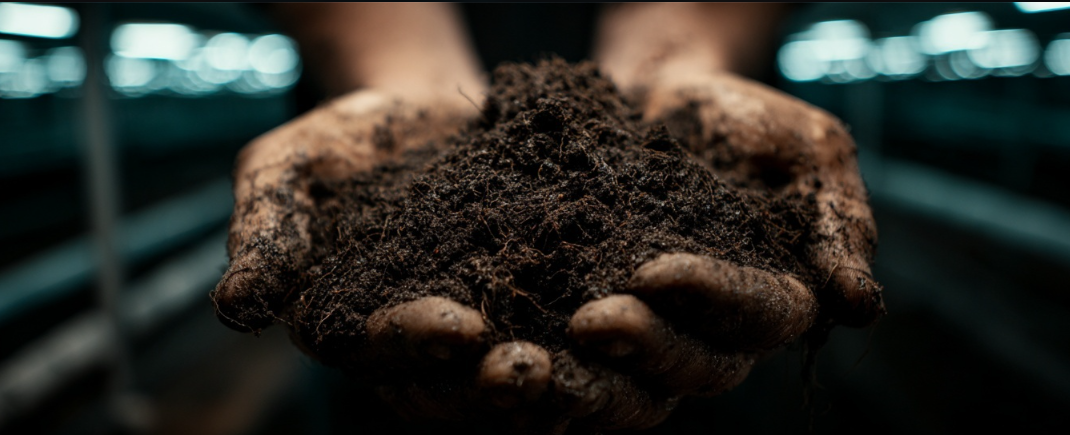
The word "organic" was never intended to be a legal category, a marketing gimmick, or a sterile checklist of prohibited substances. To the pioneers of the 1970s—the radicals, the "dirt-worshippers," and the visionaries behind the California Tilth and the California Certified Organic Farmers (CCOF)—organic was a sacred covenant. It was a philosophy of biological imperative centered on the humus: the dark, living, breathing vitality of the soil. To these early practitioners, the soil was not a substrate or a "medium"; it was a complex, sentient ecosystem. If the soil was healthy, the plant was healthy, and by extension, the human was healthy. This was the "Tilth" concept—a word derived from the Old English for "cultivation," implying a deep, soulful stewardship of the earth.
However, the passage of the 1990 Organic Foods Production Act (OFPA) marked the beginning of a profound ontological shift. As the grassroots movement grew into a multi-billion dollar industry, the federal government moved to "protect" the term, effectively staging a hostile takeover of its definition. When the USDA National Organic Program (NOP) finally implemented its standards, the holistic wisdom of the Tilth was steamrolled by the cold machinery of Washington bureaucracy.
The transition from a community-based certification to a federal mandate was not a step forward; it was a co-opting imposition. The USDA did not just standardize organic; they standardized the soul out of it. By overrunning the strict, principle-based standards of the California pioneers, the USDA replaced a biological philosophy with a reductionist, rule-based bureaucracy. Today, the USDA "Organic" seal is less a hallmark of ecological integrity and more a mockery of the movement's original intent—a Trojan horse designed to allow industrial agribusiness to scale up while the foundational principles of soil health and animal dignity are ground into the dirt.
The Conceptual Betrayal: From Soil to "System"
The most egregious evidence of the USDA’s departure from organic reality is the Hydroponics Scandal. In a move that felt like a punch to the gut of the traditional movement, the National Organic Program (NOP) chose to allow soil-less growing—hydroponics, aeroponics, and aquaponics—to carry the "Organic" seal. This decision was not a mere technicality; it was a fundamental severing of the link between the certification and the earth itself. To the pioneers of the Tilth, the soil was the very soul of the work—a complex, living digestive system that transformed decaying matter into life. By certifying plants grown in inert solutions of water and liquid nutrients, the USDA effectively declared that the earth is optional, reducing "Organic" from a biological philosophy to a reductionist checklist.
This transition marks the death of soil stewardship in the eyes of the law. To the industrial organic lobby, soil is viewed merely as a "medium," a physical platform to hold a plant upright while it is pumped with liquid nitrogen. This perspective ignores the carbon-sequestering, mineral-rich microbial dance that defines true organic vitality. The NOP has shifted the focus entirely from long-term ecological outcomes to short-term input management. As long as a fertilizer or pesticide is not specifically listed as prohibited, the USDA grants its blessing, even if the farm is a sterile, plastic-lined warehouse devoid of a single earthworm.
The result is the "Monoculture Mirage," where the input-substitution model allows massive corporations to operate thousand-acre industrial tracts that function exactly like conventional chemical farms. These operations do not seek to build the life-giving humus that the original California standards demanded; instead, they manage spreadsheets of allowed synthetic additives and "approved" processing aids. The USDA has created a standard that is more about the absence of certain poisons than the presence of biological life. It is a hollow victory for the consumer—a world where the label has survived, but the living purpose has been eviscerated.
The Industrialization of Suffering (The "Animal System" Myth)
If the USDA’s treatment of soil was a philosophical betrayal, its handling of livestock is a moral catastrophe. The term "organic meat" has become a linguistic sleight of hand, a way to dress industrial confinement in the robes of pastoral ethics. Under the original Tilth vision, an animal was never a "unit of production" or a "protein system"; it was a sentient participant in a closed-loop farm ecosystem. Today, however, the USDA National Organic Program has largely allowed the "Organic" seal to be plastered over the walls of Concentrated Animal Feeding Operations (CAFOs). By prioritizing the needs of large-scale campaign donors over the biological needs of living beings, the government has facilitated the industrialization of suffering.
The most glaring example of this ethical erosion is the "porch" loophole. While the law technically requires animals to have "access to the outdoors," the USDA allowed industrial poultry operations to satisfy this requirement by building tiny, screened-in concrete balconies. These "porches" ensure that hundreds of thousands of birds never actually touch a blade of grass or feel the earth beneath their feet, yet their meat and eggs are sold at a premium to consumers who believe they are supporting humane farming. This is not agriculture; it is an architectural trick designed to bypass the spirit of organic law while adhering to its most cynical interpretation.
Furthermore, the USDA has institutionalized a diet that is biologically foreign to the animals it certifies. Ruminants—creatures like cows and sheep designed by millions of years of evolution to ferment grass—are instead fed massive quantities of organic corn and soy to speed up growth and increase milk volume. This "Organic Grain" mandate serves the industrial throughput model but creates a metabolic nightmare for the animal and a nutritionally inferior product for the human. By allowing ruminants to be confined in feedlots as long as their grain is certified organic, the USDA has severed the ancient link between the animal and the pasture.
Ultimately, the NOP has replaced the "Living Being" with the "Compliant Input." The standard ensures that an animal hasn't been injected with synthetic hormones, but it offers no guarantee that the animal lived a life worth living. This reductionist view ignores the "Five Freedoms" of animal welfare in favor of a chemical-free version of the same torture found in conventional systems. For the consumer, the "Organic" label on a piece of meat is no longer a promise of a higher ethic; it is merely a receipt for a slightly more expensive form of industrial exploitation.
Regulatory Capture and the "Pay-to-Play" Certification
The degradation of the organic label was not an accident of incompetence; it was a predictable outcome of regulatory capture. When the USDA assumed control of the "Organic" trademark, it dismantled the decentralized, community-led oversight of the Tilth era and replaced it with a pay-to-play bureaucracy. In the original grassroots model, certification was a badge of honor bestowed by peers who understood the local ecology. Under the National Organic Program (NOP), it has morphed into a transactional relationship where the regulated essentially hire their regulators. This creates an inherent conflict of interest: private certifying agents, whose revenue depends on the fees paid by the farms they inspect, are incentivized to attract the largest corporate clients by offering the path of least resistance.
This "one-size-fits-all" administrative burden serves as a high-entry barrier that systematically marginalizes the small-scale family farmer—the very people who built the movement. A five-acre market garden and a five-thousand-acre industrial plantation are subjected to the same grueling, expensive, and document-heavy "Organic System Plan." For the small farmer, the staggering volume of paperwork is a tax on their time and limited resources; for the $3 billion agribusiness giant, it is a rounding error and a cost of doing business. The result is a regulatory environment that favors industrial scale over ecological intimacy. The USDA has effectively turned "Organic" into a luxury brand for the wealthy processor rather than a protection for the small producer.
Perhaps the most cynical aspect of this transition is how the USDA sidelined the original activists to take over the "trademark" of the word. By codifying "Organic" into federal law, the government essentially stole the language of the movement. Small farmers who had practiced chemical-free, soil-building agriculture for decades suddenly found themselves legally prohibited from using the word "Organic" to describe their own life’s work unless they paid the federal government for the privilege. This co-opting was the final blow in overrunning the California Tilth. The USDA didn't just define organic; it confiscated it, ensuring that the term would henceforth serve the interests of the Washington lobbies and major campaign donors who value uniformity and throughput over the radical, decentralized spirit of the earth.
The Consumer’s Dilemma: Dying for a Label?
The ultimate casualty of the USDA’s regulatory takeover is the consumer, who now navigates a marketplace defined by "Organic Lite." The USDA seal has been weaponized as a marketing shield, a visual shortcut that grants a "halo effect" to products that are organic in name but conventional in spirit. By paying a premium for the green-and-white sticker, the average buyer believes they are opting out of a broken system; in reality, they are often just funding a slightly more expensive version of it. This creates a dangerous "Consumer’s Dilemma," where the very label designed to provide transparency has become a tool of obfuscation, masking the industrial reality of "organic" factory farms behind idyllic imagery of rolling hills and happy cows.
The health implications of this dilution are not merely philosophical—they are biological. While the USDA standard successfully limits exposure to a specific list of synthetic pesticides and herbicides, it offers no guarantee of nutrient density. There is a profound difference between a tomato grown in microbially-rich, mineralized Tilth and one grown in a sterile hydroponic solution or depleted industrial soil. When the USDA stripped the "soil-first" requirement from the definition of organic, they stripped the nutritional value from the produce. We are left with a food supply that is technically "compliant" but functionally hollow, contributing to a paradox where humanity is overfed by a global organic industry yet remains undernourished by a lack of genuine soil vitality.
This deception creates a false sense of security that may actually deter more radical, necessary changes in diet and sourcing. If a consumer believes their "organic" ultra-processed snack or their "organic" grain-fed beef is a healthy choice, they stop looking for the local farmer who is actually healing the land. The USDA seal has become a ceiling rather than a floor, trapping the consumer in a loop of corporate dependency. To truly reclaim our health and escape the "death by label" that plagues the modern diet, we must look past the government's stamp of approval. We must demand a return to radical transparency—seeking out the "Beyond Organic" movements and regenerative certifications that refuse to compromise the sacred link between the health of the earth and the health of the human being.
Reclaiming the Root
The history of the USDA National Organic Program is a cautionary tale of what happens when a radical, life-affirming philosophy is translated into the language of federal regulation. The USDA did not merely define organic; it sterilized it, stripping away the "Tilth" to make the movement palatable for mass consumption and corporate profit. By overrunning the grassroots standards of the California pioneers, the government replaced a sacred covenant with the soil with a hollow administrative checklist. The "organic" food on most grocery store shelves today is a ghost of the original vision—a product of a system that permits soil-less crops, industrial animal confinement, and a "pay-to-play" certification process that serves the lobbyist over the laborer.
However, the failure of the federal label does not mean the movement is dead; it simply means it has moved back to the margins where it began. Real organic farming was never meant to be a government-granted privilege or a trademark owned by a bureaucracy. It is a relationship—a direct, transparent connection between a farmer who stewards the land and a consumer who values the life within it. To save the concept of organic from the mockery made of it by the NOP, we must return to the root. This means looking past the green-and-white seal and seeking out the farmers who practice a "Beyond Organic" or "Regenerative" ethic that the USDA refuses to mandate.
The path forward requires a rejection of the "Organic Lite" trap. We must acknowledge that a label cannot replace the biological necessity of healthy soil or the moral necessity of animal dignity. If we are to avoid the chronic diseases of a compromised food system, we must stop being passive consumers of labels and start being active participants in local food webs. The original vision of the Tilth remains as vital today as it was in the 1970s, but it no longer lives in the halls of Washington. It lives in the compost piles, the rotational pastures, and the hands of those who know that true organic health cannot be regulated into existence—it must be grown from the ground up.
Member discussion: