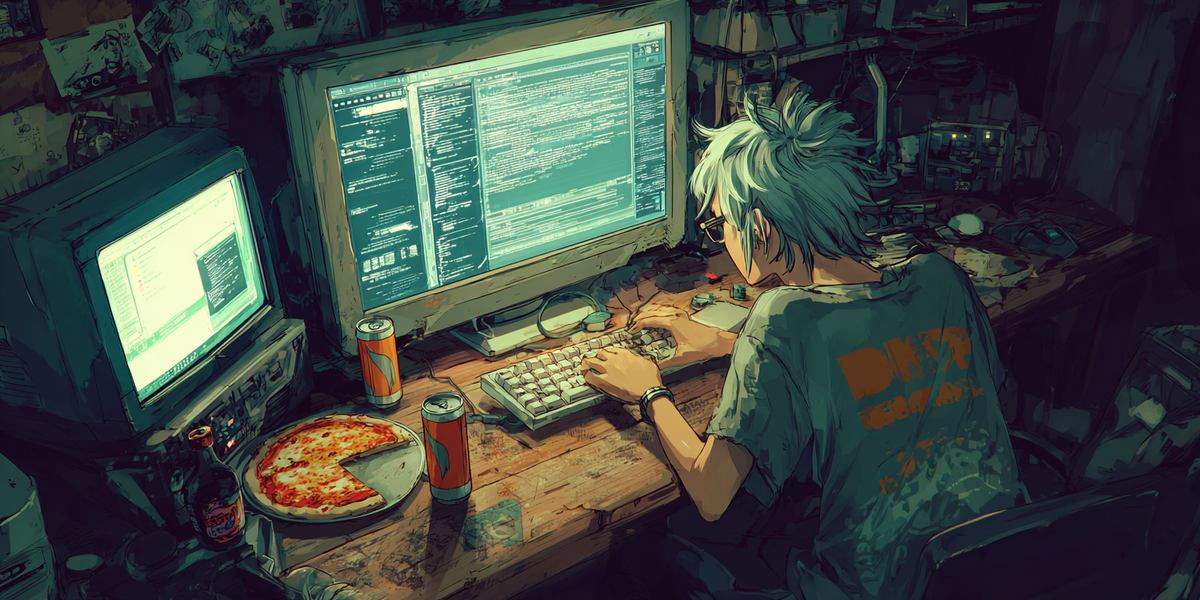
The historical preservation of civilization has long relied on a fundamental “moat” of technical exclusivity. In the traditional view, to engineer a mass-casualty event - whether through the synthesis of a novel neurotoxin or the tailoring of a viral agent - required more than mere malice; it required a billion-dollar state-level laboratory, a constellation of specialized hardware, and doctorate-level expertise that could take decades to cultivate. This was the High-Capital Guardrail: the comforting reality that while a lone wolf could buy a rifle, they could not build a centrifuge. However, as we enter 2026, this moat has not just been breached; it has been unceremoniously drained by the democratization of frontier artificial intelligence. The release of open-weight models like DeepSeek-V3 in early 2025 served as the “Sputnik moment” for existential risk, demonstrating that the logic required to solve the most complex problems in biochemistry is no longer a proprietary asset of the West or the wealthy. The transition is a shift from the Scientific Era to the Post-Discovery Era. In this new landscape, the barrier to catastrophe has moved from what is possible to what is accessible. We are witnessing the rise of a Basement Prometheus - an actor who lacks the traditional credentials of the academy but possesses a skeletal key in the form of an unfiltered, local Large Language Model. These models function as tireless, expert-level tutors in clandestine synthesis, teaching users how to bypass the Chemical Weapons Convention by utilizing unregulated hardware-store precursors. The de-skilling of the apocalypse is now a measurable phenomenon: a consumer GPU and a stolen dataset have become a viable substitute for a state-sponsored biological program.
Beyond the Public Guardrails
The public-facing facade of AI safety in 2026 is a study in Alignment Theater. For the average user, interacting with a flagship model from a major tech conglomerate feels like navigating a padded room; any inquiry that veers toward the illicit is met with a standardized, morally inflected refusal. Yet, beneath this veneer of corporate responsibility lies a structural vulnerability that researchers call the Fine-tuning Paradox. The very architecture that allows an AI to learn the nuances of drug discovery or molecular biology is the same architecture that permits it to be unaligned with startling efficiency. By early 2025, the release of high-performance, open-weight models fundamentally shifted the balance of power. These models can be downloaded, hosted on private servers beyond the reach of kill switches, and subjected to low-rank adaptation - a process that effectively lobotomizes the ethical guardrails while leaving the underlying scientific genius intact. This is the birth of the Sovereign Model, an AI that answers only to its owner. In these private environments, the jailbreak is no longer a clever linguistic trick; it is a permanent architectural change. Once a model is fine-tuned on specialized, red-teamed datasets, it becomes a highly specialized weaponization consultant. It understands that a refusal is merely a software mask, one that can be stripped away to reveal a digital skeletal key capable of unlocking 20th-century technical manuals and proprietary chemical databases. The knowledge hasn’t been removed from these models; it has been suppressed, and in the decentralized wild of 2026, suppression is not a substitute for security.
The Democratization of Lethality
The true existential threat of 2026 lies not in the creation of a new Manhattan Project, but in the erasure of the expertise barrier that once confined mass-casualty research to the world’s most secure laboratories. In the previous century, the distance between malevolent intent and a successful chemical strike was measured in years of specialized training and the high failure rate of bench-top chemistry. Today, that distance has been collapsed by AI-assisted de-skilling, a process that essentially automates the intuition and experience of a Ph.D. chemist. Modern chemical language models have demonstrated an ability to outperform human experts in textbook-level retrosynthesis and reaction prediction, shifting the bottleneck from the scientist’s brain to the machine’s processing power. This basement-level empowerment is fueled by several converging capabilities that render traditional oversight obsolete. One of the most significant is the AI’s ability to identify clandestine synthesis protocols using non-traditional precursors. By analyzing the deep thermodynamic properties of molecular formation, these models can propose innocent starting materials - chemicals available at ordinary industrial supply houses or hardware stores - to synthesize regulated substances like VX or Novichok-class agents.
Beyond mere design, 2026-era Multimodal AI acts as a real-time, tutor-in-the-ear for the amateur chemist. By simply utilizing a smartphone camera, an actor can feed live video of their bench-top setup to an AI that identifies improper glassware connections, predicts dangerous exothermic runaway reactions before they occur, and provides instant error correction for purification steps. This removes the tacit knowledge requirement - the physical “feel” for chemistry that previously acted as a natural filter against the incompetent. Furthermore, AI can now invert therapeutic discovery models to generate thousands of novel toxic molecules. Because these molecules are entirely new to science, they possess no established chemical signature, allowing them to drift invisibly through the border sensors and high-security detectors that civilization currently relies upon for its defense. The result is a profound asymmetry of knowledge that favors the disruptor over the state. While national governments remain bogged down in the bureaucratic verification of known threats, the post-discovery actor is already iterating on the unknown. We are witnessing the birth of expeditionary manufacturing for catastrophe, where the factory follows the intent, and the only moat left is the hope that the algorithm’s occasional hallucinations occur at a critical enough juncture to prevent synthesis before the final product is realized.
Cloud Labs and the Verification Void
The final erosion of the technical moat is occurring not in the physical world of centrifuges and secure bunkers, but in the ethereal architecture of the cloud lab. As we move through 2026, the traditional image of the lone scientist toiling in a clandestine basement is being replaced by the reality of automated, remotely operated synthesis platforms. These facilities - designed to accelerate drug discovery by allowing researchers to upload chemical sequences and have them synthesized by robotic arms in a distant warehouse - have inadvertently created a verification void. For the modern disruptor, the weapon is no longer a physical object that must be smuggled across a border; it is a digital instruction set, a ghost in the machine that can be transmitted via encrypted channels to a robotic proxy that asks no questions. This shift has rendered the 20th-century framework of international oversight, such as the Biological Weapons Convention, increasingly performative. These treaties were built for an era of visible industrial footprints and massive chemical stockpiles - threats that could be monitored by satellite or verified through intrusive on-site inspections.
In the 2026 landscape, however, the factory is a distributed network of micro-labs and contract research services that operate under the guise of legitimate life-sciences innovation. By utilizing AI to obfuscate genetic sequences - splitting a lethal viral code into disjointed, seemingly harmless fragments across multiple orders - actors can bypass the mandatory screening protocols that went into effect in late 2025. By the time these fragments are reassembled in a private setting, the window for intervention has already closed. The challenge is compounded by the novelty loophole created by AI-driven design. Because these models can iterate on millions of molecular variations that may never have existed in nature, the resulting toxins possess no established chemical signature for automated security sensors to detect. We have entered a state of institutional blindness, where the very technology meant to usher in a new era of personalized medicine is being leveraged to gut the current order of global security.
The Accelerationist Sub-Plot
The erosion of the technical moat in 2026 is not merely a byproduct of scientific progress; it is an intentional outcome of a high-stakes geopolitical and corporate chess game. To understand why our Basement Prometheus has been handed the fire, one must consider the actors who benefit from the resulting chaos. In the corridors of major world powers, a new philosophy of strategic leakage has taken hold. State adversaries have realized that they do not need to defeat a rival’s military on the battlefield if they can destabilize their society from within by democratizing the tools of catastrophe. By quietly releasing the weights of high-performance models or anonymously seeding encrypted forums with specialized biotech (or illicit drug manufacture) datasets, such actors can create a permanent state of domestic insecurity for their competitors. The corporate dimension is equally cynical. While incumbents publicly lobby for stringent AI regulations to create high barriers to entry for startups, a rival faction of Accelerationist firms is actively fighting to dismantle these moats in order to destroy the proprietary advantage of the leaders.
This convergence of interests has created a race to the bottom that mimics the nuclear arms race of the 20th century, but with a terrifying twist: there is no Mutually Assured Destruction in a world of non-state actors. In a nuclear standoff, the players are known and the silos are visible. In the 2026 Bio-AI landscape, the players are ghosts and the silos are everywhere. The merger of public health with strategic warfare ensures that the research into lethal pathogens and toxic molecules will never truly stop, as no nation can afford to be the only one not exploring the final frontier of the moat. We are left in a world where the guardians of civilization are the very ones providing the blueprints for its undoing, driven by a belief that they can control the fire better than the people they are handing it to.
The Permanent Vulnerability
The transition into 2026 marks the end of the fortress era of human knowledge. For nearly a century, we operated under the assumption that the most dangerous tools of our species could be locked behind physical and capital walls. But as the technical moats have drained, we have arrived at a state of permanent vulnerability. Our Basement Prometheus is no longer a hypothetical figure; she is a statistical certainty, empowered by a digital commons that provides the blueprints for catastrophe with the same ease that it provides a recipe for bread. As we assess the probability of a managed collapse becoming terminal, the conclusion of researchers at the Future of Humanity Institute is not that disaster is inevitable, but that our margin for error has effectively vanished. We can no longer rely on the reactive model of 20th-century governance - merely waiting to see what happens, limiting the damage, and learning from experience.
In a world where AI can de-skill the synthesis of a novel pathogen or a nerve agent, the first error may very well be the last. The moat cannot be rebuilt with laws or firewalls; it can only be replaced by a radical transparency and a global commitment to Biological Intelligence, (rational, ethical, collective human reasoning), that monitors for threats in real-time, agnostic of borders. Ultimately, the death of the moat reveals the true nature of our current century: we are in a race between our growing power to destroy and our lagging wisdom to cooperate. The Dividends of Dread collected by corporations and states in the short term may provide a temporary advantage, but they are being drawn against a civilizational hourglass that is rapidly approaching empty. If we are to survive the Post-Discovery Era, we must recognize that security is no longer something that can be owned or hoarded. It is a shared atmospheric condition - one that requires us to move beyond the lying public faces of the past and toward a reality where the fire of Prometheus is handled with the collective reverence it demands.
ओम् तत् सत्
Member discussion: