
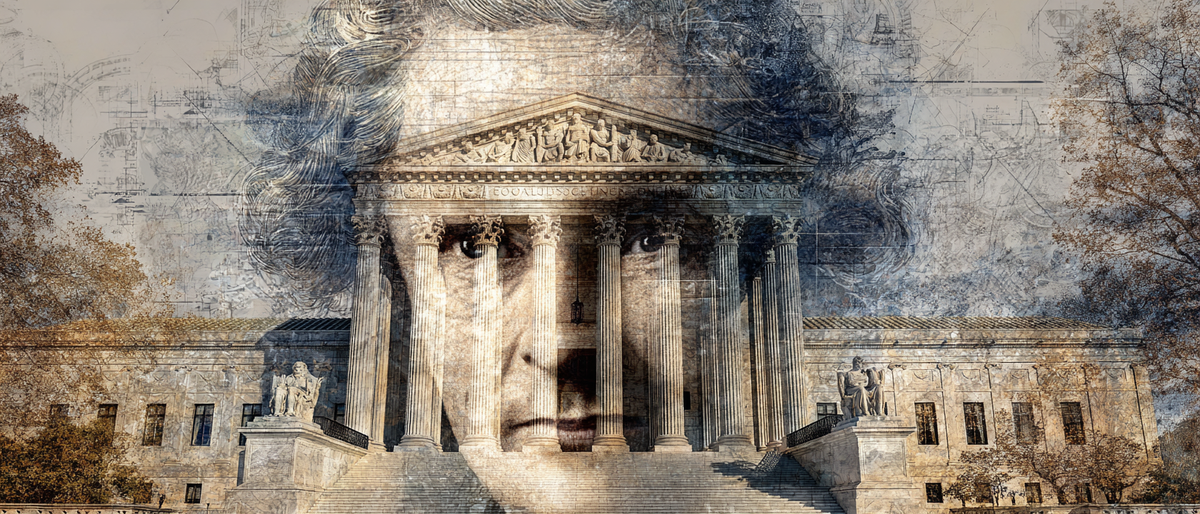
In 1761, James Otis Jr. stood before a crowded courtroom in Boston and railed against the "Writs of Assistance." These were general warrants issued by the British Crown - limitless, nameless permissions that allowed officials to enter any home and break open any trunk in search of "un-customed" goods. Otis called them "the worst instrument of arbitrary power," arguing that they placed the liberty of every man in the hands of every petty officer. He lost the case, but John Adams would later remark that in that courtroom, "the child Independence was born."
Fast forward to 2026. The trunks are now data logs. The "petty officers" are corporate litigators. And the "Writs of Assistance" have been rebranded as Civil Preservation Orders. We are currently witnessing a systemic inversion of the Fourth Amendment. In the high-stakes theater of The New York Times Co. v. OpenAI, a federal court has effectively issued a general warrant for the "papers and effects" of millions of Americans. By ordering the segregation and preservation of user logs to satisfy a corporate discovery request, the court has bypassed the fundamental requirement of particularity. In the eyes of the court, your private intellectual output - your draft poetry, your legal queries, your intimate philosophical debates with an AI - is not "speech." It is "discoverable metadata." It is being treated as the "exhaust" of a machine rather than the "sanctuary" of a human mind. This is Rule by Law in its purest form: the use of procedural mechanics to strip away substantive rights before the victim even knows they’ve been targeted.
The judiciary leans heavily on the "Third-Party Doctrine" - the archaic notion that by using a service like OpenAI, you have voluntarily "published" your thoughts and thus forfeited any expectation of privacy. But this is a legal fiction that has curdled into a nightmare. Jefferson’s conception of the "Sovereign Mind" did not include an asterisk for digital intermediaries. When the court treats OpenAI as a mere "custodian" of records, it ignores the reality that for the modern working class, these platforms are the new "locked desk." By allowing a plaintiff to compel a defendant to impound the data of a non-party, the court is facilitating a constitutional trespass for the sake of a corporate audit. This trespass is not accidental; it is the natural byproduct of a judicial system that has been re-engineered to prioritize the balance sheet over the Bill of Rights.
When Capital Replaces Consent
If the first movement of this crisis was the quiet theft of the digital sanctuary, the second is the hollowing out of the courtroom itself. We have entered a cynical era where the "Consent of the Governed" has been effectively replaced by the "Convenience of the Litigant." In the hallowed halls of the modern federal judiciary, the scales of justice are no longer weighing "Right against Wrong," but "Risk against Revenue." The result is the emergence of a new Corporate Peerage, where the court treats two massive entities as sovereign powers negotiating a border dispute. Because these giants possess the capital to sustain "scorched earth" discovery for a decade, the court adapts its rules to fit their gargantuan scale, leaving the individual user invisible in the shadows of the docket.
In a functioning, representation-based democracy, the rights of the millions would serve as the primary constraint on the court’s power. In a market-driven judiciary, however, the primary constraint is Judicial Economy. The judge asks not how to protect the citizen, but how to move a massive pile of litigation toward a settlement without clogging the system. The answer is invariably to treat user privacy as a "transaction cost" - a small fee paid in liberty to keep the wheels of industry turning. This leads directly to what I call the Billion-Dollar Accommodation, an unspoken agreement where the judiciary allows massive corporations to utilize general discovery techniques that would be laughed out of court if used against a single citizen.
The asymmetry is staggering. If a local sheriff wanted to read your private diary, he would be forced to run the gauntlet of the Fourth Amendment, requiring a warrant, probable cause, and a specific description of the evidence sought. Yet, when a billion-dollar publisher seeks to impound the digital "logs" of every citizen who utilized a specific tool, they need only file a Civil Motion. By framing the seizure as "evidence preservation" rather than a "search," the court allows a private corporation to do what the government itself is constitutionally forbidden from doing. This is the laundering of authoritarianism through the private sector, rewriting the Grand Experiment into a service contract for the highest-value litigants. This degradation of the Rule of Law leaves the "little guy" with only one remaining option: to mass his own forces and storm the gates of the docket.
Standing and the Limits of the Class Action
When the individual is reduced to an afterthought in a billion-dollar dispute, the only remaining path to relevance is the massing of forces. If the courtroom has become a fortress for corporate interests, the Class Action functions as a form of digital militia - a way for the citizenry to breach the gates and demand the "Standing" that the system has so casually denied them. In the eyes of the law, a single user complaining about a preservation order is a nuisance; a hundred thousand users joined in a civil complaint is a jurisdictional crisis. By filing a massive class-action suit, the citizenry finally achieves the one thing the Market Court respects: a threat to judicial economy.
The power of this maneuver lies in its ability to flip the script of the Billion-Dollar Accommodation. Suddenly, the court is no longer managing a clean dispute between two titans; it is facing a procedural nightmare of its own making. A well-organized class action can impel a higher court to intervene, forcing an appellate judge to look past the technicalities of discovery and address the underlying "constitutional tort." Yet, we must be clear-eyed about the limitations of this remedy. While a class action can stop a specific overreach, it rarely cures the systemic rot. In a crippled democracy driven by market forces, the "remedy" often takes the form of a settlement - a financial payoff that allows the corporation to "buy" its way out of a constitutional ruling.
The users may receive a check, but the Rule by Law remains intact. The corporate entities simply price these settlements into their quarterly budgets, treating the violation of rights as a depreciable asset. Ultimately, a class action is a defensive wall, not a total victory. It can protect your data from the current "monarchy" of the courts, but it does little to dismantle the capitalist architecture that prioritized property over liberty in the first place. Jefferson’s "Grand Experiment" required more than just successful lawsuits; it required a citizenry that refused to be treated as a byproduct of the state.
Sovereignty Beyond the Courtroom
The final and most critical act must be the Great Redirection. Jefferson observed that the "natural progress of things is for liberty to yield, and government to gain ground." He did not intend this as an admission of defeat, but as a call to the creation of parallel structures of sovereignty. When the official channels of representation have been captured by market forces, we must look beyond the courtroom. We must acknowledge the brutal truth: a system that views your private thoughts as "discoverable assets" will never truly grant you the Standing you deserve.
The real redirection lies in the transition from dependency to decentralization. As long as we entrust our expressive data to digital intermediaries, we remain subjects to their legal vulnerabilities. Every prompt typed into a centralized server is a hostage handed over to the next corporate litigation. The Jeffersonian solution for 2026 is to "refuse the tea" entirely. This means moving toward architectures—open-source, local-first, and end-to-end encrypted - where the "bigger guns" of the court simply have no target to hit. If a court cannot find a central server to subpoena, the preservation order becomes a ghost.
This is the ultimate move. If we move our intellectual labor to systems that prioritize the Sovereignty of the Mind over Judicial Economy, the Corporate Court loses its jurisdiction over the human spirit. This is the only way to relieve the systemic injury: by making the monarchy irrelevant through a refusal to participate in their centralized panopticon. We must stop asking for permission to be private and start building systems that make privacy a physical law rather than a legal privilege. The Grand Experiment was never meant to be a static document guarded by men in robes; it was a living practice of self-sufficiency. While we fight the Rule by Law in the courts today, we must simultaneously build the digital "Committees of Correspondence" that exist outside their reach. Liberty will not be granted by a judge - it will be re-encoded by the people.
Member discussion: