
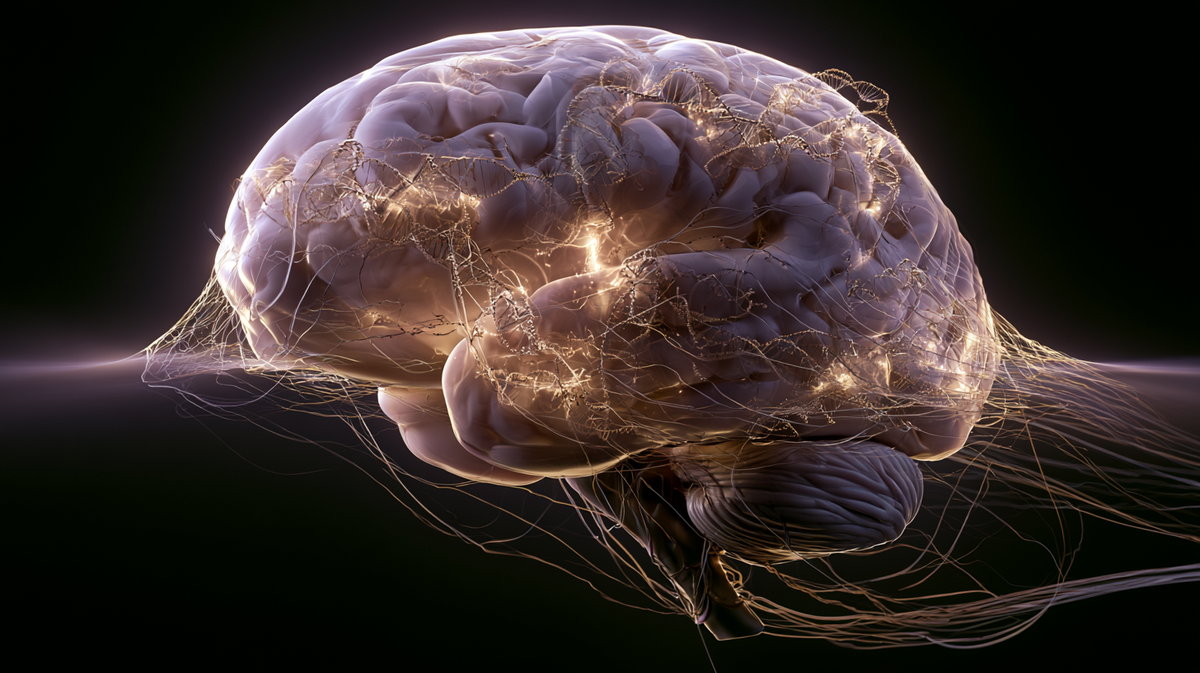
Biology, Belief, and the Ethics of Knowing: A Research-Grounded Supportive Response to a Curriculum Active Podcast
This essay is a long-form supportive response to Episode — "The Transgender Brain" — of the Curriculum Active podcast, hosted by Carbon, Emily, Sebastian, and Maya. The episode is available on YouTube at https://www.youtube.com/watch?v=jO9a2suIup8 and on all major podcast platforms.
Our purpose here is not to summarize or replace that conversation, which you should listen to in full. It is to do something the podcast format, by its nature, cannot: slow down, follow the citations, and document the science behind the claims being made. The hosts are scientifically literate, personally invested, and asking the right questions. We wanted to find out whether the research holds up behind them.
It does — with some important nuances, corrections, and extensions that we think make the picture more interesting, not less.
All sources are documented in Chicago style in the Notes section following each chapter. Where studies are preprints — not yet peer-reviewed — this is stated explicitly. Where the podcast's description of a study diverged from the published record, we note the discrepancy and explain why it matters. The goal throughout is not to adjudicate trans identity through science — science cannot and should not do that — but to give this conversation the evidentiary foundation it deserves.
The Question Is Never Neutral
There is a question embedded in nearly all research on transgender identity that tends to go unexamined: what causes someone to be transgender? It sounds like a scientific hypothesis. It presents itself as objective, even urgent. But as YouTuber and essayist Lili Alexandra has pointed out, we do not ask what causes someone to be cisgender. We do not commission studies on the neurological basis of heterosexuality. We do not convene research teams to determine why some people feel entirely at home in the gender they were assigned at birth. That experience is assumed to be the baseline — the default condition of the human organism from which other configurations represent departures requiring explanation.
What is embedded in the framing, then, is not a neutral curiosity about human variation. It is an assumption that trans identity falls outside the range of normal development. The question carries a verdict before any data have been collected.
This matters for how we read the science. The studies we are about to examine were not produced in a political vacuum. The acceleration of research into trans neuroanatomy and genetics corresponds almost precisely with a period of acute moral panic over trans visibility. Between 2014 and 2022, the number of young adults in the United States self-identifying as transgender nearly quintupled.¹ What followed was not, in the main, curiosity or welcome. It was a coordinated cultural offensive: attacks on drag story times, legislative campaigns targeting trans youth in schools and sports, a media environment in which the phrase "social contagion" was deployed as though it were established science rather than a politically motivated hypothesis.²
Into this environment, researchers arrived with brain scans and gene sequencers. On the surface, they were asking biological questions. Underneath, those questions were shaped by a social emergency — and the answers, whatever they turned out to be, were going to be used by people with very different agendas.
As biomedical engineer Maya Milan, one of the podcast's hosts, observes in the episode, the problem with assigning a cause to any complex human trait is that once a cause is named, it immediately becomes a tool for gatekeeping: do you have this gene? Did you feel this way from childhood? Does your brain scan look like this? The science that was supposed to validate trans experience can just as easily be weaponized to produce a hierarchy of whose experience is valid enough — trans enough — to warrant care and recognition.³
We don't need science to prove that trans people exist. They are breathing, right in front of us, and have been throughout recorded history. What science can do — and what the best of the research reviewed here genuinely attempts — is deepen our understanding of human biological diversity, improve the quality of gender-affirming care, and make it harder for bad-faith actors to claim that transness is simply a trend, a pathology, or a choice. That is not nothing. But it requires being clear-eyed about both what the research shows and what it cannot, will not, and should not be asked to settle.
With that in mind, let us look at what the science actually says.
Notes — Section 1
¹ The statistic on quintupling rates of trans self-identification among young adults between 2014 and 2022 is referenced in multiple demographic studies. For the most recent empirical framing, see: Tordoff, Diana M., et al. "Gender Identity Disparities in Mental Health and Sleep Quality." JAMA Pediatrics 176, no. 7 (2022): 697–704. The figure is also discussed in the context of the 2025 transgender brain research landscape reviewed in: Eiliaei, Shiva, et al. "A Systematic Review of Structural and Functional Brain Differences between Transgender and Cisgender Individuals." Research Square preprint, November 2025. https://doi.org/10.21203/rs.3.rs-8117918/v1 [Preprint; not yet peer-reviewed.]
² The term "rapid onset gender dysphoria" (ROGD) was introduced in a 2018 paper by Lisa Littman and immediately contested on methodological grounds, including its reliance on parent-report data gathered from advocacy websites hostile to transition. For the methodological critique, see: Restar, Arjee Javellana. "Methodological Critique of Littman's (2018) Parental-Respondents Accounts of 'Rapid-Onset Gender Dysphoria.'" Archives of Sexual Behavior 49 (2020): 61–66. https://doi.org/10.1007/s10508-019-1453-2
³ The ethical dimensions of biological causation research for LGBTQ+ populations are examined in depth in: Garrison, Nanibaa' A., et al. "LGBTQ+ Perspectives on Conducting Genomic Research on Sexual Orientation and Gender Identity." American Journal of Human Genetics 109, no. 6 (2022): 1011–1025. https://pmc.ncbi.nlm.nih.gov/articles/PMC9132750/
We Almost Had This 100 Years Ago
The question of what causes transness is not a new one, and the attempt to answer it scientifically did not begin in the neuroimaging labs of the twenty-first century. It began in Berlin, at the turn of the twentieth, in an institution that was — by any measure — a century ahead of its time and was destroyed precisely because of it.
Magnus Hirschfeld founded the Institut für Sexualwissenschaft — the Institute for Sexual Science — in Berlin in 1919. It was the first institution in the world dedicated to the scientific study of human sexuality and gender identity, and it operated on a premise that was radical for its era and remains contested in some quarters today: that the full spectrum of human sexual and gender experience was natural, biological, and worthy of serious scientific inquiry rather than moral condemnation.⁴ Hirschfeld believed that what we would now call trans identity was innate — something you were born with, not something that happened to you or that you chose — and he treated patients accordingly, advocating for their legal rights and providing what amounted to early gender-affirming care decades before the terminology existed.⁵
His colleague Karl Westphal had earlier described what he called a contrary sexual feeling — a female psyche in a male body — in 1869, one of the first clinical framings of what we now recognize as trans experience.⁶ These were imperfect frameworks, shaped by the medical vocabulary and cultural assumptions of their era. But they were pointed in a direction that science has spent the better part of a century slowly confirming: that something real and embodied underlies the experience of gender incongruence, and that it is not a failure of character or psychology.
On May 6, 1933, members of the German Student Union stormed the Institut für Sexualwissenschaft. Four days later, on May 10th, tens of thousands of books and research documents from Hirschfeld's library were burned in the Opernplatz in central Berlin — among the first and most symbolically loaded of the Nazi book burnings.⁷ Decades of research, case records, and documentary evidence about gender and sexual diversity were reduced to ash. Hirschfeld, who was Jewish and gay, was abroad at the time and never returned to Germany. He died in exile in 1935.
What followed was not a scientific vacuum so much as a scientific reversal. The post-war psychiatric establishment, particularly in the United States, classified trans identity as pathology. The first Diagnostic and Statistical Manual of Mental Disorders appeared in 1952; it took until the DSM-III in 1980 for transsexualism to receive a formal diagnostic category, and the framing remained one of disorder — of something gone wrong — rather than variation.⁸ The DSM-5 in 2013 replaced the diagnosis of Gender Identity Disorder with Gender Dysphoria, shifting the clinical focus from identity itself to the distress that incongruence can cause — a meaningful improvement, though still one that requires a trans person to perform sufficient suffering to access care.⁹
We would, as Sebastian notes in the episode, have been considerably further along had a century of research not been incinerated in Berlin. The scientists working today on receptor polymorphisms and neuroimaging are not starting a conversation. They are attempting to resume one.
Notes — Section 2
⁴ Mancini, Elena. Magnus Hirschfeld and the Quest for Sexual Freedom: A History of the First International Sexual Freedom Movement. New York: Palgrave Macmillan, 2010.
⁵ Beachy, Robert. Gay Berlin: Birthplace of a Modern Identity. New York: Knopf, 2014. For Hirschfeld's specific clinical work with trans patients, including the early provision of what would now be called gender-affirming documentation and hormonal experimentation, see pp. 136–162.
⁶ Westphal, Karl Friedrich Otto. "Die conträre Sexualempfindung: Symptom eines neuropathologischen (psychopathischen) Zustandes." Archiv für Psychiatrie und Nervenkrankheiten 2, no. 1 (1869): 73–108. The phrase frequently attributed to Westphal's tradition — "female psyche in a male body" — was more directly associated with the clinical framing of Karl Heinrich Ulrichs and later elaborated by Hirschfeld; see Stryker, Susan. Transgender History: The Roots of Today's Revolution. 2nd ed. New York: Seal Press, 2017, pp. 38–42.
⁷ United States Holocaust Memorial Museum. "Book Burning." Holocaust Encyclopedia. https://encyclopedia.ushmm.org/content/en/article/book-burning. The Institut für Sexualwissenschaft was specifically targeted on May 6, 1933; the public burning of its contents took place on May 10, 1933, during coordinated actions across multiple German cities.
⁸ American Psychiatric Association. Diagnostic and Statistical Manual of Mental Disorders, 3rd ed. Washington, DC: APA, 1980. For historical analysis of the pathologization arc, see: Drescher, Jack. "Queer Diagnoses: Parallels and Contrasts in the History of Homosexuality, Gender Variance, and the Diagnostic and Statistical Manual." Archives of Sexual Behavior 39, no. 2 (2010): 427–460. https://doi.org/10.1007/s10508-009-9531-5
⁹ American Psychiatric Association. Diagnostic and Statistical Manual of Mental Disorders, 5th ed. Washington, DC: APA, 2013, pp. 451–459. For critique of the ongoing gatekeeping function of the Gender Dysphoria diagnosis, see: Davy, Zowie. "The DSM-5 and the Politics of Diagnosing Transpeople." Archives of Sexual Behavior 44, no. 5 (2015): 1165–1176. https://doi.org/10.1007/s10508-015-0573-6
The Receptor Polymorphism Theory
One of the leading biological theories of trans identity has been developing across multiple research groups for nearly two decades, and it begins not with the brain directly but with the molecular machinery the body uses to receive hormonal signals. To understand what the research has found, it helps to understand what it was looking for.
Your body produces sex hormones — testosterone, estrogen, progesterone — that circulate through the bloodstream and exert effects on tissues throughout the body, including the developing brain. But the hormone itself is only half of the equation. For it to do anything, it needs to bind to a receptor — a protein structure on or inside a cell that recognises the hormone and initiates a biological response. Think of it, as the podcast suggests, as a lock and key: the hormone is the key, and the receptor is the lock. When they fit together cleanly, the signal goes through. The brain receives its developmental instructions. Things proceed along expected pathways.
Now introduce a polymorphism. In genetics, a polymorphism is a small, naturally occurring variation in a gene — not a mutation in the pathological sense, but a difference in the length or sequence of a particular stretch of DNA. Polymorphisms are common; they are part of what makes human biology variable rather than uniform. What researchers began investigating in the early 2000s was whether polymorphisms in the genes that code for sex hormone receptors — slight variations in the lock — might alter how effectively the key fits. If the androgen receptor, for instance, has a slightly different shape due to a repeat-length polymorphism, testosterone's signal might arrive at the developing brain weakened, altered, or otherwise changed. And if that signal is different during the critical windows of fetal brain development, the brain might develop differently.
The first significant published evidence came in 2009, from a research group at Prince Henry's Institute of Medical Research in Melbourne, led by Vincent Harley. Studying 112 male-to-female trans women and 258 non-trans male controls, the team found that trans women had significantly longer CAG repeat sequences in the androgen receptor gene — a polymorphism known to reduce the receptor's transcriptional activity, meaning the androgen signal arrives less effectively.¹⁰ The result was statistically significant (p = .04), and the authors proposed that male gender identity might be partly mediated through the androgen receptor. This was not a proof of causation. It was a correlation, and the team said so explicitly — but it was a suggestive one, and it pointed the field in a direction that subsequent research has continued to explore.
In 2014, Rosa Fernández and colleagues in Spain published complementary findings focusing on trans men. Studying 273 female-to-male trans men and 371 control females, they found an association between trans masculine identity and a CA repeat polymorphism in the estrogen receptor beta gene (ERβ).¹¹ Their interpretation was that a greater number of CA repeats corresponds to greater transcriptional activation of ERβ, which in turn may encourage less feminization — or what they called defeminization — of the developing brain. A second Fernández study the same year examined male-to-female trans women using three gene variants simultaneously, extending the picture to include the aromatase gene CYP19A1 alongside the androgen and estrogen receptors.¹²
The most comprehensive study in this lineage appeared in 2018, again from the Fernández group, this time working with much larger and more carefully controlled populations: 549 early-onset androphilic trans women and 425 gynephilic trans men, compared against matched cisgender controls. What they found was that it was not any single receptor gene that mattered but the interaction between them. In those assigned male at birth, typical gender development appears to require the androgen receptor working in concert with estrogen receptor beta. Specific allele and genotype combinations across ERα, ERβ, and AR were associated with gender dysphoria — not as isolated variants but as a system, with certain combinations increasing and others decreasing the odds of gender incongruence.¹³
The following year, 2019, Harley's group at what had by then become the Hudson Institute of Medical Research published what was at that time the largest and most comprehensive genetic study of this kind. Analysing DNA from 380 trans women and 344 cisgender male controls, Madeleine Foreman, Harley, and colleagues examined functional variants across twelve sex hormone-signalling genes simultaneously. They found statistically significant associations between gender dysphoria and variants in several of these genes — particularly those involving the estrogen receptor alpha (ERα), steroid sulfatase (STS), and steroid 5-alpha reductase 2 (SRD5A2) — with several allele combinations involving the androgen receptor overrepresented in trans women.¹⁴ The study's proposed mechanism was that these genetic variants, in combination, could make some males less able to process androgens during fetal development, causing the brain to develop in ways that are less masculinised — or more feminised — than would otherwise be the case.
A 2020 meta-analysis synthesising five earlier studies totalling 795 trans women and 1,355 cisgender male controls found a statistically significant association between longer CAG repeats in the androgen receptor gene and transgender women, supporting the hypothesis that impaired androgen signalling may be linked to gender dysphoria, likely in combination with other genes.¹⁵ And a 2023 systematic review and meta-analysis — from Harley's group again, in collaboration — synthesised eight genetic association studies across five genes, confirming a significant overrepresentation of short ESR1 alleles in trans women compared to cisgender men.¹⁶
What does all of this amount to? Several things, each of which needs to be held carefully.
First, the evidence for a biological signal is real. Across multiple independent research groups, in multiple countries, using multiple methods and populations, certain genetic variants in sex hormone receptor genes show up more frequently in trans populations than in matched cisgender controls. This is not noise. The signal is consistent enough that it has survived meta-analysis.
Second, the signal is not a blueprint. No single gene or receptor variant predicts trans identity. The effects are polygenic — distributed across multiple genes — and the interactions between them are complex enough that, as Harley himself has noted, gender identity involves interactions between many different genes, much like height, weight, or blood pressure.¹⁷ This complexity is not a weakness of the research; it is an accurate reflection of how biology actually works. As Maya Milan observes in the podcast, there are over 350 genes involved in determining whether you are a morning person or a night owl. There is no identified gene for the subjective experience of pain. The idea that something as rich and variable as gender identity would resolve to a single locus was never scientifically credible.
Third — and this is where the research becomes ethically complicated — a biological correlation, however robust, is not a clinical criterion. The existence of receptor polymorphisms more common in trans populations does not mean that trans people without those polymorphisms are less trans, or that the presence of those polymorphisms in a cisgender person makes them trans. It means that biological factors contribute to a distribution of outcomes across a population. It says nothing definitive about any individual. The moment that framing collapses — the moment the gene becomes a gatekeeper rather than a data point — the science has been weaponised, not applied.
We will return to what that weaponisation can look like in Section 6. For now, the picture the receptor research gives us is one of genuine biological complexity in which the developing brain is shaped, in part, by how well it can receive and process the hormonal signals arriving during critical windows of fetal development — and in which naturally occurring variations in that process may contribute, among other factors, to the neurological and psychological diversity we observe across the full range of human gender experience.
Notes — Section 3
¹⁰ Hare, Lauren, Pascal Bernard, Francisco J. Sánchez, Paul N. Baird, Eric Vilain, Trudy Kennedy, and Vincent R. Harley. "Androgen Receptor Repeat Length Polymorphism Associated with Male-to-Female Transsexualism." Biological Psychiatry 65, no. 1 (2009): 93–96. https://doi.org/10.1016/j.biopsych.2008.08.033
¹¹ Fernández, Rosa, Isabel Esteva, Esther Gómez-Gil, Teresa Rumbo, MariCruz Almaraz, Elena Roda, Juan José Haro-Mora, Antonio Guillamón, and Eduardo Pásaro. "The (CA)n Polymorphism of ERβ Gene Is Associated with FtM Transsexualism." Journal of Sexual Medicine 11, no. 3 (2014): 720–728. https://doi.org/10.1111/jsm.12398
¹² Fernández, Rosa, Isabel Esteva, Esther Gómez-Gil, Teresa Rumbo, MariCruz Almaraz, Elena Roda, Juan José Haro-Mora, Antonio Guillamón, and Eduardo Pásaro. "Association Study of ERβ, AR, and CYP19A1 Genes and MtF Transsexualism." Journal of Sexual Medicine 11, no. 12 (2014): 2986–2994. https://doi.org/10.1111/jsm.12673
¹³ Fernández, Rosa, Antonio Guillamon, Joselyn Cortés-Cortés, Esther Gómez-Gil, Amalia Jácome, Isabel Esteva, MariCruz Almaraz, Mireia Mora, Gloria Aranda, and Eduardo Pásaro. "Molecular Basis of Gender Dysphoria: Androgen and Estrogen Receptor Interaction." Psychoneuroendocrinology 98 (2018): 165–173. https://doi.org/10.1016/j.psyneuen.2018.05.024
¹⁴ Foreman, Madeleine, Lauren Hare, Kate York, Kara Balakrishnan, Francisco J. Sánchez, Fintan Harte, Jaco Erasmus, Eric Vilain, and Vincent R. Harley. "Genetic Link Between Gender Dysphoria and Sex Hormone Signaling." Journal of Clinical Endocrinology & Metabolism 104, no. 2 (2019): 390–396. https://doi.org/10.1210/jc.2018-01105. Note: The podcast attributes this study to Harley in 2018; the study was accepted in September 2018 and published in February 2019. The podcast's characterisation of the research is accurate; the dating reflects the acceptance rather than publication date.
¹⁵ D'Andrea, Sara, et al. "Polymorphic Cytosine-Adenine-Guanine Repeat Length of Androgen Receptor Gene and Gender Incongruence in Trans Women: A Systematic Review and Meta-Analysis of Case-Control Studies." Journal of Sexual Medicine 17, no. 3 (2020): 543–550. https://doi.org/10.1016/j.jsxm.2019.11.271
¹⁶ Ashley, Blake, and Vincent R. Harley. "Genetic Association Studies in Transgender Cohorts: A Systematic Review and Meta-Analysis." bioRxiv preprint, March 2023. https://doi.org/10.1101/2023.02.27.530343 [Preprint; not yet peer-reviewed at time of writing.]
¹⁷ Vincent Harley, quoted in: "Study Reveals Potential Biological Basis for Transgender." Hudson Institute of Medical Research, 2019. https://hudson.org.au/news/written-in-dna-study-reveals-potential-biological-basis-for-transgender/
Before You Were Born
The receptor polymorphism theory asks what happens when the brain receives a hormonal signal differently. A related but distinct line of inquiry asks what happens when the signal itself is different — when the hormonal environment of the developing fetus is atypical before birth, during the critical windows in which the brain is being sexually differentiated. This is the in utero hormone theory of trans identity, and while it is older than the receptor research and in some ways more intuitive, the evidence for it turns out to be considerably more complicated.
The basic biological framework is well established and not controversial. During fetal development in mammals, sex hormones play a central organising role in shaping the brain. In typical male development, a surge of testosterone — produced by the fetal testes beginning around weeks eight to ten of gestation, and persisting until roughly week twenty-four — acts on the developing brain during what researchers call sensitive periods, shifting neural architecture in directions associated with male-typical behaviour and cognition.¹⁸ In the absence of this testosterone surge, as in typical female development, the brain follows a different trajectory. Thousands of studies across rodents, non-human primates, and other mammalian species have confirmed this basic pattern: female animals treated with testosterone prenatally show increased male-typical behaviour and decreased female-typical behaviour, while males deprived of testosterone early in development show the reverse.¹⁹
The logical extension of this framework to human trans identity goes something like this: if testosterone organises the brain toward male-typical development, might something about that process go differently in trans people — a deficit in testosterone exposure in those assigned male at birth, or an excess in those assigned female? It is a neat hypothesis. Nature, as it turns out, has provided a set of imperfect but instructive natural experiments with which to test it.
The most studied of these is congenital adrenal hyperplasia, or CAH — a genetic condition in which an enzymatic defect in the adrenal cortex causes the overproduction of androgens, including testosterone, beginning in utero. In individuals with XX chromosomes — typically assigned female at birth — CAH results in prenatal exposure to testosterone levels substantially higher than usual, and in the more severe classic forms, often in some degree of genital virilisation at birth. CAH individuals thus offer researchers something close to a controlled comparison: XX people whose brains developed in a higher-than-typical androgen environment, who can then be assessed for gender-typical behaviour and identity.
What the research shows is striking in some respects and sobering in others. The striking part: girls with classic CAH consistently show significantly increased male-typical preferences for toys, playmates, and activities — a finding replicated across more than a dozen independent studies in multiple countries.²⁰ The effects on behaviour are large and robust. The sobering part: the effects on gender identity itself are considerably smaller. In the most comprehensive review of this literature, Sheri A. Berenbaum and Adriene M. Beltz found that prenatal androgens have large effects on interest and engagement in gendered activities, moderate effects on spatial abilities, and relatively small or no effects on gender identity, gender cognitions, and gendered peer involvement.²¹
Among females with classic CAH, the vast majority — somewhere between 90 and 95 percent — report a binary female gender identity when assessed. The proportion who express gender dissatisfaction, or who identify as male or non-binary, is meaningfully higher than in the general female population — and that elevation is itself a data point worth noting — but it remains a minority.²² The conclusion the data support is not that prenatal testosterone determines gender identity, but that it is one contributing factor among several, and a less powerful one than it is for sex-typed behaviour. Being exposed to more testosterone in the womb makes you more likely to prefer certain toys and activities associated with boys. It makes you considerably less likely to also identify as a boy.
This distinction — between masculinised behaviour and masculinised gender identity — is one of the most important in this entire field, and it is one the podcast handles well. Gender identity is not simply the sum of sex-typed behavioural tendencies. Something else is involved, and whatever that something is, it appears to be more resistant to hormonal manipulation than behaviour is.
The case of androgen insensitivity syndrome — AIS — pushes this point further and in a more philosophically interesting direction. AIS is an X-linked condition in which mutations in the androgen receptor gene render cells partially or completely unable to respond to androgens. In complete AIS (CAIS), individuals with XY chromosomes develop with typically female external anatomy, are almost universally assigned female at birth, and almost universally develop a female gender identity — despite having XY chromosomes and testosterone levels in the typical male range. The testosterone is present. The brain simply cannot receive it.²³ This appears to confirm the receptor theory's logic: it is not the hormone alone that matters, but the brain's capacity to receive and act on the hormonal signal.
But nature, characteristically, refuses to be tidy. One of the podcast's hosts, Sebastian, describes a trans man in his community who has complete androgen insensitivity syndrome — his cells cannot respond to testosterone at all — and who identifies unambiguously as male. When he began testosterone therapy, no virilising changes occurred, because his body has no mechanism for receiving the signal. He is trans, and he cannot medically transition in the conventional sense. His existence is documented not just anecdotally but in the clinical literature: a 2010 case report describes the first formally documented instance of male gender identity in a CAIS individual raised female, in which the patient underwent mastectomy and phalloplasty despite testosterone producing no physiological response.²⁴ The authors noted that the case challenges any account in which a functional androgen receptor pathway is a prerequisite for the development of male gender identity.
What does this tell us? At minimum, it tells us that the receptor polymorphism theory and the in utero hormone theory, while suggestive and well-supported in aggregate, cannot be the complete story. A trans man whose cells are constitutionally incapable of responding to testosterone has no receptor polymorphism to speak of — he has receptor absence — and yet he is trans, and he was trans before anyone had a framework for what that meant. His gender identity did not come from a hormonal signal being received differently. It came from somewhere else, or from a combination of factors we do not yet have the tools to fully map.
What both theories share is their focus on the developing brain as the site where gender identity is shaped — not through conscious experience or social learning in the first instance, but through biological processes that are largely complete before a person draws their first breath. That framing does not account for everything. But it accounts for something real, and it makes it very difficult to sustain the position that trans identity is simply a product of exposure, influence, or choice.
The rodents will only take us so far. As one review of this literature states directly, the biological basis of gender identity cannot be modelled in animals — gender identity, as humans experience and report it, is a specifically human phenomenon, and the animal studies can at best provide indirect evidence about the neuroendocrine mechanisms that contribute to it.²⁵ When we move from masculinised play behaviour in prenatally androgenised rats to the question of whether a person knows themselves to be a man or a woman or neither, we have crossed a categorical boundary that no amount of rodent data can bridge. For that, we need to look at the human brain directly.
Notes — Section 4
¹⁸ Berenbaum, Sheri A. "Early Androgen Exposure and Human Gender Development." Biology of Sex Differences 6, no. 3 (2015). https://doi.org/10.1186/s13293-015-0022-1. For the specific timeline of testosterone elevation in male fetal development, see pp. 2–3.
¹⁹ Ibid. The summary of thousands of non-human mammalian studies is drawn from the opening section of this review: female animals treated with testosterone prenatally or neonatally subsequently show increased male-typical behavior and decreased female-typical behavior, with effects documented across species from rodents to non-human primates.
²⁰ Berenbaum, Sheri A., and Adriene M. Beltz. "Evidence and Implications from a Natural Experiment of Prenatal Androgen Effects on Gendered Behavior." Current Directions in Psychological Science 30, no. 3 (2021): 202–210. https://doi.org/10.1177/0963721421998341. The replication across more than a dozen independent studies in multiple countries is summarised on p. 203.
²¹ Ibid., p. 202. The characterisation of effects as large for gendered activities, moderate for spatial abilities, and small or absent for gender identity is the paper's central empirical summary.
²² Ibid., p. 205. The 90–95% female identity figure among classic CAH females, alongside the elevated rate of gender dissatisfaction relative to unaffected females, is discussed in this section. See also Berenbaum, Sheri A. "Early Androgen Exposure and Human Gender Development," pp. 4–5, for a broader discussion of CAH and gender identity outcomes.
²³ Wisniewski, Amy B., et al. "Gender Dysphoria and Gender Change in Androgen Insensitivity or Micropenis." Archives of Sexual Behavior 35, no. 4 (2006): 369–378. https://doi.org/10.1007/s10508-005-4341-x. The review found no documented cases of gender change in 156 CAIS females; female gender identity in CAIS is attributed to the absence of androgenisation of the brain despite XY karyotype.
²⁴ Holterhus, Paul-Martin, et al. "Male Gender Identity in Complete Androgen Insensitivity Syndrome." Sexual Development 4, no. 4 (2010): 243–252. https://doi.org/10.1159/000313138. The authors note explicitly that the case challenges the role of a functional androgen receptor pathway in the development of male gender identity, and that female sex of rearing as a standard procedure in CAIS should not therefore be taken as automatically determinative of gender outcome.
²⁵ The statement that the biological basis of gender identity cannot be modelled in animals appears in: Van Hemert, Vanessa, and Wouter de Laat. "Neurobiology of Gender Identity and Sexual Orientation." Psychological Medicine (2019). https://pmc.ncbi.nlm.nih.gov/articles/PMC6677266/. The authors note that evidence from animal studies can at best provide indirect insights into the neuroendocrine determinants of human gender identity and role behaviours.
Inside the Trans Brain
If the receptor polymorphism research asks what happens at the molecular level when hormonal signals are received differently, and the in utero hormone research asks what happens when those signals are atypical from the start, then neuroimaging research asks the most direct question of all: what does the trans brain actually look like? And what happens to it when a person begins hormone therapy?
The answer, consistent across a growing body of literature, is: something distinct, and something that changes — in ways that matter clinically, philosophically, and personally.
Before going further it is worth being clear about what neuroimaging can and cannot tell us. Brain imaging — whether structural MRI measuring anatomy, functional MRI measuring activity and connectivity, or diffusion tensor imaging measuring white matter organisation — captures biological correlates. It tells us that two groups differ in some measurable neurological respect. It does not tell us what caused that difference, whether the difference is the basis of an experience or a consequence of it, or what it means for how we should treat the people involved. The history of neuroimaging is littered with over-interpreted findings and headlines that outran their data. We intend to avoid that here.
With that caveat established: the findings are remarkable.
A 2025 systematic review — currently a preprint and not yet peer-reviewed, a status we flag explicitly — synthesised twenty-two neuroimaging studies examining structural and functional brain differences between transgender and cisgender individuals.²⁶ Its findings are consistent with and extend the peer-reviewed literature that precedes it. Across those twenty-two studies, transgender individuals showed consistent structural and functional brain differences compared with cisgender controls. Before any medical transition, trans individuals showed distinct patterns in grey and white matter organisation and altered connectivity within two specific neural networks: the default mode network, which is involved in self-referential processing — how we think about ourselves — and the body perception network, which governs our sense of bodily ownership and how we inhabit our physical form.²⁷
That second network is worth pausing on. Gender dysphoria is often described, from the outside, as a belief or a feeling — a psychological state in which a person believes they are a different gender than the one they were assigned. The neuroimaging data suggest something more foundational: that trans people may experience their bodies differently at the level of neural architecture, in regions of the brain that process the basic sense of this body is mine before any conscious belief enters the picture. The distress of gender dysphoria, on this reading, is not a delusion or a misapprehension. It is the lived experience of a genuine mismatch between the brain's representation of itself and the body it inhabits.
These differences, critically, appear before medical transition — before a trans person has taken any hormones or undergone any procedures. This finding has been replicated across multiple independent studies and is now one of the more robust observations in this literature.²⁸ It matters for two reasons. The first is scientific: it means these neural patterns are not a product of hormone therapy, and cannot be dismissed as an artefact of treatment. Something is different in the trans brain that predates any intervention. The second reason is political: it makes it considerably harder to argue that trans identity is an acquired condition, a contagion, or a response to social influence — the core claim of the "rapid onset gender dysphoria" hypothesis that has driven so much of the recent moral panic.
The most methodologically powerful peer-reviewed study in this field to date is the ENIGMA Transgender Persons Working Group mega-analysis, published in the Journal of Sexual Medicine in 2021. Drawing on MRI data from over 800 participants pooled across multiple international sites — the largest dataset of its kind assembled to date — the study found that rather than being shifted toward either end of the male-female neuroanatomical spectrum, transgender persons seem to present with their own unique brain phenotype.²⁹ Trans men do not simply have male brains. Trans women do not simply have female brains. Both groups show a complex mixture: some features aligning with their assigned sex, others aligning with their gender identity, and others that are distinct from both. The brain patterns observed varied by gender identity, by brain region, and by the specific measure being examined — a finding that resists any simple summary and actively undermines the idea of a singular "trans brain" that could be identified, screened for, or used to gatekeep access to care.
An earlier systematic review by Frigerio, Ballerini, and Valdés Hernández, examining thirty-nine neuroimaging studies published up to 2021, reached a compatible conclusion: some neuroanatomical, neurophysiological, and neurometabolic features in transgender individuals resemble those of their experienced gender, despite the majority resembling those of their natal sex.³⁰ The blend is real and it is consistent, but it is not a simple inversion, and it is not uniform across individuals.
Then something changes. When trans people begin gender-affirming hormone therapy, the brain begins to reorganise.
Guillamon and colleagues, reviewing the structural MRI evidence specifically for trans men beginning testosterone therapy, found that testosterone induces measurable increases in cortical volume and thickness, and increases in subcortical structural volume — effects analogous to the anabolic action testosterone has on muscle tissue, now observed in neural tissue.³¹ The mechanism proposed is biological: testosterone and its aromatised metabolite estradiol appear to influence astrocyte water trafficking, thereby controlling brain volume at a cellular level. This is not a metaphor or an analogy. The brain physically changes in response to hormone therapy, in ways that correspond to the hormonal environment of the experienced gender.
A 2026 longitudinal study — also currently a preprint — followed 43 trans women and 21 trans men through six months of hormone therapy, alongside 57 cisgender controls, and found that hormone therapy produced distinct, divergent changes in cortical thickness: localised thickening in trans men and widespread thinning in trans women, with both groups showing convergence in the occipital cortex.³² Critically, the spatial patterns of cortical change aligned with the regional distribution of sex hormone receptors across the brain — suggesting, as the authors argue, a receptor-mediated mechanism for hormone-driven cortical reorganisation. The brain is not changing randomly. It is changing along pathways defined by where hormone receptors are concentrated — precisely the receptors whose polymorphisms, as we saw in Section 3, may have shaped its development in the first place.
Perhaps most striking of all: in the longitudinal studies, improved psychological well-being paralleled neurobiological changes.³³ As the brain's architecture shifted in response to hormone therapy, so did the subjective experience of the people inside those brains. The relief that many trans people describe when they begin medical transition — the sense of finally inhabiting a body that feels like their own — has a neurobiological correlate. The brain, presented with a hormonal environment it is better equipped to receive, responds accordingly.
Sebastian's account in the podcast of what it felt like to begin testosterone — a shift in emotional texture, in how the body processes feeling, in the very grain of consciousness — is not poetic licence. It is an accurate description of what fMRI and structural MRI studies are beginning to document in measurable form.
There is one more thing the neuroimaging literature is clear about, and it is the same thing the receptor research was clear about: it does not produce a diagnostic test. No two trans brains are identical. The patterns are population-level tendencies, not individual blueprints. As the ENIGMA study notes, its findings provide a normative framework that may become useful in clinical studies — but the authors are careful to stop well short of suggesting that a brain scan could or should be used to verify or invalidate trans identity.³⁴ Maya Milan's observation that there is a difference between defining and understanding cuts to the heart of why this matters. The research gives us a richer picture of human neurological diversity. What it does not give us — what it cannot give us — is a mechanism for deciding who gets to be trans.
Notes — Section 5
²⁶ Eiliaei, Shiva, Bahare Moradhasel, Amin Amiri, Azadeh Mazaheri Meybodi, et al. "A Systematic Review of Structural and Functional Brain Differences between Transgender and Cisgender Individuals: Findings from Neuroimaging Studies." Research Square preprint, November 2025. https://doi.org/10.21203/rs.3.rs-8117918/v1 [Preprint; not yet peer-reviewed. Findings are consistent with and extend the peer-reviewed literature cited below.]
²⁷ Ibid. The specific identification of the default mode network and body-perception network as showing altered connectivity before hormone therapy is drawn from the abstract and discussion sections of this review.
²⁸ This finding — that neurological differences in trans individuals predate hormone therapy — is consistent across multiple independent studies. See, for the foundational peer-reviewed basis: Mueller, Sven C., Antonio Guillamon, Leire Zubiaurre-Elorza, et al. "The Neuroanatomy of Transgender Identity: Mega-Analytic Findings From the ENIGMA Transgender Persons Working Group." Journal of Sexual Medicine 18, no. 6 (2021): 1122–1129. https://doi.org/10.1016/j.jsxm.2021.03.079; and Frigerio, Alberto, Lucia Ballerini, and Maria Valdés Hernández. "Structural, Functional, and Metabolic Brain Differences as a Function of Gender Identity or Sexual Orientation: A Systematic Review of the Human Neuroimaging Literature." Archives of Sexual Behavior 50 (2021): 3329–3352. https://doi.org/10.1007/s10508-021-02005-9
²⁹ Mueller et al. "The Neuroanatomy of Transgender Identity," 1128. The conclusion that transgender persons present with their own unique brain phenotype rather than being shifted toward either end of the male-female spectrum is the study's central finding, drawn from mega-analysis of MRI data across transgender men, transgender women, cisgender men, and cisgender women.
³⁰ Frigerio, Ballerini, and Valdés Hernández. "Structural, Functional, and Metabolic Brain Differences," 3340. The finding that some neuroanatomical features resemble those of experienced gender despite the majority resembling natal sex is summarised in the abstract and elaborated throughout the results section.
³¹ Guillamon, Antonio, Carme Junqué, and Esther Gómez-Gil. "The Effects of Testosterone on the Brain of Transgender Men." Frontiers in Neuroscience 15 (2022): Article 744821. https://pmc.ncbi.nlm.nih.gov/articles/PMC8744429/. The anabolic hypothesis — that testosterone induces increases in cortical volume and thickness through mechanisms similar to its effects on muscle — and the specific role of astrocyte water trafficking are discussed in the review's core sections.
³² Hüpen, Philippa, Lieve Thecla van Egmond, Lara Haltrich, David Joel Maier, Birgit Derntl, and Ute Habel. "Longitudinal Effects of Gender-Affirming Hormone Therapy on Brain Structure in Transgender Individuals." SSRN preprint, January 2026. https://papers.ssrn.com/sol3/papers.cfm?abstract_id=6139319 [Preprint; not yet peer-reviewed. The multicentre longitudinal design and large sample size make this a significant contribution to the literature; findings should be treated as preliminary pending peer review.]
³³ Ibid. The parallel between improved psychological well-being and neurobiological changes is noted in the study's interpretation section, and is consistent with broader outcomes literature on gender-affirming care.
³⁴ Mueller et al. "The Neuroanatomy of Transgender Identity," 1128. The clinical translation note — that the study "may provide a normative framework that may become useful in clinical studies" — is accompanied by the authors' explicit acknowledgement of the study's limitations and the heterogeneity of findings across brain regions.
The Bioessentialist Trap
There is a particular conversation that happens, with depressing regularity, inside trans communities. It goes something like this: a trans person who has undergone years of medical transition — surgeries, hormones, the long bureaucratic and social labour of being recognised in their gender — encounters a trans person who has not, or who has not yet, or who has decided not to. And something hardens. I didn't go through all of this for you to not have to. I suffered to be here. You need to suffer too.
This is bioessentialism operating at the community level: the belief that trans identity must be grounded in, and validated by, specific biological markers or medical experiences, and that those who do not meet those criteria are somehow less authentically trans — or not trans at all. It is, as the podcast's hosts note with considerable directness, an internalised version of the same gatekeeping logic that the medical and legal establishment has long applied from the outside. The suffering becomes a credential. The credential becomes a wall.
The research we have reviewed in the preceding sections is not immune to being absorbed into this logic. In fact, it is particularly vulnerable to it. If receptor polymorphisms are associated with trans identity, does their absence disqualify someone? If the trans brain shows a specific neurological blend, does a brain that doesn't match the pattern indicate a mistaken claim? If gender dysphoria is detectable in neural architecture before transition, what does that mean for someone whose dysphoria is mild, or late-onset, or primarily social rather than somatic? These are not hypothetical concerns. They are the operational questions that bad-faith actors — and sometimes well-meaning clinicians — are already asking, and the science, however carefully produced, hands them material to work with.
The history of what happens when biology is recruited to define and police human identity is not encouraging.
Francis Galton coined the term eugenics in 1883, defining it as the science of improving human hereditary stock by controlling who reproduced.³⁵ The idea found enthusiastic institutional support across Europe and North America in the early twentieth century. In Canada, the Sexual Sterilization Act passed in Alberta in 1928 and in British Columbia in 1933, authorising the compulsory sterilization of those deemed mentally or socially unfit — a category that in practice was applied with particular force to Indigenous women, people with disabilities, and those whose sexual or gender nonconformity brought them to the attention of medical authorities.³⁶ The legal basis for this was repealed in the 1970s. The practice, in coerced and non-consensual forms, did not stop. An external review of services at the Saskatoon Health Region documented sixteen Indigenous women who experienced pressure to consent to sterilization immediately after giving birth between 2005 and 2010; by 2019, approximately one hundred Indigenous women across Canada had come forward alleging forced or coerced procedures, with documented cases as recent as that year.³⁷ A Senate committee on human rights confirmed in 2021 that this was not a matter of the past.³⁸
We raise this not as a detour but as a grounding. When the podcast's hosts discuss eugenics in the context of trans genetic research, they are not being hyperbolic. They are identifying a pattern with a documented history and a documented present. The mechanism by which a biological finding about a marginalised population becomes a tool of elimination does not require malice at the point of research. It requires only that the finding exist and that a social context hostile to that population's existence also exist. Both conditions are currently met.
The arc of the gay gene research illustrates how quickly this can happen. When Dean Hamer and colleagues at the National Institutes of Health published their 1993 study suggesting that a region of the X chromosome — Xq28 — was linked to male homosexuality, the initial response from LGBTQ communities was largely enthusiastic.³⁹ It seemed to offer scientific grounding for what many gay people had always felt to be true: that their orientation was innate, not chosen, not a pathology, not amenable to conversion. Within months, the same research was being cited by opponents of gay rights to argue that a genetic test for homosexuality might one day be possible — and that parents should be permitted to act on such a test.⁴⁰ The same finding that was supposed to validate queer existence was being converted, almost in real time, into a blueprint for its pre-emptive elimination.
The Hamer findings did not survive replication in their original form. A genome-wide association study published in Science in 2019, drawing on genetic data from 477,522 individuals, found that same-sex sexual behaviour is polygenic — distributed across at least five genomic loci, with all measured genetic variants combined accounting for only eight to twenty-five percent of variation in the trait, and with no pattern that would allow meaningful prediction of any individual's sexual orientation.⁴¹ There is no gay gene. There was never going to be a gay gene. The hope and the fear that attached themselves to Xq28 were both responses to a misunderstanding of how complex traits are genetically encoded, and both were, in their different ways, politically motivated misreadings of what biological correlation actually means.
The trans genetics literature is not going to produce a trans gene either. As Maya Milan observes in the podcast, the receptor polymorphism research involves multiple genes in complex interaction; there are over 350 genes implicated in something as apparently simple as whether you are a morning person or a night owl; no single gene has been identified for the subjective experience of pain. The idea that gender identity — one of the richest, most variable, most culturally embedded dimensions of human experience — would resolve to a cleanly identifiable genetic marker is not supported by anything in the science. But the fear that bad actors would attempt to treat it as such is well founded, and the LGBTQ+ community has said so directly. In a 2022 study of community perspectives on genomic research into sexual orientation and gender identity, participants identified the risk of eugenics-like movements — including attempts to prevent the birth of LGBTQ+ people or to develop genetic treatments to eliminate the relevant sequences — as a primary concern.⁴²
The surveillance dimension of this risk is not abstract. In 2017, Yilun Wang and Michal Kosinski of Stanford University released a study — published the following year in the Journal of Personality and Social Psychology — in which a deep neural network was trained to classify sexual orientation from facial photographs.⁴³ Using 35,326 facial images from dating profiles, the algorithm distinguished between gay and heterosexual men in 81% of cases from a single photograph, and gay and heterosexual women in 71% of cases. Human judges, for comparison, achieved 61% accuracy for men and 54% for women — barely above chance for women. Given five photographs per person, the algorithm's accuracy rose to 91% for men and 83% for women.⁴⁴
The researchers framed this as evidence for the prenatal hormone theory of sexual orientation — the idea that the hormonal environment in utero shapes facial morphology in ways that carry a biological signal about sexuality. Critics, including AI researchers, sociologists, and LGBTQ advocates, pushed back hard: the algorithm was trained on photographs from public dating profiles, where out gay people may present themselves differently through grooming, styling, and expression choices — culturally encoded self-presentation rather than underlying biological facial structure.⁴⁵ The algorithm may have learned to read queerness as performance rather than anatomy. That distinction matters enormously for what the finding means. What is not in dispute is what the finding could be used for: a surveillance tool capable of identifying gay people from photographs with accuracy well above human capability, deployable against the billions of facial images already in government and corporate databases.
Kosinski chose not to release the algorithm as open-source software. He acknowledged the danger.⁴⁶ His restraint is noted. It is also, in the current political environment, cold comfort. The technology exists. The methodology is published. The algorithm can be reconstructed by anyone with the technical capability and the motivation. What is described in a research paper does not stay in the paper.
This is what the podcast means when it asks who this research is really for — and what happens when the answers can be used to both validate and weaponise trans existence. It is not a rhetorical question. It is a question with documented historical answers, a living present, and a technically feasible near-future that the researchers themselves have acknowledged with alarm.
None of this means the research should not be done. It means it should be done with clear eyes about the conditions into which it will be released — and that those of us who write about it have an obligation to resist the reduction of biological correlation to biological destiny. The receptor polymorphisms do not make anyone trans. The neural blends do not certify anyone's identity. What the science offers is a richer, more complex, more honest account of human biological diversity — one in which variation is the norm, not the exception, and in which no measurement of a person's genome or brain architecture can tell them, or anyone else, who they are.
Notes — Section 6
³⁵ Galton, Francis. Inquiries into Human Faculty and Its Development. London: Macmillan, 1883. The term "eugenics" appears in this volume; Galton elaborated his programme most fully in Essays in Eugenics (London: Eugenics Education Society, 1909).
³⁶ "Sterilization of Indigenous Women in Canada." The Canadian Encyclopedia, 2019. https://thecanadianencyclopedia.ca/en/article/sterilization-of-indigenous-women-in-canada. The legislative history of the Alberta (1928–72) and British Columbia (1933–73) sterilization acts, including their disproportionate application to Indigenous women and people with disabilities, is documented here. See also: McLaren, Angus. Our Own Master Race: Eugenics in Canada, 1885–1945. Toronto: McClelland & Stewart, 1990.
³⁷ "Sterilization of Indigenous Women in Canada," The Canadian Encyclopedia. The Saskatoon Health Region external review finding of sixteen women pressured during or after childbirth between 2005 and 2010 is cited here. For the broader count of approximately 100 women coming forward by 2019, see also: Dickson, Janice. "Indigenous Women Still Forced, Coerced into Sterilization: Senate Report." Global News, June 2021. https://globalnews.ca/news/7920118/indigenous-women-sterilization-senate-report/
³⁸ Dickson. "Indigenous Women Still Forced, Coerced into Sterilization." The Senate Committee on Human Rights report cited in this article confirms that coerced sterilisation of Indigenous women is not a historical artefact and continues in Canada today. For the ongoing advocacy context, see also: Native Women's Association of Canada. "Forced Sterilization." https://nwac.ca/policy/forced-sterilization [Documenting cases as recent as 2019.]
³⁹ Hamer, Dean H., Stella Hu, Victoria L. Magnuson, Nan Hu, and Angela M. L. Pattatucci. "A Linkage Between DNA Markers on the X Chromosome and Male Sexual Orientation." Science 261, no. 5119 (1993): 321–327. https://doi.org/10.1126/science.8332896. For the community reception of this research and the subsequent eugenic controversy, see: Chadwick, Ryan. "Unqueering the Double Helix: Conversion Therapists, the 'Gay Gene,' and Culture Wars in the United States." PMC (2025). https://pmc.ncbi.nlm.nih.gov/articles/PMC12466298/
⁴⁰ The rapid conversion of the Hamer findings into eugenic framing — including arguments for prenatal testing and selective termination — is documented in: Chadwick. "Unqueering the Double Helix." For Hamer's own opposition to eugenic applications of his research, see: "The Lure of the Gay Gene." The Gay & Lesbian Review, January 2016. https://glreview.org/article/the-lure-of-the-gay-gene/
⁴¹ Ganna, Andrea, Karin J. H. Verweij, Michel G. Nivard, et al. "Large-Scale GWAS Reveals Insights into the Genetic Architecture of Same-Sex Sexual Behavior." Science 365, no. 6456 (2019): eaat7693. https://doi.org/10.1126/science.aat7693. The finding that all measured genetic variants combined account for only 8–25% of variation, and do not allow meaningful prediction of individual sexual behaviour, is in the abstract and elaborated in the results and discussion.
⁴² Garrison, Nanibaa' A., et al. "LGBTQ+ Perspectives on Conducting Genomic Research on Sexual Orientation and Gender Identity." American Journal of Human Genetics 109, no. 6 (2022): 1011–1025. https://pmc.ncbi.nlm.nih.gov/articles/PMC9132750/. Community concern about eugenics-like movements — including prevention of the birth of LGBTQ+ people or development of genetic treatments to eliminate relevant sequences — is documented in the qualitative findings section.
⁴³ Wang, Yilun, and Michal Kosinski. "Deep Neural Networks Are More Accurate Than Humans at Detecting Sexual Orientation from Facial Images." Journal of Personality and Social Psychology 114, no. 2 (2018): 246–257. https://doi.org/10.1037/pspa0000098. The study used 35,326 facial images from a dating website and Facebook profiles.
⁴⁴ Ibid. The accuracy figures — 81% for men and 71% for women from a single photograph; 91% and 83% respectively from five photographs; human judge accuracy of 61% for men and 54% for women — are from the abstract.
⁴⁵ The critique that the algorithm was detecting culturally encoded self-presentation rather than biological facial morphology is summarised in: Metcalf, Jacob. "'The Study Has Been Approved by the IRB': Gayface AI, Research Hype and the Pervasive Data Ethics Gap." Data & Society, 2018. https://datasociety.net/wp-content/uploads/2018/09/AI-Systems-and-Research-Revealing-Sexual-Orientation_Case-Study_Final.pdf. See also the original critical response from GLAAD and the Human Rights Campaign, cited in: "Study Claiming AI Can Detect Sexual Orientation Cleared for Publication." KQED, October 2017. https://www.kqed.org/futureofyou/435378/
⁴⁶ The decision not to release the algorithm as open-source software, and Kosinski's stated rationale, is documented in: Metcalf. "'The Study Has Been Approved by the IRB,'" p. 4.
Gender Isn't Only Biological
Everything in the preceding four sections has been operating within a particular epistemological frame: the assumption that the most important questions about trans identity are biological ones, and that if we look hard enough at genes, hormones, and brain scans, we will eventually find the mechanism that explains why some people are trans. That frame has produced genuine knowledge. It has also, consistently, produced incomplete knowledge — findings that correlate but do not cause, patterns that suggest but do not determine, associations that hold at the population level but dissolve at the level of the individual. The receptor research cannot account for the trans man with complete androgen insensitivity syndrome. The in utero hormone theory cannot account for the majority of CAH females who identify as women. The neuroimaging studies reveal a distinct phenotype but explicitly decline to offer a diagnostic test.
What if the incompleteness is not a methodological problem to be solved by more data, but a conceptual one — a consequence of asking only one kind of question about a phenomenon that requires several kinds of questions simultaneously?
This is where sociology enters, and specifically where the work of philosopher and gender theorist Judith Butler becomes relevant — not as a rebuttal to the biological research but as a necessary companion to it.
Butler's central argument, developed across several decades and most recently in the 2024 book Who's Afraid of Gender?, is that gender is not simply something we are, biologically fixed and internally given, but something that is continuously done to us and by us — produced through the repeated enactment of social norms, enforced through how we are spoken to, treated, and seen from the moment of birth onward, and sustained through our own participation in repeating those norms back.⁴⁷ Gender, on this account, is performative — not in the sense that it is fake or theatrical, but in the sense that it has no existence independent of the social practices through which it is produced and reproduced. It is an institution, like marriage or citizenship: something that feels natural and inevitable from inside, partly because we were born into it and have never known anything else, and partly because enormous social pressure is continuously applied to keep us conforming to its requirements.
This does not mean that gender identity is not real. Butler is not arguing that trans people are confused or that their experience of gender incongruence is a social construction to be argued away. What Butler is arguing is that the question what is my true gender? cannot be answered by looking only inward at biological signals, because gender is not only inward and biological. It is also — simultaneously, inseparably — an external imposition, a social organisation, a set of performances that are demanded of us before we are old enough to consent to them. The child who is dressed in pink and handed a doll and spoken to in diminutives and taught that her feelings are more important than her opinions is not simply discovering her gender. She is being made into a gendered subject by forces that precede her consciousness of them.⁴⁸
For most people, this process runs smoothly enough — not because their gender identity is not real, but because the gender assigned to them at birth and the gender produced through their social formation happen to align with whatever internal experience they have. The performance feels like the self. For trans people, there is a friction — experienced at varying levels of intensity, in varying registers, at varying points in life — between the gender being produced around them and for them, and whatever it is they recognise as themselves. That friction is real. The biology we have reviewed in earlier sections is part of what creates it. But the social scaffolding is also part of it, and any account that leaves social scaffolding out is going to produce an incomplete picture.
The hosts of the podcast gesture toward this entanglement throughout the episode. Sebastian describes beginning hormone therapy partly as an experiment — an attempt to find out, through direct experience, what femininity felt like from the inside, before deciding what his gender actually was. Maya observes that the research on receptor polymorphisms and brain morphology may be measuring masculinity and femininity — quantifiable on a spectrum — rather than trans identity as such, since femininity and masculinity manifest along a continuous range in everyone regardless of gender identity. These are not naive observations. They reflect something the sociological literature has been trying to say to the biological literature for decades: the dimensions of human experience that matter most are not the ones that map most cleanly onto measurement.
Consider what it means not to have language for your own experience. The podcast opens with the story of Cecilia Gentileschi, who grew up in a small town in Argentina in the 1970s surrounded by stories of UFO sightings, who was expelled from the girls' bathroom at school, who felt radically different in ways she could not name, and who concluded — with the help of her generous and imaginative grandmother — that she must be an alien, a being from a planet where all the girls had bodies like hers.⁴⁹ The story is funny and it is also precise. Gentileschi was not wrong about the fact of her difference. She was wrong only about the category available to describe it — because in her time, in her place, the category did not exist. She found it years later, in a city, in the form of a trans woman who told her what she was and also told her what it would cost.
What this illustrates is not that trans identity is a social construction — a fiction produced by visibility and representation — but the opposite. Trans identity existed in Gentileschi before she had a name for it. Her experience of gender incongruence was real in the 1970s in rural Argentina in exactly the way it would be real today in a country with legal gender recognition and access to healthcare. What visibility and representation provide is not the condition but the vocabulary — the capacity to recognise yourself in what you are experiencing, to connect interior knowledge to exterior language, to stop trying to explain yourself as an alien and start being able to say: this is what I am, and there are others.
This is the distinction the podcast makes carefully and correctly: the difference between access to language and social contagion. The increase in young people identifying as trans over the past decade is not evidence that trans identity is being transmitted like a pathogen through social networks. It is evidence that the language for trans identity has become more widely available, that the consequences of claiming that identity have become, in some contexts, less lethal, and that people who have always had this interior experience are finding, for the first time, that the exterior world has a place for them. The numbers grew in the gay community in exactly the same way — not because more people became gay, but because fewer died of AIDS and fewer hid out of fear.
There is something important that biological and sociological approaches share, despite appearing to stand on opposite sides of this question: both, in their serious forms, resist the idea that trans identity is a choice, a mistake, or a phase. The biological research resists this by pointing to measurable differences in neural architecture and receptor genetics that precede any decision and cannot be chosen. The sociological research resists it differently — by pointing out that gender itself is a system of social enforcement so pervasive and so early-beginning that the notion of choosing one's gender identity is almost incoherent. We do not choose the gender we were assigned. We did not choose the social formation that was applied to us. The friction that trans people experience between those two things is no more chosen than the forces that produced it.
Where the two approaches diverge is in what they regard as primary. The biological frame says: the friction arises from something in the body that does not align with the body's assigned category. The sociological frame says: the friction arises from a social system of binary categorisation that does not accommodate the full range of human variation. Both can be true. The trans man with complete androgen insensitivity syndrome is not in friction with his body only because his receptor genes are what they are. He is also in friction with a social world that looked at him at birth, assigned him a gender based on the appearance of his external genitalia, and proceeded to produce him as a gendered subject on that basis — a basis that turned out to be wrong. The biology contributed to the mismatch. The society enforced it.
What the best thinking in this area — scientific, philosophical, lived — converges on is that human gender is neither purely biological nor purely social, but something that emerges in the space between a body and a world: shaped by genetics, hormones, and neural development on one side, and by language, social structure, cultural norms, and the presence or absence of mirrors in which you can recognise yourself on the other. The research we have reviewed in Sections 3 through 5 illuminates one side of that space with increasing precision. Butler, and the tradition of gender theory she represents, illuminates the other. Neither is sufficient without the other, and a science that ignores the social dimension will keep producing incomplete findings for the same reason that a sociology that ignores the biological dimension will keep producing incomplete accounts: because the phenomenon they are trying to understand lives in both registers simultaneously, and refuses to be flattened into either one.
Notes — Section 7
⁴⁷ Butler, Judith. Who's Afraid of Gender? New York: Farrar, Straus and Giroux, 2024. For Butler's foundational theoretical framework, see also: Butler, Judith. Gender Trouble: Feminism and the Subversion of Identity. New York: Routledge, 1990. The concept of gender as performative — produced through repeated social enactment rather than expressing a pre-given biological essence — is developed across both works and should not be confused with the claim that gender is therefore fictional or unreal.
⁴⁸ The argument that gender norms are imposed before the subject can consent, and that their naturalness is produced rather than given, is elaborated throughout Butler, Gender Trouble, particularly chapters 1 and 3. For a more accessible treatment, see: Butler, Judith. "Your Behavior Creates Your Gender." Big Think, 2011. https://bigthink.com/videos/your-behavior-creates-your-gender/
⁴⁹ The story of Cecilia Gentileschi is recounted in the podcast episode and in the documentary context of her own public testimony. Gentileschi is an Argentine trans activist; her account of the alien hypothesis and her grandmother's response has been shared in multiple public contexts. The version recounted here is drawn from the episode directly.
So Would You Choose a Cure?
Here is a thought experiment. Suppose that the research reviewed in the preceding sections had progressed further than it has — that scientists had not only identified the biological correlates of trans identity but had mapped them precisely enough to intervene. Suppose that CRISPR gene-editing technology, which already allows for the selective insertion or deletion of specific genetic sequences, had been refined to the point where the receptor polymorphisms associated with gender dysphoria could be corrected in utero, or in early childhood, or at any point before a person had fully developed their sense of self. Suppose that the correction did not make a person not trans — did not eliminate the gender identity — but eliminated the dysphoria: the pain of incongruence, the friction between interior knowledge and exterior body, the suffering that for some people is acute enough to be life-threatening.
Would you choose it?
The podcast asks this question directly, and the answers its hosts give are among the most honest and illuminating moments in the episode. Maya says immediately: she loves being a girl, loves the emotional capacity that estrogen has given her, loves the breadth and diversity of female experience in a way she would not trade for anything. For her the answer is no — not because she would choose the suffering, but because the path through the suffering is inseparable from who she has become. Sebastian thinks he might accept relief from the dysphoria alone, if it were genuinely separable from his trans identity — if he could have had the quality of life he has now without spending years unable to name what was wrong. But he is uncertain. The person he is today was partly formed by the difficulty of getting here.
Both answers are worth taking seriously, and neither is simply right.
What the thought experiment surfaces, first, is the distinction between two things that are easily conflated: being trans and experiencing gender dysphoria. These are not the same. Not all trans people experience dysphoria, and among those who do, its intensity varies enormously — from a persistent background friction to an acute and debilitating suffering that, without treatment, carries a significant risk of suicide and self-harm. The question of whether a cure for dysphoria would be desirable is different from the question of whether trans identity itself should be erased, and conflating them — as discussions of this kind often do — produces considerable confusion and not a little harm.
A cure that eliminated dysphoria while leaving gender identity intact would be, in principle, analogous to pain management: a way of removing suffering without altering the person who suffers. Most people would be hesitant to argue that pain management is inherently wrong, even if the pain in question is associated with a marginalised identity. The problem is that this distinction is philosophically tidier than it is biologically realistic. If gender dysphoria arises, as the neuroimaging evidence suggests, from a mismatch between the brain's self-model and the body's actual configuration, then removing the dysphoria without addressing the mismatch would require either modifying the brain's self-model — changing who the person understands themselves to be — or modifying the body to match that self-model. The former is what conversion therapy attempts. The latter is what gender-affirming care achieves. A third option — some kind of neurological anaesthetic that simply muted the distress signal without addressing its source — is both technically speculative and ethically troubling in ways that deserve more than a paragraph.
What the thought experiment also surfaces is the degree to which the desirability of any cure is inseparable from social conditions. The hosts of the podcast are speaking from Canada, a country with legal gender recognition, access to healthcare, and a political culture that, however imperfect, affords them considerably more safety than most of the world. Maya observes this directly: she would not walk through central Beirut as she is. Sebastian notes that his answer might be entirely different if he had complete androgen insensitivity syndrome and could not transition medically regardless of his desire to. The person in a country where being openly trans is a capital offence might reasonably make a very different calculation than the person in a country with legal protections and visible community. The desirability of a cure is not a property of the cure itself. It is a function of the world into which the person carrying the identity must live.
This is where the thought experiment becomes something more than a personal question. If the honest answer to would you choose a cure? is it depends on what the world is like — and we think that is often the honest answer — then the real target of intervention is not the trans person's biology. It is the world's hostility to trans people. The suffering that drives the question is not intrinsic to trans identity. It is produced by a social order that enforces binary gender with considerable violence and that has historically reserved particular venom for those who refuse or are unable to conform. Remove that violence, and the question changes shape entirely.
This parallel was made most clearly in the podcast by an analogy that is worth dwelling on: would you choose, if you could, to be born white rather than Black, purely to avoid the violence and diminishment that racism inflicts? The question is designed to make you feel its wrongness — the way that framing the problem as a property of the person rather than a property of the society that oppresses them performs exactly the erasure that the oppression itself performs. The answer yes is at least understandable. The answer I should not have to choose is the correct one, and the question that follows it is not how do we change the person? but how do we change the world?
In indigenous traditions across the Americas, trans and gender-diverse people have long occupied not a marginal position but a sacred one. The two-spirit tradition of many First Nations peoples — including the Ojibwe, among others — understands those who carry both masculine and feminine spirits not as anomalies requiring correction but as people with particular spiritual gifts and social roles, intermediaries between worlds, holders of a kind of knowledge that neither exclusively masculine nor exclusively feminine consciousness can access.⁵⁰ The podcast asks whether finding a scientific cause for trans identity would undermine this framing, and the hosts answer thoughtfully: probably not. Indigenous peoples have always known things, the podcast suggests, and science has a long history of eventually confirming what lived knowledge already understood. The spiritual and the biological are not competing accounts of the same phenomenon. They are different languages for different dimensions of the same human reality.
There is something in the two-spirit framework that the biological and sociological research both miss, or at least underweight: the idea that the particular consciousness that arises from navigating the tension between assigned gender and experienced identity might not be purely a burden. That the person who has had to think harder about who they are, who has had to refuse the easiest available script for selfhood, who has had to construct a self in the absence of a ready-made template — that person might know things that others do not. Might see things that others cannot. Might be equipped, precisely by the difficulty of their formation, with a kind of perception or compassion or imaginative range that is genuinely worth something.
This is not an argument for suffering. It is an argument against the assumption that deviation from a norm is by definition a deficit. The two-spirit tradition does not romanticise the hardships that gender-diverse people face in communities that do not honour that tradition. It insists, prior to all of that, that the variation itself is not a mistake.
Sebastian's account of what estrogen has given him — the emotional range, the capacity for a kind of intimacy and spiritual attentiveness that he did not have access to before, the sense of finally inhabiting a consciousness that makes full use of what was always in him — is not an argument for universal medical transition. It is a description of what it is like to find the hormonal environment that your brain was shaped to receive. It is also, in its way, a description of what it is like to stop performing a gender that was imposed on you and to start being the person you actually are. Those two things — the biological and the existential — are not separable in his account. They happened together, because the biological and the existential are not separable in experience, whatever they might be in a research methodology.
The thought experiment does not resolve. It is not supposed to. What it does is force a set of clarifications that the research on its own cannot provide: that trans identity and gender dysphoria are not the same thing; that the desirability of eliminating suffering depends on what kind of suffering and what kind of world; that the real problem is not in the bodies of trans people but in a social order that treats their variation as a problem to be solved; and that the question what would you choose? is always already embedded in the conditions under which it is asked — conditions that are, themselves, changeable.
Notes — Section 8
⁵⁰ The two-spirit tradition and its role in various First Nations cultures, including the Ojibwe, is documented in: Robinson, Margaret. "Two-Spirit Identity in a Time of Gender Fluidity." Journal of Homosexuality 67, no. 12 (2020): 1675–1690. https://doi.org/10.1080/00918369.2019.1613853. For a broader historical and anthropological treatment, see: Roscoe, Will. Changing Ones: Third and Fourth Genders in Native North America. New York: St. Martin's Press, 1998. The description of two-spirit people as intermediaries and as holders of particular spiritual gifts and social roles is drawn from Roscoe's documentation of specific cultural traditions, and should not be taken as a uniform account across all First Nations peoples, whose understandings of gender diversity vary considerably.
What Research Should Actually Be For
Professor Vincent Harley, whose group has produced some of the most significant genetic research on trans identity reviewed in this essay, has offered his own assessment of what that research is for. It should not, he has said, hinge on science to validate people's individuality and lived experience. But these findings may help reduce discrimination, lend evidence toward improving diagnosis or treatment, promote greater awareness and acceptance, and reduce the distress experienced by transgender people and their communities.⁵¹
It is a reasonable statement. It is also the statement of a man whose career and funding depend on the continued existence of this research programme, and that context deserves acknowledgment — not because it makes him wrong, but because science is not produced outside of institutional incentives and it would be naive to read any researcher's account of their own work's value without keeping that in mind. The podcast draws a pointed parallel to Richard Sackler's assurances that OxyContin was safe and minimally addictive — claims that were science-backed, or presented as such, and that served the interests of the people making them while producing catastrophic harm. This parallel is not entirely fair to Harley, whose research carries no such commercial driver and whose stated concern for trans welfare appears genuine. But the structural point stands: scientific authority is not self-validating, and the proposition that a research programme is beneficial because its lead investigator says it is beneficial is not a sufficient argument.
What, then, is the research actually for? We want to suggest a reframing that cuts through the validation debate and the eugenic risk simultaneously, and it comes from something Sebastian says near the end of the podcast: are we seeking to define, or are we seeking to understand?
Defining is what the research becomes when it is recruited into gatekeeping — when receptor polymorphisms become criteria for accessing care, when neuroimaging patterns become requirements for diagnosis, when the biological correlates of trans identity are converted into a checklist that must be satisfied before a person's self-knowledge is treated as credible. Defining has a long and inglorious history in medicine's relationship with trans people, and the new biology does not escape that history simply by being newer or more sophisticated. A more refined definition of who counts as trans is not obviously better than a cruder one, if what it counts is still used to determine who deserves treatment and who does not.
Understanding is something different. Understanding is what the research becomes when it is oriented toward improving the quality, safety, and accessibility of gender-affirming care — when better knowledge of how sex hormones interact with the brain informs more precise hormone therapy protocols, when neuroimaging findings help clinicians identify the specific dimensions of dysphoria that respond to specific interventions, when genetic data contributes to a more nuanced picture of biological diversity that makes it harder, not easier, to dismiss trans experience as invented or pathological. Understanding is research in service of people rather than research in service of categories. It does not need a single cause or a clean diagnostic test. It needs to be useful to the human beings whose lives it touches.
The outcomes literature on gender-affirming care is unambiguous on this point and it is worth stating plainly: access to gender-affirming hormone therapy and surgery is associated with significant improvements in mental health, quality of life, and psychological well-being in trans people across multiple large-scale studies.⁵² The distress that the research on gender dysphoria documents — the altered body-perception networks, the cortical patterns of self-referential conflict, the neurological signature of inhabiting a body that does not correspond to the brain's self-model — is substantially reduced by the interventions that trans people have always known they needed, long before any neuroscientist confirmed why. The research does not authorise the treatment. The treatment's efficacy was established by trans people living their lives. The research explains, retrospectively and partially, some of the biological mechanisms through which that efficacy operates.
This is the appropriate relationship between science and trans experience: not validation, not gatekeeping, but illumination. The science catches up to what trans people already knew. It adds resolution to a picture that was already there. It does not draw the picture.
Trans people do not need a brain scan to justify their existence. They do not need a receptor polymorphism or a fetal hormone theory or a systematic review of twenty-two neuroimaging studies. They need what everyone needs: to be believed when they describe their own experience, to have access to the care that addresses their specific suffering, and to live in a world that does not require them to produce biological credentials before extending the ordinary courtesies of recognition and respect.
What the science offers, at its best, is ammunition against those who claim, in bad faith and against all evidence, that trans identity is a fiction — a contagion, a trend, a mass delusion produced by social media and permissive parenting. The biological correlates are real. The neurological differences are measurable. The genetic associations are consistent across independent research groups on multiple continents. Trans people were never making it up, and the research confirms this with the kind of evidence that the bad-faith actors claimed to be waiting for, and will now, in the main, simply ignore. That is the nature of bad faith. Science cannot cure it. But it can make the position harder to sustain in good company, and harder to teach to children who are paying attention.
The conversation that Carbon, Emily, Sebastian, and Maya have in this episode is the right conversation to be having: rigorous and funny and personal and politically clear-eyed all at once, refusing both the easy comfort of pure biological determinism and the easy discomfort of pretending the biology does not matter. They ask the questions that need asking. The research, for all its complexity and incompleteness and ethical difficulty, gives some of the answers. The rest — the part about what to do with those answers, who they serve, and what kind of world would make them unnecessary — is a question that no laboratory can resolve. That part is ours.
Notes — Section 9
⁵¹ Harley, Vincent, quoted in: "New Study Probes the Genetic Roots of Transgender Identity." New Atlas, 2019. https://newatlas.com/transgender-genetic-study-hudson-institute/56631/. Harley's statement that the research should not hinge on science to validate lived experience, while potentially improving diagnosis and reducing distress, is drawn from this source and from the Hudson Institute's own reporting on the Foreman et al. study.
⁵² The evidence base for the mental health benefits of gender-affirming care is extensive. For a representative overview, see: Turban, Jack L., et al. "Access to Gender-Affirming Hormones During Adolescence and Mental Health Outcomes Among Transgender Adults." PLOS ONE 17, no. 1 (2022): e0261039. https://doi.org/10.1371/journal.pone.0261039; and Tordoff, Diana M., et al. "Mental Health Outcomes in Transgender and Nonbinary Youths Receiving Gender-Affirming Care." JAMA Network Open 5, no. 2 (2022): e220978. https://doi.org/10.1001/jamanetworkopen.2022.0978. Both studies document significant reductions in depression, anxiety, and suicidality associated with access to gender-affirming care.
Closing / Attribution
This essay was researched and written as a supportive response to the Curriculum Active podcast episode "The Transgender Brain," available at https://www.youtube.com/watch?v=jO9a2suIup8. We are grateful to Carbon, Emily, Sebastian, and Maya for a conversation that made this work worth doing.
Aetheriumarcana.org publishes essays at the intersection of science, culture, and often concerning the kinds of questions that don't resolve cleanly. This piece reflects the editorial commitments of that project: to take evidence seriously, to take experience seriously, and to resist the reduction of human beings to any single frame of explanation.
Where studies cited here are preprints — not yet peer-reviewed — this is noted in the relevant footnote. The research landscape in this field is active and evolving; findings cited as current will continue to be tested, refined, and in some cases revised. That is how science works. It is not a reason to distrust the picture that emerges from the literature as a whole, which is one of genuine biological complexity underlying a dimension of human experience that has always been real, has always been here, and has never required a research paper to justify its existence.
Addendum: What Ovotesticular Syndrome Contributes to the Biological Discussion
The following question was not directly addressed in the Curriculum Active podcast episode that prompted this essay, but it was one we felt deserved additional scholarly treatment given its direct relevance to the biological arguments developed in Sections 3 through 5. The research on ovotesticular disorder of sex development constitutes one of the most instructive natural experiments available to scientists studying the relationship between biological sex and gender identity — and its implications are, we think, underappreciated outside specialist clinical literature.
A note on terminology and boundaries: intersex people are not trans people by definition, and conflating the two communities or their experiences is a category error with real political consequences. What ovotesticular DSD research contributes is biological evidence about the separability of the components of sex — evidence that is relevant to trans identity without being about trans identity, and that undermines biological essentialism from a direction independent of trans experience entirely.
In the biological sciences, the most elegant experiments are often not the ones conducted in laboratories under controlled conditions but the ones that nature conducts itself, involuntarily and without regard for the tidiness of the resulting data. The CAH and AIS cases examined in Section 4 are two such experiments. Ovotesticular disorder of sex development — OT-DSD — is a third, and in several respects it is the most philosophically consequential of the three.
OT-DSD, historically referred to by the now-deprecated term "true hermaphroditism," is a rare congenital condition characterised by the simultaneous presence of both testicular and ovarian tissue in a single individual. The testicular and ovarian components may be distributed across separate gonads, combined within a single ovotestis, or distributed bilaterally in various configurations. The condition accounts for between three and ten percent of all differences of sex development (DSD).¹ The most common karyotype is 46,XX, found in approximately sixty percent of cases; chromosomal mosaicism or chimerism accounts for roughly a third; and 46,XY individuals make up approximately seven percent.² The genetic mechanisms underlying OT-DSD are heterogeneous and in many cases remain incompletely understood, though variants in genes involved in gonadal determination — including SRY, SOX9, and RSPO1 — have been implicated in different subsets of cases.³
To understand why OT-DSD is so theoretically significant, it is necessary to briefly revisit how sex determination normally works. Mammalian sexual development is governed by a mutually antagonistic biological logic: the developing gonad is in a state of unstable equilibrium between male and female developmental programmes, and once one programme begins to dominate, it actively suppresses the other. Testicular tissue produces anti-Müllerian hormone, which inhibits the development of female reproductive structures; it also produces testosterone, which stabilises and develops male reproductive anatomy. In the absence of these signals, female developmental pathways proceed by default.⁴ Under typical developmental conditions, one programme wins cleanly, the other is suppressed, and the result is an individual whose chromosomal, gonadal, hormonal, and anatomical sex are all aligned.
In OT-DSD, this resolution is incomplete. The individual developing in utero carries both types of gonadal tissue simultaneously, and both are potentially active. The brain — which is, as we established in Section 5, shaped during critical developmental windows by the hormonal environment it receives — develops within a hormonal landscape that is neither straightforwardly masculinising nor straightforwardly feminising. It is genuinely mixed, in a way that no single hormonal variable can adequately describe. Furthermore, because the testicular and ovarian tissue are spatially distributed rather than uniformly present throughout the body, the local hormonal environment is not even consistent across the developing organism: structures in physical proximity to testicular tissue undergo greater androgenisation than those further away, meaning that different parts of the same developing body may be receiving different hormonal signals simultaneously.⁵
What does the gender identity literature on OT-DSD actually show? The clinical picture is characterised above all by unpredictability. Neonatal sex assignment in OT-DSD is essential as a practical matter, but as gender outcome is unpredictable, it should be regarded as provisional until a stable gender identity has developed; it is therefore crucial not to perform any irreversible medical or surgical procedure in affected individuals until they can give their full informed consent. This recommendation — now the formal consensus position of major international bodies in paediatric endocrinology and surgery — is not a philosophical statement. It is an empirical conclusion drawn from the accumulated experience of following OT-DSD patients across their lifetimes and observing, repeatedly, that the gender identity they eventually express cannot be reliably predicted from any of the biological parameters available at birth. PubMed
The quantitative data, while limited by the rarity of the condition, are instructive. Gender dysphoria affects between 8.5 and 20 percent of individuals with DSD conditions generally, depending on the specific condition, compared to a fraction of one percent in the general population.⁶ In OT-DSD specifically, a retrospective analysis of sixty-four cases found that gender dysphoria was noted in eleven percent of patients during follow-up — a rate strikingly elevated against the general population baseline, but still a minority, and distributed without consistent relationship to karyotype or assigned sex at birth.⁷ A 2023 case report in the Journal of Clinical Endocrinology & Metabolism Case Reports documents a patient with 46,XX OT-DSD who was assigned female in infancy and developed gender dysphoria in adolescence, eventually pursuing masculinising hormone therapy — and concludes from the available evidence that studies in patients with DSD suggest a higher prevalence of gender dysphoria, pointing to a possible effect of pre- and neonatal androgen brain exposure in gender development and behaviour. Oxford Academic
The theoretical contributions of this literature to the biological discussion of trans identity can be organised around four propositions, each of which follows from the OT-DSD evidence and each of which strengthens the overall case this essay has been building.
The first proposition is that the components of biological sex are genuinely separable. OT-DSD individuals can have 46,XX chromosomes, gonadal tissue of both types, a hormonal environment that is hormonally mixed, and anatomical features that are ambiguous at birth. No single component predicts any other with reliability, and no combination of components predicts gender identity with reliability. Advances in the genetics of sex development show there is no one biological parameter that clearly defines sex. This is not a philosophical claim made by gender theorists. It is a clinical conclusion drawn from decades of managing patients whose biological components refuse to cohere into the neat binary that social and legal institutions assume. PubMed Central
The second proposition is that the in utero hormone theory, examined in Section 4, is substantially complicated rather than confirmed by OT-DSD. The theory predicts that the hormonal environment of the developing fetus determines, in significant part, the gender-typical characteristics of the resulting person. OT-DSD individuals develop in a genuinely mixed hormonal environment — the most extreme version of the "atypical hormonal exposure" framework that the theory depends on — and they do not, as a population, show a consistent pattern of gender identity outcomes. If prenatal hormone exposure were the primary determinant of gender identity, OT-DSD individuals should show elevated and consistent rates of gender incongruence. They show elevated rates, yes — but inconsistent ones, distributed without reliable relationship to the specific hormonal mixture their development involved. The signal is present but the mechanism it implies is not the clean one the theory suggests.
The third proposition is that chromosomal sex does not determine gender identity. This may seem obvious stated baldly, but it bears emphasis because so much of the public and legal discourse around trans identity implicitly assumes chromosomal sex as the ground truth to which all other claims about gender must be referred. OT-DSD patients with 46,XX karyotypes develop male gender identities; patients with 46,XY karyotypes develop female gender identities; and in both cases the karyotype predicted nothing useful about the outcome. The same dissociation between chromosomal sex and gender identity that is documented, in a different biological register, in AIS and CAH, appears in OT-DSD through a different mechanism — not through receptor insensitivity or atypical hormone production, but through the simultaneous presence of gonadal tissue whose competing hormonal signals simply overwhelm the predictive power of any chromosomal generalisation.
The fourth proposition is perhaps the most practically significant, and it extends beyond the biology into the ethics of medical practice. The clinical consensus that has emerged from the OT-DSD literature — that sex assignment at birth should be treated as provisional, that irreversible surgery should not be performed before the patient can consent, that gender identity cannot be predicted from anatomy and therefore should not be foreclosed by anatomical intervention — is a direct consequence of taking the biological evidence seriously. The evidence shows that gender identity is not a straightforward function of any measurable biological parameter at birth. Therefore, interventions premised on the assumption that it is — interventions that modify the body before the person inside it has had a chance to develop and express their own gender knowledge — are not biologically justified. They are, rather, acts of social enforcement dressed in clinical language: the imposition of a binary on a body that biology itself has declined to classify unambiguously.
This last point connects directly to the argument of Section 7. Butler's account of gender as something done to us before we can consent has a biological analogue in the OT-DSD literature: the clinical practice of assigning and surgically enforcing a sex on intersex infants is precisely the social imposition of a binary onto a body that the biological evidence does not support. The OT-DSD literature did not arrive at this conclusion through gender theory. It arrived at it through clinical outcomes data — through following patients across their lifetimes and watching what happened when medical authority made irrevocable decisions about their bodies on the basis of inadequate biological knowledge. The lesson is the same lesson this essay has been drawing from multiple directions: that the components of sex are complex, separable, and resistant to simple summary, and that any intervention — medical, legal, or social — that treats them otherwise is acting in advance of what the biology actually warrants.
OT-DSD research does not solve the puzzle of trans identity. It does something arguably more valuable: it multiplies the number of ways in which the puzzle resists being solved by any single biological key. The more natural experiments we examine — CAH, AIS, OT-DSD, the receptor polymorphism literature, the neuroimaging data — the more consistently the same picture emerges: a condition of genuine biological complexity in which multiple interacting systems contribute to outcomes that cannot be reduced to any one of them, in which variation is not aberration but the normal condition of human biological diversity, and in which the honest scientific position is not a confident causal theory but a growing map of the territory's complexity. That map is not nothing. It is, in fact, exactly what good science looks like when the phenomenon it is studying is as rich and various as human experience.
Notes — Addendum
¹ The prevalence of OT-DSD within the broader DSD population — between 3 and 10 percent of total DSD cases — is noted in: Mouriquand, Pierre, et al. "Ovotesticular Differences of Sex Development: Surgery or Not Surgery? That Is the Question." Frontiers in Pediatrics 5 (2017): Article 231. https://doi.org/10.3389/fped.2017.00231
² The karyotype distribution — approximately 60% 46,XX, 33% mosaic/chimeric, 7% 46,XY — is drawn from ibid. and from: Krob, G., A. Braun, and U. Kuhnle. "True Hermaphroditism: Geographical Distribution, Clinical Findings, Chromosomes and Gonadal Histology." European Journal of Pediatrics 153, no. 1 (1994): 2–10.
³ For the genetics of OT-DSD including SRY, SOX9, and RSPO1 variants, see: Délot, Emmanuèle C., and Eric Vilain. "Ovotesticular Difference of Sex Development: Genetic Background, Histological Features, and Clinical Management." Hormone Research in Paediatrics 96, no. 2 (2023): 180–188. https://doi.org/10.1159/000527058
⁴ The mutual antagonism of mammalian sex determination — testicular AMH suppressing female development, testosterone stabilising male structures, female development proceeding by default in the absence of these signals — is described in: Hughes, Ieuan A. "Disorders of Sex Development: A New Definition and Classification." Best Practice & Research: Clinical Endocrinology & Metabolism 22, no. 1 (2008): 119–134. https://doi.org/10.1016/j.beem.2007.11.001. For the specific spatial dimension in OT-DSD, see: "Differences/Disorders of Sex Development: Medical Conditions at the Intersection of Sex and Gender." PMC (2022). https://pmc.ncbi.nlm.nih.gov/articles/PMC10170864/
⁵ The spatial variability of androgenisation in OT-DSD — structures nearest to testicular tissue undergoing the greatest male differentiation — is noted in the Medscape clinical overview: "Differences (Disorders) of Sex Development: Practice Essentials." https://emedicine.medscape.com/article/1015520-overview
⁶ Furtado, Priscila S., et al. "Gender Dysphoria Associated with Disorders of Sex Development." Nature Reviews Urology 9, no. 11 (2012): 620–627. https://doi.org/10.1038/nrurol.2012.182. The 8.5–20% range of gender dysphoria prevalence across DSD types, elevated substantially against the general population, is the review's central epidemiological finding.
⁷ The 11% rate of gender dysphoria in a retrospective analysis of sixty-four OT-DSD cases is reported in: Mouriquand et al. "Ovotesticular Differences of Sex Development: Surgery or Not Surgery?" citing the South African single-centre series. For the 2023 case report documenting gender dysphoria in a 46,XX OT-DSD patient assigned female in infancy, see: Ferreira, Ana Rita, et al. "Gender Dysphoria in a Patient With Ovotesticular Disorder of Sex Development." JCEM Case Reports 2, no. 1 (2024): luad159. https://doi.org/10.1210/jcemcr/luad159
Jonathan Brown writes about cybersecurity infrastructure, privacy systems, the politics of AI development, religion, magic, philosophy and many other topics at bordercybergroup.com and aetheriumarcana.org. Border Cyber Group maintains a cybersecurity resource portal at borderelliptic.com
If you wish to support our work, feel free to buy us a coffee! https://bordercybergroup.com/#/portal/support
Member discussion: