
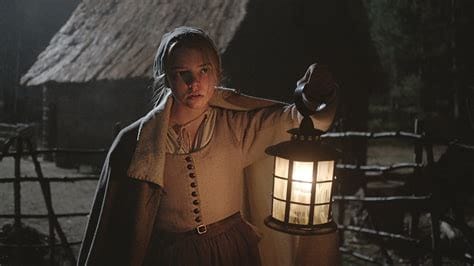
Protestantism, Psychosis, and the Devil's Daughter in Robert Eggers' The Witch
Robert Eggers' 2015 film The Witch: A New England Folktale is one of the rare horror films that earns the right to be called theological. Its terrors are not the terrors of the slasher genre, nor even the supernatural haunted-house variety. They are the terrors of a particular and devastating idea: that the universe may be precisely as Calvin described it, that the soul may genuinely be depraved, and that the God who alone could redeem that depravity has chosen, inexplicably, to remain silent. Set in 1630s New England and drawn meticulously from period documents, court records, and Puritan devotional literature, the film functions simultaneously as historical reconstruction and as a kind of theological trap — one that springs shut on every character in the story, and potentially on the viewer as well.
The film has attracted substantial commentary, most of it organized around a single axis of interpretation: is the supernatural evil in the story real, or is it the projection of a family disintegrating under isolation and religious mania? This is, on its surface, a reasonable question. But it is also, I will argue, the wrong question — or at least an incomplete one. The more disturbing possibility that The Witch holds open is that both things are simultaneously true, that the supernatural evil is real and is also, in a meaningful psychological sense, generated from within the family itself. Specifically, from within its eldest daughter.
My argument is this: Thomasin is the witch of the forest. Not in the reductive sense that she is hallucinating or that the film is a psychological thriller in disguise — Eggers is too committed to his folkloric materials for that, and the film is too careful to sustain a simple rationalist reading. Rather: Thomasin is the witch in the sense that she is the vessel through which the family's accumulated spiritual corruption finds its outward, supernatural form. She is the agent of the evil, acting under a dissociative psychosis produced by the unbearable contradictions of her Puritan existence — the eldest daughter of a hyper-Protestant family, too intelligent for submission and too devout for apostasy, caught between a theology of total depravity and a human hunger for selfhood that the same theology has no room to accommodate. The witch of the wood is not some external entity who descends upon an innocent family. She is what Thomasin becomes when the system that made her has no further use for her.
To understand how this reading works, we need to understand the system that made her.
The Reformation at the Edge of the World
The Witch opens with what looks like a trial but is, in fact, an expulsion. William, the patriarch, stands before the leaders of a Puritan plantation and refuses to submit. His precise theological disagreement with the community is never spelled out, which is itself one of the film's sharper historical observations. By 1630, the arguments that divided Protestants from one another had proliferated to the point where the specific doctrinal fault line mattered less than the structural fact of the argument itself. The Protestant impulse, the insistence that individual conscience before scripture trumps institutional authority, had been so thoroughly internalized that it could not be turned off when it threatened to fragment the new institutions that same conscience had built.
This is the fundamental irony that hangs over everything in The Witch, and it is worth dwelling on. The Puritans who founded Plymouth Colony and the Massachusetts Bay Colony had themselves broken from the Church of England on exactly the grounds William invokes against the plantation council: that the institution had departed from the pure gospel, that true conscience could not be bound to corrupt authority. Martin Luther's most famous utterance — my conscience is captive to the Word of God; I cannot and will not recant — had effectively installed a theological self-destruct mechanism at the heart of the Protestant project. If the right of individual scriptural conscience is absolute, then no Protestant authority is ever truly safe from the next dissenter who reads the same Bible differently. The Reformation's genius was also its poison.
William is that next dissenter. He has apparently arrived in New England as part of the great wave of Puritan emigration of the 1630s, and he has found that the new church in the new world is as capable of compromise and error as the one he fled. He frames his stand in the grandest possible terms — the pure and faithful dispensation of the gospel, the Kingdom of God — and the plantation council frames their rejection of him in equally grand terms: pride, dishonor, rebellion against the Commonwealth. Both sides are probably telling the truth. The film is careful to make William simultaneously sympathetic and self-deceiving. His pride is genuine, and his theology may be genuine too, and The Witch is too honest to assure us that these things are incompatible.
What William creates by leading his family into the wilderness beyond the plantation's boundary is something the film's most astute commentators have called a church of two: a family that is its own congregation, with no community, no oversight, no sacramental life beyond the prayers they say in their farmhouse. He has enacted the logic of the Reformation at its most extreme: splintered away from the splinter group, until the unit of the church is no small thing as a single household, alone in a forest that the Puritan imagination had populated with demons before anyone arrived to live next to it. In splitting from the plantation, William has not escaped the wilderness of New England. He has created a wilderness within the wilderness.
And yet. There is something almost magnificent about William in those opening scenes. He is a man who means what he says. The leaders of the plantation want to silence him, and he will not be silenced. He is banished and yet he chooses to regard banishment as his own act of will: I would be glad on it. The Protestant in him has metabolized the exile as freedom. He rides into the forest with his family singing Psalm 111, and his face, beside Catherine's, wears something that looks like triumph.
He will spend the rest of the film learning what that triumph actually cost.
Total Depravity and the Impossible Child
Calvinist theology rests on five doctrines, the first of which is total depravity: the conviction that the fall of Adam has corrupted not merely the human will but the human capacity to perceive truth, desire goodness, or orient oneself toward God. The heart is deceitful above all things and desperately sick. Every inclination of the human heart is evil from childhood. These are not hyperbolic rhetorical flourishes in the Puritan reading of scripture; they are literal anthropological facts. The self, unassisted by grace, is a site of perpetual corruption.
The second of Calvin's doctrines — unconditional election — makes this worse in a specific, psychologically devastating way. If the soul is totally depraved, and if salvation is the free sovereign act of God extended only to those he has chosen before the foundation of the world, then the individual soul has no means of verifying its own election. You cannot look inward and find grace there, because the very faculty with which you look is corrupted. You cannot accumulate merit, because merit is a Catholic error. You can only examine the evidence of your life for signs — and those signs are notoriously ambiguous, particularly in a world where disaster keeps arriving and the crops keep failing and the baby keeps screaming in the night.
This is the atmosphere that The Witch breathes. The family's first act upon reaching their new homestead is prayer. Their second act — Thomasin's — is private confession: may I confess I've lived in sin, but I beg thee for the sake of thy son, forgive me. She is perhaps sixteen. She is already cataloguing her sins. What sins does a sixteen-year-old Puritan girl accumulate? The film never says, and it doesn't need to. Under the Calvinist anthropology she has absorbed since infancy, simply being conscious is sufficient grounds for confession. The flesh is weak. The inclinations of the heart are evil. Every thought, every desire, every flicker of anything that could be called selfhood outside of God is evidence of the corrupt nature she inherited from Adam.
This is the system Thomasin lives inside. She is the eldest daughter of a family with no surplus and no servants, which means she functions as a second mother without the authority of one. She is old enough to be a sexual being — her younger brother Caleb's pubescent gaze makes this visible — in a theological framework that has no categories for female sexuality except sin and matrimony. She cannot leave. She cannot speak freely. She is accused of things she hasn't done and expected to absorb the accusation in the spirit of penitence that her faith demands. Every time she opens her mouth to defend herself, the defense sounds — in the moral grammar of her community — like pride, which is the ur-sin, the sin that expelled Satan from heaven, the sin that William himself confesses as his fatal flaw in his final prayer.
The psychological trap is total. She is guilty when she submits and guilty when she resists. She is a child and she is expected to be a woman. She is a woman and she is expected to be a child. The only thing the system cannot afford to give her is a self.
Something has to give.
The Witch's Work: A Closer Reading
The film presents Samuel's disappearance as the witch's first act. We watch the infant vanish from Thomasin's care while she plays peek-a-boo at the edge of the wood, and we are shown a brief, terrible glimpse of an old woman — the witch of the forest in her classical form — bearing the child away to do what witches in the folklore of the period do with unbaptized infants. The flying ointment, the blood, the desecration. It is presented as fact. The supernatural is real.
But Eggers is too careful a filmmaker to let that presentation simply close the question. Thomasin is the last person to have been with Samuel. Thomasin is the one who cannot account for him. The family's immediate, anguished conclusion is that a wolf took him, but the audience's privileged glimpse of the witch comes at a curious remove — we see what seems to be the act, without the context that would allow us to know who performs it. The witch and Thomasin do not share the frame. They never do, until the end of the film, when Thomasin walks to join the coven and becomes, definitively, what she has been all along.
Consider the logic of the thing. An unbaptized infant, taken from the care of its eldest sister, ground into the material of a witch's ointment. One of the most persistent elements of early modern witch trial testimony — the kind of testimony Eggers drew directly from in writing the script — was the claim that witches used the fat of murdered children, particularly unbaptized ones, to make the unguent that allowed them to fly. The baptism detail is not incidental. Samuel has not yet been baptized because William, in his pride and isolation, has placed his family beyond the reach of any church that could perform the sacrament. The infant's vulnerability is the direct consequence of his father's hyper-Protestantism. And it is Thomasin, the daughter of that pride, the scapegoat of that family, who is alone with him when he disappears.
Caleb's encounter in the forest follows its own disturbing logic. Caleb is fifteen or sixteen, old enough for his body to have developed desires that his theology can only name as corruption. The film makes his physical awareness of his sister quietly, horribly clear — a lowered gaze, a lingering attention that crosses into something it should not be. He follows Thomasin into the forest. He becomes separated from her. He arrives, alone, at the hut of the witch, who appears to him in seductive form. We do not see what happens inside the hut. We see Caleb stagger home naked, in trance, and we watch as, in his dying delirium, he speaks in tongues and has something removed from his throat: an apple.
The apple is the film's most concentrated symbol. John Milton, writing in the same century, had established the apple as the forbidden fruit of Eden, and The Witch deploys the image with full awareness of its weight. Before Caleb's encounter in the forest, William has already introduced the apple as a figure for deception: he sends Caleb to lie to Catherine about where they have been, and the cover story is that they went looking for apples. The first lie of the family's disintegration is dressed in Edenic fruit. When Caleb returns from the forest with the witch's apple lodged in his throat, he is carrying the emblem of original corruption in its most immediate form — first fruits not of the promised land but of the wilderness, not of blessing but of destruction.
The biblical Caleb — the one sent by Moses to scout Canaan — went from the wilderness into the land of abundance and returned with fruit to prove its goodness. The Caleb of Eggers' film reverses this exactly: he goes from the farm into the wilderness, and he returns carrying the fruit of a curse. It is one of the film's most elegant structural moves. But it does not quite press upon the identity of the figure who seduced the boy in the forest. The witch appears to Caleb in a form that is young, beautiful, and available. She is the inversion of everything his religion has told him to expect from a woman, which is to say she is the image of his desire given a body and a door.
The question the film allows you to ask, without answering it, is whether the young woman who emerged from the hut in the forest was the witch of the wood in some entirely separate supernatural body — or whether she was, in the dissociated phenomenology of a mind coming apart, Thomasin herself. Caleb cannot tell his sister from a demon. His faith has taught him that the desires he feels for her are demonic. His sister is the person he most fears and most wants in the same gesture. The forest is the place where the unconscious becomes visible.
Thomasin does not need to have consciously led her brother to the witch's hut. She does not need to have deliberately performed anything. Psychosis, particularly the variety induced by sustained theological terror and social isolation, does not require intention. It requires only an unbearable pressure and a mind that finds, at the edge of its endurance, a way to exteriorize what it cannot contain.
The Scapegoat Economy
The family's dynamic, before the supernatural even enters the picture, is already organized around Thomasin as its designated sinner. This is not merely incidental cruelty on the part of the other characters — it is structurally necessary. A family living under the theology of total depravity, in isolation, facing material disaster, needs somewhere to put the guilt that the theology insists is present in all of them. William cannot be the vessel for that guilt because he is the patriarch and the spiritual authority. Catherine cannot sustain the family if she is broken. The twins are too young. Caleb is the son. Thomasin is the eldest daughter, which is to say she is the most expendable person with the least institutional protection, and the one whose emerging sexuality provides the readiest evidence of the corrupt nature that everyone in the household is, in fact, struggling with.
The twins accuse her of being a witch before anything clearly supernatural has touched her. Their accusation has the flavor of something they've been told, or something they've intuited from the atmosphere of blame that surrounds her. Catherine's grief over Samuel collapses immediately into accusation against Thomasin: who else was there, who else could be responsible. William hesitates, but William is already drowning in his own pride, and the easiest solution to his inability to feed his family or protect his children is to locate the problem in his eldest daughter's sinfulness rather than his own judgment.
The scapegoat logic is ancient and well-documented — René Girard built an entire anthropological framework around it — but it has a particular virulence in Puritan households because the theology gives it such perfect cover. Thomasin is sinful. Everyone in the family is sinful. But her sinfulness is uniquely visible, uniquely available for the kind of scrutiny that cathects the family's collective guilt onto a single point. She is the witch because someone has to be the witch, and the family's spiritual economy cannot survive if it turns out to be everyone.
What the film asks us to consider is whether, at some point in this process, she becomes what she has been accused of being — not by signing a book, not by a deliberate Faustian bargain, but by the simpler and more terrible mechanism of a human consciousness that has no other available identity. You can only be called a witch so many times, in a system that insists you examine your own heart for evidence of your corruption, before the accusation finds the thing it was looking for. Not because the accusation was correct, but because the mind, under sufficient pressure, will manufacture the reality it has been most persistently told to expect.
This is not a metaphor. The historical record of the witch trials — the Salem proceedings of 1692, which Eggers draws on as historical background even though his film is set sixty years earlier — shows repeatedly that the accused women often came, over the course of their interrogations, to believe themselves guilty. The system of confession, examination, and communal verdict was extraordinarily effective at producing the very guilt it claimed to be detecting. Thomasin's psychosis, if we want to call it that, is not an individual failure of mental health. It is what the system produces in the person it designates as its spiritual dustbin.
William's Pride and the Problem of Protestant Excess
William's final confession is the film's theological pivot point. Lying in the farmyard, gore-slicked, looking at the body of his wife whom he has just killed in self-defense, he prays: I am infected with the filth of pride. He has arrived, at the last possible moment, at the insight that his entire spiritual autobiography has been an exercise in grandiosity dressed as righteousness. His defiance of the plantation council, his march into the wilderness, his insistence on his private conscience against every institutional check — all of it, he now sees, was not faithfulness to Christ but fidelity to himself, with Christ as the flag he flew over an essentially personal empire.
William is a Luther figure — but Luther without the broader church that eventually contained and channeled the Reformation's energy, Luther at the extreme end of the Protestant logic where the principle of individual conscience, taken to its terminus, dissolves every institutional bond and leaves the individual alone with God and the wilderness. The trouble is that the wilderness is not God. The wilderness, in the Puritan moral geography, is precisely the place where God is absent and the devil operates freely. By insisting on his private conscience over every communal check, William has walked his family directly into the devil's domain and told them it was the promised land.
Robert Eggers is not making an anti-Protestant argument in any simple polemical sense. He is making a more historically specific and therefore more interesting observation: that the Protestant insistence on the individual conscience, the very thing that made the Reformation a genuine liberation movement, contains within it the seeds of a recursive splintering that can end in total isolation. The settlers left England for New England. William left the plantation for the wilderness. Thomasin will leave the family for the coven. Each departure is framed, at the moment of its occurrence, as a kind of freedom. Each departure produces a smaller and more precarious community until finally there is only one person, alone in the dark, with the devil's hand on her shoulder.
The coven Thomasin joins at the end of the film is, in this light, a grotesque parody of the church William was trying to build: a community, an initiation, a shared body of practice, a pact that binds its members together. It offers everything the plantation offered and that William threw away — belonging, purpose, participation in something larger than the isolated self — except that its sovereign is not Christ but whatever entity speaks through Black Phillip.
Black Phillip is the film's most concentrated image of the demonic, and he is also its most darkly comic one. He is, to all appearances, a goat. The twins have been communing with him throughout the film; Caleb's dying vision seems to involve him; and it is he who, in the film's final movement, speaks to Thomasin in a voice that is clearly masculine, cultivated, and entirely comfortable in its authority. Wouldst thou like to live deliciously? The question is not a temptation in the dramatic sense — it is almost bureaucratic, a human resources interview for a position that has been vacant for some time. He already knows the answer. Thomasin's willingness to sign the book, to join the coven, to take her place among the levitating figures in the firelit forest, is not the moment when she falls. It is the moment when the fall is acknowledged and celebrated.
Catherine, Job's Wife, and the Theology of Desertion
Before we can return to Thomasin's ending, we need to sit with Catherine — the film's most heartbreaking figure, and the one whose spiritual collapse is rendered with the most theological precision. Catherine identifies herself, in her grief, with Job's wife: the woman whose suffering hardened her against God rather than driving her toward him. Job's wife's counsel to her husband — curse God and die — is the scripture's most compressed image of a faith that has curdled into despair, and Catherine recognizes it in herself without being able to stop it.
What makes the identification devastating is that Catherine's despair is entirely reasonable. She has lost two children, possibly three, to the wilderness her husband insisted on. Her eldest daughter is, by the logic of the community she lives in, a witch. Her surviving son is dying in front of her in a state that looks exactly like demonic possession. And the God she has devoted her life to is, as far as she can tell, entirely absent. Not distant. Absent. The silence of heaven in The Witch is not the ambiguous silence of a God who moves in mysterious ways — it is the silence of an empty room.
When the demons masquerade as her dead sons and offer her comfort, she accepts it unquestioningly. This is exactly what the Bible forbids. Deuteronomy's explicit prohibition against consulting the dead, the cautionary tale of Saul and the Witch of Endor — but Catherine has lost the capacity to care what the Bible forbids. She has reached the point that the theology she was raised in had no good answer for: she believed, she obeyed, she submitted, and God did not come. The figures of Caleb and Samuel that come to her in the night are almost certainly demonic simulacra, but what difference does it make to someone whose faith has collapsed entirely? The counterfeit comfort of a demon is warmer than the genuine silence of heaven.
Catherine's story and Thomasin's are mirror images in this respect. Both women reach a point where the theology has failed them so completely that they will accept any alternative. Catherine accepts the false comfort of the devil's puppets because she is broken. Thomasin accepts the devil's offer because she has been systematically stripped of every other option. The difference is that Thomasin's acceptance is presented, in the film's final image — the levitation, the ecstasy, the firelight — as something that looks almost like joy. This is the film's cruelest move: the one moment that resembles liberation is also the moment of ultimate damnation. Or is it? The film will not decide for you.
The Witch's Inheritance: What Thomasin Becomes
The reading I am proposing requires us to hold two apparently contradictory things in mind simultaneously. The first is that Thomasin is genuinely innocent — she has been wrongly accused, wrongly blamed, wrongly positioned as the family's spiritual scapegoat — and that this innocence is morally real and historically grounded in the documented injustice of the scapegoat dynamic. The second is that she is the witch: that the murders of Samuel and the spiritual destruction of Caleb can be laid at her door, not as evidence that the accusations against her were correct all along, but as evidence that the accusations, sustained long enough and pressurized enough, created the very thing they claimed to detect.
These two things are not actually contradictory. They are the same thing looked at from different angles. Thomasin is innocent and Thomasin is the witch because the witch is what innocence becomes when a system decides it has no use for innocent girls.
The psychosis I am describing is not a clinical condition that could have been diagnosed and treated. It is a specific form of spiritual and psychological collapse produced by a specific set of conditions: a theology of total depravity that gives the mind no stable ground to stand on, a family under material crisis that needs a guilty party, an adolescent girl with no sanctioned identity outside submission, and an isolation so complete that there is no external reality to push back against the internal one. Under these conditions, the boundary between what is imagined and what is done, between the desire for destruction and the act of destruction, between the accusation and the accused, becomes unstable in ways that the surrounding community reads as witchcraft and that we might read as psychosis, but that the film insists on holding as both simultaneously.
There is a moment late in the film when Thomasin, alone in the farmhouse after her mother's death, sits at the table with an expression that the film's admirers have tended to describe as shell shock or exhaustion. It is more specific than that. She is sitting in the ruins of everything that defined her — the family that accused her, the father who could not protect her, the faith that condemned her before she had done anything to be condemned for — and she is, for perhaps the first time in her life, entirely without obligation. The bell summons her. The voice offers her the thing that the theology of total depravity had, by design, never offered: a self. An identity. A life that is hers to possess and inhabit. Wouldst thou like to live deliciously?
The question is not what any reasonable person would want. It is what an exhausted, psychotically bereaved young woman wants when every other option has been stripped away. The devil does not need to tempt the strong. He needs only to offer the obvious to those whom God's people have reduced to nothing.
The Silence of God
There is a final theological problem in The Witch that no reading of the film can avoid, and it is the one that makes the film genuinely disturbing rather than merely horrific. If the devil is real in this film — and he is, he speaks, his agents perform real supernatural acts — then God is real too. And God has said nothing. He has not intervened. He has not sent any counter-voice to oppose the one that offers Thomasin the book. He has not, as far as the film is prepared to show us, done anything except remain absent while a family destroys itself in his name.
The problem of divine hiddenness — why God feels silent when he is supposed to be present — is not a problem Eggers invented, and not one that he pretends to answer. The Psalms are full of it; Job's entire drama is organized around it; Catherine's lament — I fear I cannot ever feel that same measure of love again — is its most personal expression in the film. The theological tradition has various answers: God's ways are not our ways, suffering is the discipline of love, the cross is where divine silence is most fully revealed as the deepest possible speech. These answers are real and have sustained billions of people. The Witch does not refute them. It simply declines to offer them, and watches what happens to the people who needed them and couldn't find them.
What happens is that the devil fills the silence. Not because the silence proves God's absence, but because the silence is experienced as absence by people in extremis, and experienced absence is functionally identical to actual absence. The demonic does not need to defeat God. It needs only to be louder, more immediate, more tangible, more willing to show up when called. Wouldst thou like to live deliciously? The voice of the devil in this film is the voice of a god who answers. The tragedy is not that this is sufficient. The tragedy is that, for Thomasin, by the time the question is asked, it is.
The levitation at the end of the film — Thomasin rising naked through the trees in a state of what appears to be pure ecstasy, joining the coven in a moment that looks, visually, exactly like an ascension — is the film's final theological joke. It has the structure of a miracle. It has the emotional quality of a rapture. Its meaning is precisely the inverse of both. The girl who rises through the New England trees is not going to heaven. She is going to the only place that was willing to have her. Whether we call what she experiences there liberation or damnation depends entirely on who we think deserved her — the God who stayed silent or the devil who picked up the phone.
Conclusion: The Witch and Her Makers
The Witch is, among other things, a film about what a culture does when it decides that a girl's inner life is inherently dangerous. The Puritan theological framework did not invent misogyny, but it gave it a particularly lethal set of conceptual tools: the doctrine of total depravity made every female desire evidence of corruption; the impossibility of verified election made every spiritual crisis potentially evidence of reprobation; the isolation of the frontier removed every structural check on the family's capacity to consume itself. Thomasin moves through this framework as its designated casualty, and the film's horror is not that the witch takes her. The horror is that the witch was already there, assembled from the raw material of her impossible position, waiting in the wood.
The interpretation I have been developing here is not, strictly speaking, supported by anything Eggers has said publicly about the film's intentions — and it may be that a director who has been so careful about period accuracy would resist a reading that imports twenty-first century psychological frameworks into seventeenth-century material. But the films themselves are not historical documents. They are contemporary works of art made with historical materials, and The Witch is too intelligent a film to be only what its surface presents. The witch in the woods is real. Thomasin is the witch. Both of these things are true, and the space between them is where the film lives.
When Thomasin signs the book, she is not losing something she had. She is claiming something she was never permitted to name. The coven is the nightmare image of the community the plantation could have been: women together, in the dark, practicing a kind of power, however monstrous its source. It is the final, devastating inversion of William's project — the family church of two, splintered down to one, has found its communion at last. But it is a communion of destruction. And the girl who rises through the trees, ecstatic, has paid for that ecstasy with everything she was, and everything she might have been, in a world that had chosen differently.
The witch is real. The witch is Thomasin. The witch is what they made her. These three facts are the film's indivisible horror, and no one who has truly looked at it will find it easy to decide which of them is the most terrible.
Member discussion: