
A Sacred Drama of Darkness
Post 0 — The Invitation
This is the first in a fourteen-part series tracing the villain's arc across the full sweep of world literature and myth — from Vedic India through Mesopotamia, Egypt, Greece, the Hebrew Bible, Celtic and Norse Europe, medieval Christendom, the Romantic rebellion, and the long arc of cinema from German Expressionism to the MCU. The series reads each tradition on its own terms, measures each against the others, and asks a question that none of them, alone, fully answers: what is the villain's journey, and why has every civilization that produced great literature been unable to leave it alone? New essays publish weekly. A glossary of key terms appears at the end of each installment.
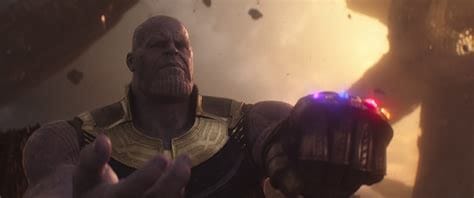
There is a moment in Avengers: Infinity War that the film's creators almost certainly did not intend as philosophy, but that functions as philosophy nonetheless.
Thanos has done what he set out to do. Half of all life is gone. The moral architecture of the film has been organized entirely to prevent this outcome, and it fails. The heroes do not arrive. The plan does not hold. The narrative promise — so familiar it is usually invisible — breaks.
And then the film does something more unsettling than the destruction itself. It allows him to rest.
We see him alone, seated before a quiet landscape, watching a sunrise. His expression is not triumph. It is not relief. It is something more difficult to name: a kind of completion. Not moral vindication, not narrative approval, but the unmistakable impression that something has reached its end.
Audiences did not know what to do with this. But they recognized it.
The response was neither simple revulsion nor simple sympathy. It was a more unstable recognition: that the figure designated as the villain had, in some sense, arrived — and that the story, whatever else it intended, had granted that arrival a form of narrative legitimacy. Not because his cause was just. The film does not argue that. But because his commitment to that cause had a quality of totality that we recognize, when we are being precise, as something structurally distinct from mere evil.
Something closer to terrible coherence.
This moment did not create a new cultural pattern. It revealed one already underway.
Tony Soprano was constructed as a cautionary figure. He became instead a site of sustained attention — through which viewers processed questions about power, loyalty, violence, and self-deception that the show's official moral posture could not fully contain. Walter White was written as a tragic descent. He became, over time, the locus of an uncomfortable recognition: that his final acknowledgment — I did it for me — did not function primarily as confession, but as clarification. Magneto has, for decades, articulated a reading of history that the stories surrounding him do not refute so much as contain. Killmonger names the violence embedded in cultural institutions that the narrative cannot meaningfully answer without destabilizing itself.
These are not isolated cases. They form a pattern — and the pattern is accelerating.
We are living through a period in which the figure designated "villain" has become one of the central carriers of serious narrative weight in popular storytelling. Not because audiences have lost the ability to distinguish right from wrong. The appetite these figures satisfy is not for the erosion of moral distinction. It is for something more demanding: the recognition that the figure designated as villain often carries forms of intensity, clarity, and commitment that the designated hero does not.
This is not a claim about moral superiority. It is a claim about narrative and philosophical function.
The villain, in these cases, does not merely oppose the hero. He articulates a position about the world and inhabits it without retreat. He refuses simplification. He accepts consequences. Whatever judgment we ultimately make of that position, it possesses a structural integrity that the surrounding narrative is forced to negotiate rather than dismiss.
What the culture is registering — before it has fully developed the language to say so — is that the category "villain," as it is commonly used, compresses something that exceeds it. That the figure to whom we assign that label is doing more than we have permitted ourselves to name.
This raises the question that drives the entire series.
If such figures recur across narratives, across genres, across centuries — if they reliably carry this kind of structural weight — are we observing a series of anomalies? Or are we encountering something that has always been there, that tradition after tradition has encountered, and that no tradition has fully succeeded in explaining away?
The modern fascination with the morally complex villain demonstrates that the pattern is visible. It does not, by itself, tell us what the pattern is for.
This series begins from the proposition that the pattern is neither new nor accidental — and that the question has been asked before, with extraordinary sophistication, in traditions that the contemporary conversation has barely begun to consult.
Long before Hollywood arrived at Thanos or prestige television arrived at Walter White, the Vedic tradition — in the Purāṇas, the Mahābhārata, and the Rāmāyaṇa — had developed what may be the most architecturally complete account of the villain's journey ever produced: a framework in which the adversary's hatred of the divine is itself a form of spiritual practice, and in which the villain's arc has its own stages, its own integrity, and its own destination. The Greek tragic tradition built an entire dramatic form around the figure who is, in every functional sense, the villain of the moral order — and discovered, in doing so, that such a figure possesses a dignity the moral order cannot confer and cannot revoke. The Norse tradition produced in Loki the most complex adversarial figure in any European mythology, and in Ragnarök an eschatology in which the villain's rebellion terminates in the destruction of the cosmos itself — not as punishment, but as the fulfillment of a function built into creation from the beginning. The Hebrew Bible wrestled with an adversarial figure who operates within the divine court, whose opposition is a form of service. The Kabbalistic tradition mapped the structural necessity of darkness within the architecture of emanation. Shakespeare, Milton, the Romantics, Dostoevsky, and four centuries of Western literary labor produced the most psychologically granular account of the villain's interiority ever achieved in any tradition — an achievement that stands on its own ground.
Each of these traditions saw something. None of them saw everything. And the differences between what they saw are as revealing as the convergences.
This series follows that trail across its full length.
It proceeds on two intertwined lines of inquiry.
The first is cosmological. What did each tradition understand — at its deepest level — about the nature and function of the adversarial figure? How far did it pursue that understanding? Where did it stop, and why? And what does the stopping point reveal about the tradition's foundational commitments?
The second is political. How has the designation "villain" been used, across historical contexts, as an instrument of classification and suppression? Who is named as the adversary, and whose interests are served by that naming? The witch burned at the stake, the Jew expelled from Spain, the heretic destroyed by the institution that feared what the heretic knew, the Norse völva whose cosmological authority was reclassified as demonic by Christianization — these are political villains, manufactured by power to serve power.
These lines do not run separately. Their most revealing intersections occur where they converge: where the culture's officially designated "villain" is carrying some of the most complex and unsettling forms of insight available within the cultural moment, and the culture's officially designated "heroes" are doing their most intellectually dishonest and politically motivated work.
A third thread — the suppression of the erotic principle, the feminine, and embodied knowledge, and its relationship to the demonization of the villain — runs through both the cosmological and political threads rather than standing independently. It surfaces wherever the architecture demands it, and it will receive its fullest treatment when the series reaches the medieval period: the Kabbalah, the Inquisition, the witch trials, and Shakespeare.
What this series proposes is not that the villain is secretly the hero, nor that moral distinctions are illusory, nor that all traditions say the same thing. It proposes something narrower, and more difficult to dismiss.
That the figure we call the villain has carried, across multiple traditions, a distinct narrative and philosophical trajectory — one with its own internal coherence, its own stages, and its own possible conclusions — and that this trajectory has rarely been examined on its own terms. That every tradition that produced great literature encountered this trajectory, grappled with it, and was changed by the encounter. And that the contemporary appetite for the morally complex villain — the appetite that drives audiences to Thanos and Walter White and Tony Soprano and Magneto — is not a symptom of cultural decay.
It is a symptom of cultural recovery.
Something that has always been present in the deepest literary and cosmological imagination of every major civilization is pressing its way back to the surface. Not because the old frameworks failed, but because they succeeded — they succeeded so well at suppression that the suppressed thing is now exerting the kind of pressure that only long-buried truths exert.
The series that follows is an attempt to trace that pressure to its sources: to follow the villain's arc across every tradition that shaped it, to hold those traditions in honest comparison, and to discover what the comparison reveals.
What, exactly, is this figure doing?
And what follows, if we take that question seriously enough to pursue it to its end?
Glossary
Adversarial principle — The narrative and cosmological function of opposition itself, considered as a structural element within a tradition's understanding of reality, rather than as a mere moral failing.
Cosmological thread — One of the two primary lines of inquiry in the series: how each tradition understood the villain's nature, function, and ultimate destiny at the level of its deepest theological and literary imagination.
Dvesabhakti — (Sanskrit: "devotion through enmity") A concept developed within the Vedic tradition, particularly in Gauḍīya Vaiṣṇava theology, describing a mode of spiritual connection to the divine through opposition rather than love. Treated in full in Post 2.
Monomyth — Joseph Campbell's model of the universal hero's journey, presented in The Hero with a Thousand Faces (1949). The series' structural critique of the monomyth is the subject of Post 1.
Political thread — The second primary line of inquiry: how the designation "villain" has been used as an instrument of power — projected onto figures whose authentic knowledge, authority, or cosmological complexity threatened dominant institutions.
Villain's journey — The series' central concept: the proposition that the adversarial figure carries, across traditions, a distinct trajectory with its own coherence, stages, and possible destinations — a trajectory that is not reducible to the hero's journey seen from the other side.
Sources and Further Reading
Primary Sources
Anthony Russo and Joe Russo, directors. Avengers: Infinity War. Marvel Studios, 2018.
David Chase, creator. The Sopranos. HBO, 1999–2007.
Vince Gilligan, creator. Breaking Bad. AMC, 2008–2013.
Stan Lee and Jack Kirby. The X-Men #1. Marvel Comics, 1963.
Ryan Coogler, director. Black Panther. Marvel Studios, 2018.
Secondary and Comparative Sources
Joseph Campbell. The Hero with a Thousand Faces. Pantheon Books, 1949.
⸻
For Further Reading
Christopher Vogler. The Writer's Journey: Mythic Structure for Writers. Michael Wiese Productions, 1992.
Todd McGowan. Universality and Identity Politics. Columbia University Press, 2020.
Brett Martin. Difficult Men: Behind the Scenes of a Creative Revolution. Penguin Press, 2013.
Janardan dasa for Aetherium Arcana ~ तत् त्वम् असि
Member discussion: