
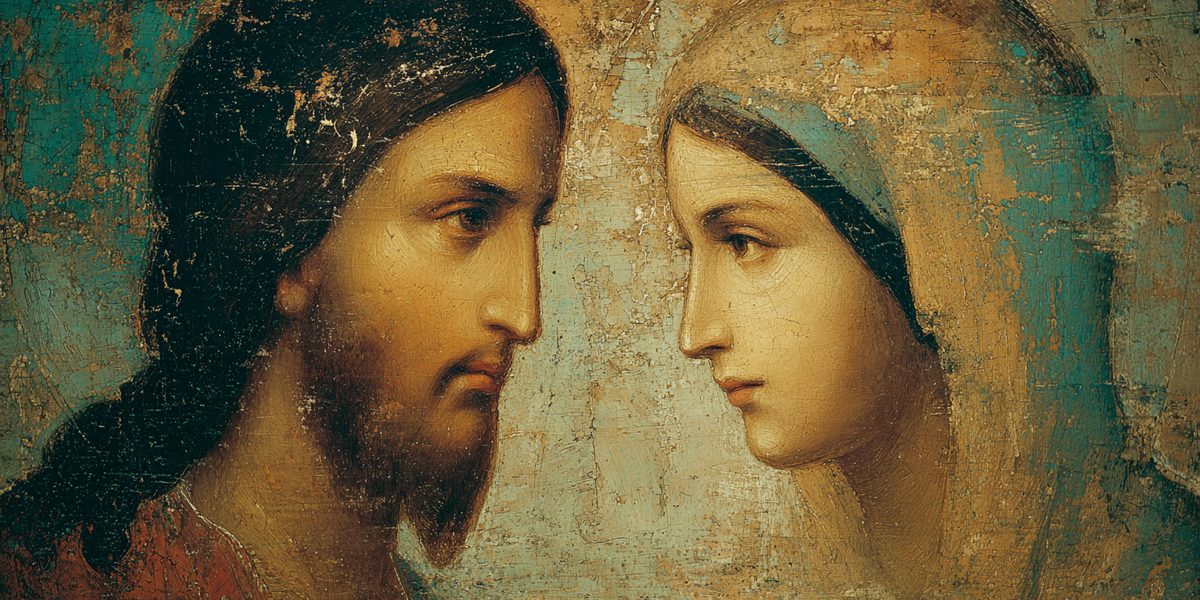
The Myth of a Monolithic Early Church
Imagine discovering a book of secret teachings from Jesus, where Judas is celebrated for helping Jesus shed his physical body, Mary Magdalene is the Chief Apostle, and salvation comes not through a cross, but through a secret password or a moment of profound, personal enlightenment. This may sound like historical fiction, but for centuries, this was the vibrant, competitive, and often chaotic reality of the early Jesus movement. When most people think of the beginnings of Christianity, they picture a unified group of followers, guided by Peter and Paul, diligently spreading the word with the four canonical Gospels (Matthew, Mark, Luke, and John) firmly in hand. This widely accepted idea of a single, unified, or "monolithic" Early Church is a powerful myth—a simplification created by the winners of a long, dramatic struggle for defining the faith. The New Testament provides us with an invaluable, yet ultimately limited, snapshot of this era; it gives us four main biographies of Jesus and a handful of apostolic letters. However, scholarship reveals that early Christianity was a massive marketplace of ideas, teeming with hundreds of groups, each fiercely loyal to their own version of Jesus and their own path to salvation, a world where some Christians believed Jesus was merely an adopted prophet, others believed he was a phantom who only appeared to eat and suffer, and countless Gospels circulated, telling sensational stories of Jesus' mischievous childhood or his secretive conversations with female disciples.
To understand this deep-seated diversity, scholars turn to the apocryphal gospels. The word "apocryphal" often carries a modern connotation of being false or heretical, but the original Greek term simply meant "hidden" or "secret." These texts were not necessarily intentionally suppressed; they were simply the documents that were ultimately not selected when Church leaders eventually gathered in the third and fourth centuries to formalize the canon—the official, authorized list of books that would form the New Testament. The modern study of these forgotten writings proves the early Jesus movement was profoundly pluralistic—a collection of many different "Christianities" rather than one single, unified expression. This material allows us to peer into the competing theological claims of the second and third centuries, showcasing the tumultuous process by which the definition of "Christian" was fought over and defined. The most dramatic evidence of this theological free-for-all comes from a movement that challenged the very core of the canonical story: Gnosticism. In the following sections, we will explore how the Gnostic Christians imagined an entirely different cosmos, a different method of salvation, and, most importantly, a radically different Jesus.
The Discovery and the Defining Text: The Gospel of Thomas
The scholarly view of the early Church shifted dramatically thanks to an accidental discovery in the Egyptian desert. In December 1945, near the town of Nag Hammadi, a local man unearthed a sealed clay jar. Inside, he found thirteen leather-bound papyrus books, or codices, filled with ancient Coptic script. This collection, known today as the Nag Hammadi Library, was a hidden treasure trove containing fifty-two diverse texts, mostly belonging to the very Gnostic movement that had been actively denounced and suppressed by the victorious Orthodox Church centuries earlier. These texts, buried around 390 CE, had effectively been sealed in a time capsule, preserving the voices of the communities that had been marginalized. Without the Nag Hammadi Library, much of what we know about Gnosticism would be limited to the hostile summaries written by their theological opponents.
The most famous and arguably the most important text in this collection is the Gospel of Thomas (GoT). Unlike the familiar canonical Gospels, the GoT is not a narrative that recounts the birth, ministry, death, and resurrection of Jesus. Instead, it is structured as a collection of 114 logia, or sayings, which begin with the powerful prologue: "These are the secret sayings that the living Jesus spoke and Didymus Judas Thomas recorded." Scholarship on the Gospel of Thomas is contentious, but its structure—a series of aphorisms—has led some experts to argue that its core material may be very early, perhaps preserving independent strains of oral tradition that circulated alongside the sources used by Matthew, Mark, and Luke. For the communities that championed it, the GoT’s authenticity rested on its claim to contain secret knowledge reserved for those who could understand its deeper meaning.
The Jesus presented in the Gospel of Thomas is fundamentally a wisdom teacher or sage, not a messianic martyr. His focus is entirely on the immediate, transformative power of his words, not on future judgment or a sacrificial death. His teachings consistently emphasize that the "Kingdom of Heaven" is not a future, heavenly destination, but a present reality to be realized internally. For example, in Logion 3, Jesus states: "If those who lead you say to you, 'See, the Kingdom is in the sky,' then the birds of the sky will precede you. If they say to you, 'It is in the sea,' then the fish will precede you. Rather, the Kingdom is inside of you, and it is outside of you." This unique emphasis on seeing and understanding the inner truth, which is the heart of gnosis, establishes a core premise that sets this Gospel—and the Gnostic worldview—radically apart from the canonical tradition.
The Gnostic Worldview: An Alternative Cosmology
To fully appreciate the Jesus of the Gospel of Thomas and other apocryphal texts, one must first grasp the Gnostic Christians’ radically alternative understanding of the universe. Unlike canonical Christianity, which teaches that the world was created "good" by an all-powerful, loving God, the Gnostic worldview is fundamentally dualistic and pessimistic about the material realm. This cosmology centers on the concept of Gnosis—a Greek word meaning "knowledge," but referring here not to academic facts, but to a deeply personal, intuitive, and saving revelation. Salvation, for them, was achieved by acquiring this gnosis, which alone could reveal the true nature of their reality and their own divinity.
In the Gnostic tradition, the universe is split between the perfect spiritual realm and the corrupt material world. At the top of existence is the True God, a remote, perfect, and completely unknowable supreme being, sometimes called the Monad. This True God did not create the world we inhabit. Instead, they posited a hierarchy of spiritual beings descending from the True God, and it was a lesser, ignorant, or even malevolent entity who botched the job of creation. This lesser creator, often called the Demiurge, is responsible for creating the flawed, sorrowful world of matter, including the human body. The Demiurge is effectively the blind, imperfect god of the Old Testament, contrasted with the supreme God of Jesus.
The plight of humanity, in this view, is that we possess a divine spark of the True God that has become trapped and imprisoned within the material, physical body created by the incompetent Demiurge. This divine spark is the true self, and it is subject to the ignorance and suffering of the material world. Consequently, the Gnostic mission is not about overcoming sin through repentance and faith, but about achieving escape. The true function of the Gnostic Christ is to serve as a supreme messenger, descending from the remote spiritual realm with the necessary secret knowledge—the gnosis—that awakens the trapped divine spark within the disciple. Once the disciple understands who they are, where they came from, and how to get back to the true spiritual source, they can shed the material prison and reunite with the True God. This unique understanding of the cosmos and the human condition explains why the Gnostic Jesus' teachings center almost entirely on enlightenment and wisdom, rather than on the importance of suffering, sacrifice, or structured church hierarchy.
The Gnostic Christ: Jesus as the Supreme Revealer
The Gnostic cosmological framework necessitates a radically different understanding of Jesus himself—a different Christology. If the material world is fundamentally flawed and salvation comes through esoteric knowledge, then the Christian concept of a God-man who sacrifices his physical body on a cross to save humanity becomes logically impossible and theologically unnecessary. This contrast defined the great struggle between emerging Orthodoxy and Gnosticism.
In canonical (or Orthodox) theology, Jesus is the Son of God, the Messiah, and the physical Incarnation of God himself. His saving act is the Atonement—his suffering, death, and literal resurrection—which redeems humanity from sin. The Gnostic understanding, however, focused not on his physical body but on his spiritual function. The Gnostic Jesus is seen primarily as the Supreme Revealer, the emissary sent from the True God to awaken the trapped sparks of divinity. To maintain the purity of this heavenly messenger, many Gnostic groups adhered to a doctrine known as Docetism (from the Greek dokeō, meaning "to seem" or "to appear"). This belief held that Jesus was a spiritual being who only appeared to be human; he did not truly suffer, bleed, or physically die on the cross. His body was an illusion, a temporary vessel used to deliver the gnosis.
This concept dramatically reshapes the narrative of other key apocryphal texts. The Gospel of Philip, for instance, centers on esoteric rituals and highly secretive symbolism, using metaphors like the "bridal chamber" to discuss spiritual union and initiation. This text hints at a highly ritualized community and reveals a Jesus deeply concerned with mysteries and hidden meanings. Even more powerful for understanding the diversity of the early movement is the Gospel of Mary, which presents a series of revelations given by Jesus only to Mary Magdalene after the resurrection. In this text, Mary is portrayed as Jesus’ most trusted and spiritually insightful disciple, the one who truly grasps his teachings. Her authority is explicitly challenged by male apostles like Peter, who doubts her claims, forcing the reader to witness the internal debates over Apostolic authority, spiritual insight, and gender roles that were playing out in the movement. In every one of these diverse Gnostic texts, Jesus’ ultimate value is not his sacrifice, but his role as the master key—the unparalleled teacher whose secret knowledge is the only means of spiritual liberation.
Legacy: The Significance of Diversity
The story of early Christianity is, ultimately, the story of which interpretation of Jesus won the day. As the second century CE progressed, the vast, competitive theological marketplace began to narrow. The diverse Gnostic gospels, with their multiple layers of secret knowledge and their emphasis on individual, esoteric enlightenment, were fundamentally challenging to any attempt to build a unified, organized, and public-facing religious institution.
The emerging leadership of what would become the Roman Catholic and Eastern Orthodox churches recognized this threat. Church fathers like Irenaeus of Lyons vehemently argued against Gnosticism, labeling it the first great heresy. His major arguments were threefold: first, Gnosticism undermined the physical reality of Jesus, making his suffering and death on the cross—the central saving act for the canonical tradition—meaningless. Second, by claiming salvation came through secret knowledge (gnosis), it bypassed the authority of the bishops and the necessity of communal church ritual. Third, Gnostic groups often allowed for female leadership, contradicting the hierarchical structure the emerging mainstream church sought to establish.
Ultimately, the canonical tradition won out, not just through theological debate, but through organization and unity. The four canonical Gospels, along with the letters of Paul, provided a standardized, accessible narrative of salvation that was preached openly and upheld by a growing, structured ecclesiastical hierarchy. Gnosticism, with its fractured groups and reliance on secret teachings, was largely driven underground, leaving behind only the damning accounts of its opponents—until the miraculous discovery of the Nag Hammadi Library in 1945 changed everything.
The enduring legacy of the apocryphal gospels is not that they provide hidden facts about the historical Jesus, but that they provide a crucial window into the genuine, tumultuous breadth of ways people attempted to make sense of him in the first centuries after his life. These rediscovered texts force us to recognize that the Jesus movement was born into a sophisticated Hellenistic world filled with deep philosophical debates over matter, spirit, and salvation. They remind us that the Christianity we know today was not a predetermined outcome, but the hard-fought result of competing claims over Christ, cosmology, and community. The Gnostic texts, therefore, are not just relics of an ancient faith, but key social documents that allow us to understand the true stakes involved in defining what Christianity would ultimately become.
ओम् तत् सत्
Member discussion: