
The Lost Argument Within Early Christianity
What is now called early Christianity did not begin as a unified system of belief moving steadily toward doctrinal clarity. It emerged instead within a field of active disagreement, interpretive experimentation, and competing claims about the meaning of a set of events that had not yet settled into the stable forms later centuries would take for granted. The retrospective image of a singular, continuous tradition—guarded by apostolic authority and clarified through councils—obscures a far more unstable beginning, in which multiple communities, texts, and teachers advanced sharply different accounts of what the life and death of Jesus signified and how that significance was to be accessed. The eventual dominance of what came to be called orthodoxy did not resolve this diversity so much as narrow it, consolidating one interpretive trajectory while relegating others to the margins under the category of heresy.
Within that suppressed plurality lies what can be described, with some caution, as the Gnostic critique of orthodox Christianity. The term “Gnostic” itself is an imperfect retrospective label, applied to a range of movements and texts that do not always cohere into a single doctrinal system. Yet across this diversity there persists a recognizable orientation: a privileging of knowledge understood not as propositional belief but as direct, transformative insight; an insistence that the deepest truths about human existence are accessible through interior awakening rather than external mediation; and a recurrent elevation of figures, symbols, and modes of understanding that later orthodoxy would either subordinate or exclude. These tendencies are not external impositions upon Christianity but developments from within the same intellectual and religious environment that produced the canonical texts themselves.
The critique, then, is not merely doctrinal but structural. It concerns the locus of authority, the nature of revelation, and the conditions under which transformation becomes possible. Where the emerging orthodox tradition increasingly located authority in publicly transmitted teaching, institutional continuity, and the affirmation of specific historical claims, the Gnostic materials and related apocryphal texts repeatedly relocate that authority inward, framing revelation as something disclosed within the individual consciousness rather than imposed from without. This shift has far-reaching consequences. It destabilizes hierarchical control, complicates the role of ecclesiastical mediation, and opens interpretive space for voices and perspectives that do not depend upon institutional sanction for their legitimacy.
Among the most significant of these are forms of feminine presence and authority that appear with striking consistency across the non-canonical materials and, more subtly, within the canonical texts themselves. In these sources, the feminine is not confined to symbolic representation or moral exemplarity but is frequently associated with knowledge, insight, and interpretive power. Figures such as Mary Magdalene emerge not merely as witnesses but as recipients and interpreters of revelation, sometimes in tension with male counterparts whose authority would later be formalized within ecclesiastical structures. Likewise, mythic and theological constructions centered on feminine principles—most notably the figure of Wisdom—encode a mode of understanding that is relational, generative, and transformative, rather than juridical or hierarchical. These elements do not constitute a fully articulated program of gender equality in any modern sense, but they do preserve a record of contested possibilities that were subsequently constrained.
To read these materials as a “feminist critique” in the contemporary sense would risk anachronism. Yet it is equally reductive to ignore the ways in which they preserve alternative configurations of authority and knowledge that resist the gendered limitations later imposed by orthodox consolidation. The value of the Gnostic and apocryphal traditions for the present inquiry lies precisely in this tension. They reveal that the eventual alignment of Christian authority with male-dominated institutional structures was not inevitable but the outcome of historical processes that selected among competing models of interpretation, community, and access to the divine.
This essay approaches the Gnostic critique not as a marginal curiosity or as a speculative detour from an otherwise coherent development, but as an integral part of early Christianity’s internal argument about itself. It examines how alternative texts and traditions articulate a vision of spiritual knowledge that is immediate rather than mediated, how they preserve traces of broader cultural and philosophical syncretism, and how they foreground forms of feminine participation that challenge later exclusions. The aim is not to replace one orthodoxy with another, nor to romanticize the heterodox materials as inherently more authentic or more just, but to recover the depth of the early debate and to recognize that what was excluded remains essential to understanding what was ultimately affirmed.
The Religious Field of the Early Mediterranean
The emergence of Christianity took place within a cultural and intellectual environment whose complexity is difficult to overstate. The Mediterranean world of the first and second centuries was not divided into neatly bounded religious systems but constituted a dense and permeable field of overlapping traditions, philosophical schools, ritual practices, and symbolic vocabularies. Greek metaphysics, Egyptian cosmology, Jewish apocalyptic expectation, and a wide array of mystery cults coexisted not as isolated domains but as interacting currents, shaping one another through processes of adaptation, reinterpretation, and synthesis. Within such a field, the formation of new religious movements did not occur through the invention of wholly unprecedented ideas, but through the recombination and reconfiguration of elements already in circulation.
Hellenistic philosophy provided one of the most significant of these elements. Platonism, in its various forms, had already established a conceptual distinction between the visible and intelligible worlds, between appearance and reality, that proved fertile ground for subsequent religious speculation. The notion that the material world might be a diminished or derivative expression of a higher, more fundamental order opened the possibility that salvation could be understood as a movement of ascent, a return of the soul to its origin. Stoicism, for its part, contributed a different but equally influential framework, emphasizing the immanence of a rational principle permeating the cosmos and the capacity of the individual to align with that principle through disciplined understanding. These philosophical traditions did not remain confined to elite discourse; they circulated widely enough to inform the symbolic and conceptual resources available to emerging religious movements.
Alongside these philosophical currents were the ritual traditions often grouped under the category of mystery religions. Cults devoted to figures such as Isis, Dionysus, and Mithras offered initiatory experiences structured around themes of death, transformation, and rebirth, frequently mediated through symbolic reenactment and the transmission of esoteric knowledge. Participation in these cults was not defined by exclusive adherence but could coexist with other religious identities, contributing to a cultural atmosphere in which religious belonging was fluid and layered. The emphasis on initiation and hidden knowledge in these traditions is particularly relevant, as it establishes a precedent for understanding religious truth not as universally accessible through public proclamation, but as disclosed progressively to those prepared to receive it.
Jewish religious thought, within which Christianity initially developed, was itself far from monolithic. Second Temple Judaism encompassed a range of sectarian positions, from the priestly concerns of the Sadducees to the legal rigor of the Pharisees and the apocalyptic expectations of groups such as the Essenes. Texts discovered at Qumran reveal communities engaged in intense reflection on cosmic dualism, divine revelation, and the interpretation of sacred history, often employing symbolic and visionary language that resonates with later apocryphal and Gnostic materials. The expectation of a transformative intervention by the divine, whether conceived in messianic or more cosmic terms, provided a shared horizon within which early Christian claims could be articulated and contested.
Within this plural environment, what would later be distinguished as “orthodox” and “Gnostic” Christianity were not yet separable as discrete entities. Rather, they represent different trajectories within a shared discursive space, drawing on common sources while emphasizing different aspects of the available symbolic repertoire. The use of philosophical language to articulate theological claims, the adoption of mythic structures to express cosmological ideas, and the integration of ritual practices into communal identity were features common to multiple strands of early Christian development. The differences that would later be formalized as doctrinal boundaries were, in their initial context, variations in emphasis, interpretation, and authority.
The syncretic character of this environment is particularly important for understanding the emergence of texts and traditions that do not conform to later canonical standards. Apocryphal writings, far from being aberrant deviations, often display a high degree of intellectual sophistication, engaging with contemporary philosophical debates and religious practices in ways that reflect their embeddedness in the broader culture. Their portrayal of figures such as Jesus frequently incorporates motifs recognizable from other traditions, not as acts of simple borrowing, but as attempts to articulate the significance of those figures within a shared symbolic language. The resulting texts may appear, from a later orthodox perspective, as hybrid or inconsistent, but within their original context they represent coherent efforts to navigate a complex intellectual landscape.
To recognize this pluralism is to reconsider the process by which certain forms of Christianity came to define themselves as normative. The eventual consolidation of orthodoxy involved not only the selection of particular texts and doctrines but the exclusion of others that were equally rooted in the same cultural and intellectual soil. The Gnostic materials and related apocryphal traditions thus preserve more than alternative theological positions; they bear witness to a moment in which the boundaries of Christian identity had not yet hardened, and in which multiple configurations of belief, practice, and authority remained viable. The critique they embody is inseparable from this context, arising not as an external challenge
Authority: Institution and Knowledge
At the center of the divergence between emerging orthodoxy and the materials later grouped under the category of Gnosticism lies a question more fundamental than any single doctrine: the question of where authority resides. The struggle is not simply over what is to be believed, but over who may claim to know, by what means that knowledge is acquired, and how it is to be transmitted. The eventual resolution of this question in favor of institutional authority was neither immediate nor uncontested. It was the outcome of a sustained negotiation in which alternative models of knowing and legitimating truth were gradually constrained.
The trajectory that would become orthodox Christianity increasingly grounded its authority in continuity—continuity of teaching, of leadership, and of historical reference. The appeal to apostolic succession functioned not merely as a claim about lineage but as a mechanism for stabilizing interpretation. To know rightly was to stand within a chain of transmission that could be traced back to those understood to have witnessed the foundational events. This emphasis on continuity was reinforced by the formation of a canon, which delineated a body of texts deemed authoritative and, by implication, excluded others whose interpretive possibilities exceeded the emerging boundaries. The consolidation of creeds further formalized this process, translating narrative and symbolic material into propositional statements that could be affirmed, taught, and defended. In this configuration, knowledge becomes inseparable from assent to publicly defined truths, and access to those truths is mediated through structures that regulate interpretation.
In contrast, the Gnostic and related apocryphal traditions repeatedly relocate the locus of authority away from external continuity and toward interior apprehension. Knowledge, in this framework, is not primarily the acceptance of a transmitted proposition but the recognition of a reality that is already, in some sense, present within the knower. The language of revelation in these texts frequently emphasizes disclosure rather than instruction, unveiling rather than argument. What is revealed is not only information about the divine but insight into the nature of the self and its relationship to a deeper ground of being. This mode of knowing resists codification precisely because it is not exhausted by any formulation; it is experiential, transformative, and often described in terms that exceed ordinary language.
The implications of this shift are substantial. If knowledge arises through direct apprehension rather than mediated teaching, the structures that claim to regulate access to truth are rendered provisional at best. Authority becomes distributed rather than centralized, contingent upon the capacity for insight rather than the possession of office. This does not eliminate the possibility of teachers or guides, but it alters their function. They are no longer the exclusive custodians of truth but facilitators of a process that ultimately unfolds within the individual. The distinction between those who know and those who do not is no longer secured by institutional position but by the presence or absence of a certain kind of awareness.
Such a reconfiguration inevitably generates tension with any system that depends upon stable boundaries and controlled transmission. The insistence that knowledge may arise outside sanctioned channels introduces an element of unpredictability that institutional structures are ill-equipped to accommodate. It also complicates the criteria by which legitimacy is assessed. If a claim to knowledge cannot be verified through conformity to established doctrine alone, then alternative forms of validation—experience, transformation, coherence with a broader symbolic framework—must be considered. These criteria are less easily standardized, and therefore less easily governed.
It is within this space that questions of inclusion become particularly acute. When authority is tied to office and lineage, access to that authority tends to reflect existing social hierarchies. When authority is tied to knowledge understood as direct insight, those hierarchies are at least partially destabilized. The apocryphal texts preserve multiple instances in which individuals who would later be excluded from formal leadership roles are depicted as recipients of significant revelation. This is not incidental. It reflects a model of authority in which the capacity to know is not predetermined by position, status, or gender, but emerges from engagement with a reality that is not owned by any institution.
The divergence between these two models—authority as continuity and authority as knowledge—does not admit of a simple resolution. Each addresses a genuine concern. The former seeks to preserve coherence and guard against fragmentation; the latter seeks to preserve immediacy and guard against ossification. The history of early Christianity can be read, in part, as the negotiation between these concerns, with the balance eventually tipping toward structures that could ensure stability across expanding communities. The Gnostic critique remains as a record of the alternative: a vision in which the legitimacy of belief is inseparable from the transformation of the knower, and in which the final ground of authority lies not in what has been received from the past, but in what is disclosed in the present.
The Feminine as Epistemology, Not Symbol
One of the most striking features of the apocryphal and Gnostic materials is the persistence with which feminine figures and feminine-coded principles are associated not merely with representation or devotion, but with knowledge itself. This association is not reducible to metaphor in any simple sense. It operates at the level of structure, shaping how insight is understood to arise and how it is communicated. In contrast to the increasingly juridical and hierarchical frameworks that characterize emerging orthodoxy, these traditions repeatedly encode a mode of knowing that is relational, generative, and transformative, and they do so through figures that later theological developments would tend to marginalize or reinterpret.
The figure of Wisdom, often rendered as Sophia, provides one of the clearest expressions of this dynamic. In these texts, Sophia is not a passive emblem of divine order but an active participant in the unfolding of reality. She is frequently depicted as the origin of movement, the initiator of processes that lead both to fragmentation and to restoration. Her actions are not always framed as unambiguously correct; indeed, her role often includes error, overreach, or descent. Yet it is precisely through these movements that the conditions for knowledge are established. The cosmos itself, in certain accounts, emerges from a disruption within the divine order that Sophia both embodies and seeks to repair. Knowledge, in this context, is inseparable from the recognition of that disruption and the participation in its resolution.
This portrayal carries significant implications for how epistemology is conceived. Knowledge is not presented as the accumulation of correct propositions about a stable reality, but as an engagement with a dynamic process in which the knower is implicated. The path to understanding involves recognition of one’s own condition, an awareness of estrangement or incompleteness, and a movement toward reintegration that cannot be achieved through external instruction alone. The feminine figure of Sophia thus becomes the site at which knowledge and transformation converge. She is not simply the object of knowledge but the condition under which knowledge becomes possible.
Such a framework stands in contrast to models that locate authority in fixed structures and define knowledge in terms of adherence to established formulations. In the latter, the feminine tends to be incorporated symbolically while remaining subordinate to the mechanisms that govern interpretation. In the former, the feminine principle operates at the level of method. It defines how knowing occurs, privileging receptivity, attentiveness, and relational engagement over assertion and control. This is not to suggest that these qualities are inherently or exclusively feminine in any essentialist sense, but rather that the traditions in question consistently encode them through feminine figures, thereby associating them with forms of authority that differ from those later institutionalized.
The consequences of this association become more visible when one considers how these materials portray the acquisition of knowledge. Revelation is often depicted as an intimate exchange, a disclosure that occurs within a relationship rather than through public proclamation. The language employed frequently emphasizes listening, receiving, and recognizing, rather than commanding or declaring. This mode of transmission resists standardization. It cannot be fully captured in creedal statements or enforced through hierarchical structures because it depends upon the disposition of the knower as much as upon the content of what is known.
In this light, the prominence of feminine figures in these traditions is not an incidental feature but an integral component of a broader epistemological orientation. The feminine is not merely present within the narrative; it is constitutive of the way the narrative understands knowledge to function. Where later orthodoxy tends to align authority with continuity, order, and doctrinal clarity, the materials under consideration preserve a parallel alignment of authority with insight, transformation, and relational depth. The tension between these alignments is not resolved within the early period but is instead managed through processes of selection and exclusion that privilege one model over the other.
To attend to the feminine in these texts, then, is not simply to recover overlooked characters or to highlight instances of inclusion. It is to recognize an alternative account of knowing that operates within early Christianity and that carries implications for how authority, revelation, and transformation are understood. This account does not displace the structures that came to dominate, but it does reveal that those structures were neither inevitable nor exhaustive of the possibilities available within the tradition.
Mary Magdalene and the Question of Authority
Among the figures who most clearly embody the tensions surrounding authority, knowledge, and legitimacy in early Christian literature, Mary Magdalene occupies a uniquely contested position. Within the canonical texts, she appears at crucial narrative junctures, most notably as a witness to the resurrection. Yet even in these accounts, her role is marked by a certain instability. She is both central and constrained, entrusted with a message that she does not ultimately control. The narrative grants her proximity to revelation while simultaneously reabsorbing that revelation into a structure that will be governed by others. It is in the apocryphal and Gnostic materials, however, that this tension becomes explicit, revealing not merely a literary ambiguity but an underlying dispute about who is authorized to know and to speak.
In texts such as the Gospel of Mary, Mary is not presented as a peripheral follower but as a primary recipient of teaching and as an interpreter of its meaning. The narrative situates her in the aftermath of the departure of Jesus, addressing a community marked by uncertainty and fear. In this context, Mary functions as a stabilizing presence, one who possesses insight into teachings that others have not fully grasped. Her authority is not derived from formal position or from participation in a publicly recognized chain of transmission, but from the content of what she has received and her capacity to articulate it. This immediately places her in a position that challenges emerging structures of leadership.
The conflict that follows is direct and unambiguous. Peter, who in later orthodox tradition becomes a foundational figure of institutional authority, questions both the legitimacy of Mary’s claim and the propriety of her role. The objection is not framed in purely doctrinal terms but carries an unmistakable social dimension. It concerns the appropriateness of a woman speaking with authority, of occupying a position that would disrupt established expectations about gender and leadership. Mary’s response, and the narrative’s implicit alignment with her, reframes the issue. The question is not who is permitted to speak according to prevailing norms, but who has genuinely understood. Authority is thus relocated from status to insight, from position to perception.
This pattern is not isolated. Other apocryphal texts similarly depict Mary Magdalene as a figure of interpretive significance, often in contexts where knowledge is transmitted privately and requires discernment rather than mere repetition. What is at stake in these portrayals is not simply the elevation of a particular individual but the preservation of a model of authority that is not reducible to institutional validation. Mary becomes, in effect, a test case for the broader question of whether knowledge can emerge outside sanctioned channels and whether such knowledge can claim legitimacy in its own right.
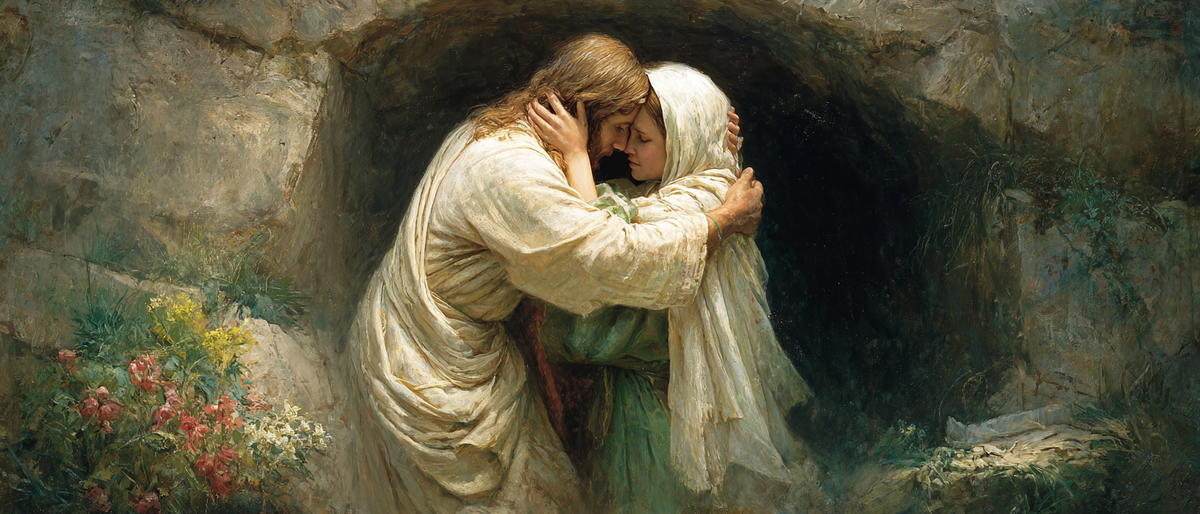
The tension between these models is already latent within the canonical accounts themselves. The Johannine narrative of the resurrection presents Mary as the first to encounter the risen Jesus, recognizing him in a moment that is both intimate and epistemically decisive. Her recognition precedes that of the male disciples, yet the narrative quickly transitions to a framework in which the implications of that recognition are mediated through others. The command that interrupts the moment—often translated as a prohibition against clinging—introduces a boundary that has been subject to extensive interpretation. It marks a shift from immediacy to distance, from personal encounter to a form of relation that can be more readily integrated into a broader communal structure. The episode thus encapsulates the tension between an unmediated apprehension of significance and the necessity, as later construed, of regulating that apprehension within defined limits.
To read the Magdalene traditions across canonical and non-canonical texts is to encounter a layered record of negotiation. On one level, there is the preservation of a memory in which a woman occupies a position of primary importance in relation to revelation. On another, there is the gradual reconfiguration of that memory to align with emerging patterns of authority. The apocryphal materials retain elements that the canonical tradition attenuates, not necessarily by direct contradiction but by emphasis and framing. They amplify the implications of Mary’s role, presenting it as a challenge to structures that would confine authority within predetermined boundaries.
The significance of this challenge extends beyond questions of individual status. It bears directly on the nature of knowledge itself. If Mary’s authority is grounded in her capacity to understand and to communicate insight, then the criteria for legitimacy shift accordingly. The focus moves from lineage and position to the quality of perception, from adherence to established formulations to the ability to articulate meaning in a way that transforms those who hear it. This does not eliminate the need for communal structures, but it redefines their function. They become spaces in which knowledge is recognized and tested, rather than mechanisms by which it is exclusively controlled.
In this sense, the figure of Mary Magdalene serves as a focal point for the broader Gnostic critique. She represents the possibility that authority might arise from a source that is not easily contained within institutional frameworks, and that such authority might manifest in forms that challenge prevailing assumptions about gender and legitimacy. The persistence of her presence across diverse textual traditions suggests that this possibility was not marginal but central to the early discourse. That it was subsequently constrained does not negate its significance; rather, it underscores the extent to which the formation of orthodoxy involved not only the affirmation of certain truths, but the regulation of who could claim to know them.
Women in the Canonical Texts: A Submerged Record
The non-canonical materials make explicit what the canonical texts often preserve in attenuated or indirect form: that women occupied roles of material support, social influence, and in certain cases, leadership within the earliest Christian communities. These traces are neither accidental nor insignificant. They represent a layer of the tradition that remains partially visible even after the processes of selection, redaction, and doctrinal consolidation that shaped the canon. To attend to them is not to impose an external interpretive framework, but to read the texts with an awareness of the tensions they contain.
The Gospel of Luke, in particular, offers one of the clearest acknowledgments of women’s participation in the ministry. It records that women accompanied Jesus and the disciples, providing support “out of their own means,” and names individuals who appear to have occupied positions of both financial and social significance. This detail, brief though it is, situates women not merely as passive recipients of teaching but as active contributors to the conditions that made the ministry possible. The economic dimension is especially important. Patronage in the ancient world conferred a form of influence that extended beyond material provision; it implied a degree of agency in shaping the activities and reach of the group being supported. That such patronage is explicitly attributed to women suggests a social reality more complex than later representations of uniformly male leadership might imply.
The Pauline corpus, read attentively, reveals an even more intricate picture. Several passages refer to women in roles that carry clear functional authority within early congregations. Individuals are identified as deacons, coworkers, and, in at least one contested but significant instance, as apostles. The language employed does not distinguish these roles as exceptional or anomalous. It reflects a working community in which participation is structured by capacity and circumstance rather than rigidly defined by gender. House churches, which formed the primary setting for early Christian gatherings, were often organized around domestic spaces, and leadership within those spaces frequently aligned with the person who controlled or hosted the household. In a number of cases, this would have been a woman, thereby situating her at the center of communal life and practice.
At the same time, the Pauline letters also contain passages that appear to restrict the role of women, emphasizing silence, submission, or exclusion from teaching authority. The coexistence of these contrasting positions within the same textual tradition has long been recognized as a point of interpretive difficulty. One approach has been to harmonize them by assuming a consistent underlying position that is variously expressed. Another has been to consider the possibility of layered authorship or later interpolation, suggesting that certain restrictive passages reflect developments in the community’s organization that postdate the earliest phase of its formation. Regardless of the resolution one adopts, the presence of this tension indicates that the question of women’s participation was not settled at the outset but was subject to ongoing negotiation.
This negotiation can be understood as part of the broader process by which early Christian communities adapted to changing social conditions. As the movement expanded and sought to establish itself within the wider Greco-Roman world, pressures toward conformity with prevailing norms would have increased. Public credibility, internal cohesion, and the desire to avoid conflict with established social hierarchies may all have contributed to a gradual redefinition of roles. In this context, restrictions on women’s public authority can be read not simply as theological imperatives but as strategic accommodations, attempts to align the emerging communities with expectations that would facilitate their survival and growth.
Yet even as these accommodations took shape, the earlier configurations did not disappear entirely. They remain embedded in the texts, visible in the names and roles that resist easy assimilation into a later, more uniform structure. The recognition of women as coworkers and leaders, the acknowledgment of their material and organizational contributions, and the narrative prominence afforded to figures such as Mary Magdalene collectively suggest that the early movement operated with a degree of flexibility that was subsequently narrowed. The canonical texts thus preserve, within their own boundaries, a record of possibilities that exceed the forms later codified as normative.
To describe this record as “submerged” is to acknowledge both its presence and its partial obscurity. It is not absent; it has not been erased. But it is often overshadowed by interpretive frameworks that privilege other elements, reading the texts through the lens of later developments rather than attending to the diversity they contain. Recovering this dimension does not require the rejection of the canonical tradition, but it does require a willingness to read it against its own internal tensions, to recognize that what appears as a unified voice may in fact be the product of multiple voices in conversation, and sometimes in conflict.
In relation to the Gnostic critique, this submerged record acquires additional significance. It provides evidence that the alternative configurations of authority and knowledge found in the apocryphal materials are not wholly external to the canonical tradition but resonate with elements already present within it. The distinction between orthodox and heterodox is thus less a matter of absolute difference than of emphasis and development. The canonical texts, when read in this light, become not only the foundation of a particular doctrinal trajectory but also a witness to the plurality from which that trajectory emerged.
The Body, Intimacy, and the Problem of Control
The question of authority and knowledge in early Christianity is inseparable from the problem of the body—how it is to be understood, how it mediates or obstructs access to truth, and how its presence complicates the regulation of religious experience. The canonical and non-canonical texts alike preserve moments in which knowledge appears not as abstraction but as encounter, not as doctrine but as recognition enacted within a relational and often embodied context. These moments are frequently marked by a tension between immediacy and restraint, between the impulse toward contact and the imposition of distance. It is within this tension that the problem of control becomes most visible.
The resurrection narratives provide a particularly concentrated instance of this dynamic. In the Johannine account, Mary Magdalene encounters the risen Jesus in a setting that is at once intimate and disorienting. Recognition unfolds not through argument or instruction but through the calling of her name, an address that collapses the distance between speaker and hearer into a moment of direct knowing. The scene carries a density that resists reduction to purely symbolic meaning. It is relational, embodied, and immediate. Yet it is precisely at this point of recognition that the narrative introduces a prohibition, often rendered as “do not cling to me.” The gesture toward contact is interrupted, and the encounter is redirected toward a form that can be communicated, transmitted, and, ultimately, regulated.
This interruption has been interpreted in various ways, but within the present context its significance lies in the boundary it establishes. The initial moment suggests a mode of knowing grounded in presence, in the mutual recognition of persons within a shared space. The prohibition introduces a shift away from that immediacy toward a mediated form of relation, one that can be articulated within a broader communal framework. The encounter is not negated, but it is transformed. Its meaning is no longer contained within the immediacy of the interaction but is redirected toward a message to be delivered, a narrative to be incorporated into the developing structure of belief.
The apocryphal and Gnostic texts frequently preserve or extend the implications of such moments in ways that resist this redirection. They tend to emphasize the interior dimension of recognition, treating the encounter not as an event to be translated into doctrine but as a disclosure that transforms the one who receives it. At the same time, they do not entirely abandon the language of intimacy. Instead, they often hold together the relational and the interior, suggesting that knowledge arises through a form of encounter that is both personal and transformative, yet not reducible to physical proximity alone. The body remains present, but its role is reconfigured. It becomes a site of recognition rather than a boundary to be enforced.
This reconfiguration complicates attempts to stabilize authority. If knowledge is tied to moments of recognition that are relational and experiential, then it cannot be fully contained within formal structures. Such moments are inherently difficult to regulate, as they depend upon conditions that cannot be entirely predicted or controlled. The introduction of boundaries—whether in the form of prohibitions, doctrinal formulations, or institutional oversight—can be understood as efforts to manage this instability. They seek to preserve the significance of the encounter while rendering it compatible with a system that requires coherence and continuity.
The tension between intimacy and control is not limited to the resurrection narratives. It appears more broadly in the way early Christian texts negotiate the relationship between public teaching and private disclosure. The distinction between what is said openly and what is reserved for a smaller circle reflects an awareness that certain forms of knowledge do not lend themselves to universal proclamation. They require a different mode of engagement, one that is closer to participation than to instruction. The existence of such distinctions within the canonical tradition suggests that the impulse toward interior and relational knowing was not foreign to it, even if it was ultimately subordinated to other concerns.
To consider these dynamics is to recognize that the formation of orthodox Christianity involved not only the clarification of belief but the regulation of experience. The body, as the locus of encounter and recognition, becomes a site at which this regulation is enacted. Intimacy is acknowledged but constrained, preserved in narrative yet redirected toward forms that can be integrated into a stable structure. The Gnostic and apocryphal materials, by contrast, tend to preserve the disruptive potential of these moments, allowing the implications of relational knowledge to extend further than the emerging orthodox framework would permit.
In this sense, the problem of control is not merely institutional but epistemological. It concerns the extent to which knowledge can be formalized without losing the conditions that give rise to it. The early Christian texts, taken together, do not resolve this problem. They document it. The tension between immediacy and mediation, between encounter and articulation, remains visible within the tradition, a sign of the competing demands that shaped its development and of the possibilities that were, at various points, both explored and constrained.
Secrecy, Revelation, and the Esoteric Dimension
The distinction between what is openly proclaimed and what is reserved for a more limited audience is a recurring feature of early Christian literature, and it occupies a central place in the tension between emerging orthodoxy and the traditions later described as Gnostic. This distinction is not merely a matter of rhetorical strategy but reflects a deeper question about the nature of revelation itself. If truth is something that can be universally articulated in clear and stable formulations, then its transmission can be public, standardized, and subject to communal verification. If, however, truth involves dimensions that exceed straightforward expression, then its communication may require forms that are indirect, symbolic, or restricted to those prepared to receive it. The early texts suggest that both of these possibilities were actively in play.
Within the canonical Gospels, the use of parables provides an initial indication of this dual structure. Jesus speaks to the crowds in narratives that invite interpretation, while offering more direct explanations to a smaller circle of followers. The rationale for this distinction is itself framed in terms that imply a differentiation in capacity or readiness. Understanding is not evenly distributed; it depends upon a mode of perception that some possess and others do not. This does not yet constitute a fully developed esoteric system, but it establishes the principle that access to meaning may be graduated rather than uniform. The existence of such a principle within the canonical tradition complicates later efforts to present Christian teaching as wholly transparent and universally accessible in its primary form.
The apocryphal and Gnostic texts extend this principle in more explicit ways. They frequently take the form of dialogues or discourses in which teachings are delivered privately, often after the departure of a wider audience. The content of these teachings tends to move beyond ethical instruction or narrative recounting into more speculative territory, addressing the structure of reality, the nature of the self, and the means by which transformation occurs. The emphasis on secrecy in these contexts does not necessarily imply an intention to exclude arbitrarily, but rather a recognition that certain forms of knowledge require a particular disposition in order to be meaningful. Disclosure is conditioned by receptivity, and receptivity is not assumed to be universal.
This orientation toward graded revelation introduces an alternative model of religious communication. Instead of a single body of teaching uniformly transmitted to all adherents, there emerges the possibility of multiple levels of engagement, each corresponding to a different depth of understanding. Such a model resists the reduction of doctrine to a set of propositions that can be equally affirmed by all members of a community. It suggests instead that the process of knowing is developmental, involving stages through which the individual moves, each stage opening onto further possibilities of insight. The role of the teacher, in this framework, is not merely to convey information but to facilitate movement through these stages, guiding the process by which understanding unfolds.
The implications of this model for authority are significant. If knowledge is stratified and experiential, then the criteria for legitimacy cannot be limited to conformity with publicly stated doctrine. They must also take into account the depth and coherence of the insight claimed. This introduces a dimension of evaluation that is more difficult to standardize, as it depends upon qualities that are not easily measured or codified. It also creates space for the emergence of alternative voices, including those that might not hold formal positions within the community but who demonstrate a capacity for insight that others recognize.
The tension between this esoteric orientation and the emerging orthodox emphasis on public, uniform teaching can be understood as a tension between two different conceptions of what a religious community is. In one conception, the community is defined by shared adherence to a common set of beliefs, articulated clearly and accessible to all. In the other, the community includes within itself a range of levels, with deeper forms of understanding available to those who have progressed further along a path of insight. The former prioritizes cohesion and clarity; the latter prioritizes depth and transformation.
It is important to note that the canonical tradition does not entirely exclude the latter conception. The presence of private instruction, the acknowledgment of differing capacities for understanding, and the use of symbolic language all indicate an awareness of the limits of purely exoteric communication. What changes over time is the degree to which this awareness is incorporated into the formal structures of the tradition. As orthodoxy consolidates, the emphasis shifts toward what can be publicly affirmed and defended, and the more fluid, graduated aspects of revelation are either reinterpreted or marginalized.
The Gnostic and related texts preserve a more explicit commitment to this esoteric dimension, treating it not as a secondary feature but as central to the nature of knowledge itself. In doing so, they articulate a critique of any model that seeks to reduce revelation to what can be universally stated without remainder. They suggest that such reduction risks losing precisely those aspects of understanding that are most transformative, those that require not only hearing but recognition. The existence of this critique within the early Christian landscape underscores the extent to which the eventual shape of orthodoxy represents a selection among possibilities rather than the inevitable expression of a single, uncontested vision.
The Suppression and Consolidation of Orthodoxy
The gradual consolidation of what would come to be recognized as orthodox Christianity was not a momentary event but an extended process, unfolding across the second through fourth centuries and beyond. It involved the convergence of theological clarification, institutional organization, and sociopolitical adaptation, each reinforcing the others. This process did not simply articulate a set of beliefs; it established the conditions under which those beliefs could be authoritatively maintained, transmitted, and defended. In doing so, it necessarily engaged with alternative forms of Christian expression, many of which were not peripheral but deeply embedded in the same intellectual and religious environment. The resulting exclusions were not incidental but constitutive of the emerging structure.
Figures such as Irenaeus and Tertullian played a decisive role in this development by framing the diversity of early Christian thought as a problem requiring resolution. Their writings articulate a concern that the proliferation of interpretations threatens the coherence and identity of the community. The response is to define boundaries more sharply, to distinguish between legitimate and illegitimate readings, and to ground that distinction in appeals to continuity with an authoritative past. The concept of heresy, in this context, functions as a tool for organizing difference, rendering certain positions not merely incorrect but outside the acceptable range of discourse. This move is both theological and institutional. It clarifies doctrine while simultaneously reinforcing the authority of those empowered to define it.
The formation of the canon represents one of the most significant mechanisms by which this consolidation occurs. The selection of certain texts as authoritative and the exclusion of others is not a neutral act of preservation but a shaping of the tradition’s interpretive horizon. Texts that align with the emerging emphasis on historical continuity, public teaching, and institutional mediation are retained, while those that foreground alternative models of knowledge, authority, or cosmology are set aside. The excluded materials do not disappear entirely; they continue to circulate in various forms, but their status is altered. They are no longer part of the normative framework through which the community understands itself.
Parallel to this textual consolidation is the development of creedal formulations, which translate narrative and symbolic content into concise statements of belief. These formulations serve a dual purpose. They provide a means of instruction, enabling the transmission of doctrine across diverse communities, and they function as markers of identity, distinguishing those who affirm the creed from those who do not. The clarity and precision of creedal language facilitate communal cohesion, but they also impose limits on interpretive flexibility. Complex and multifaceted traditions are rendered into propositions that can be affirmed or denied, leaving less room for the kinds of symbolic and experiential variation preserved in the apocryphal materials.
Institutional structures evolve in tandem with these developments. The role of bishops and other leaders becomes more clearly defined, and authority is increasingly centralized. This centralization is not merely administrative; it is epistemological. The capacity to interpret and to teach becomes associated with office, and the legitimacy of that office is tied to its place within a recognized chain of succession. In such a framework, alternative sources of authority—whether based on personal insight, charismatic experience, or non-institutional forms of recognition—are difficult to accommodate. They introduce variables that cannot be easily integrated into a system designed to ensure consistency and continuity.
The consequences of this consolidation extend beyond the realm of doctrine into questions of inclusion and exclusion. As authority becomes more tightly linked to institutional structures, access to that authority tends to reflect existing social patterns. The flexibility evident in earlier phases, where roles could be shaped by circumstance and capacity, gives way to more rigid definitions. The presence of women in positions of leadership and influence, attested in both canonical and non-canonical sources, becomes increasingly constrained as norms solidify. This shift is not always explicitly justified in theological terms; it often operates through the gradual alignment of community practice with broader social expectations.
It would be an oversimplification to characterize this process as purely repressive or to suggest that it lacks positive dimensions. The consolidation of orthodoxy provides a framework within which a diverse and expanding movement can maintain coherence, transmit its teachings across generations, and engage with external challenges. Without such structures, fragmentation might have led to the dissolution of the movement into competing sects with little capacity for sustained influence. The formation of a canon and the articulation of shared beliefs enable a continuity that has proven historically durable.
At the same time, this durability is achieved through selection. The voices and perspectives that do not align with the emerging framework are not incorporated as equal participants in an ongoing dialogue; they are reclassified, marginalized, or suppressed. The Gnostic and apocryphal traditions thus become part of the history of what is excluded, even as they remain integral to understanding the range of possibilities that were once present. Their critique is preserved not because it prevailed, but because it was recorded before the boundaries were fully drawn.
To recognize this process is not to negate the legitimacy of the orthodox tradition, but to situate it within a broader historical context in which multiple configurations of belief and authority were possible. The consolidation of orthodoxy represents a particular resolution of the tensions inherent in that context, one that prioritizes stability, continuity, and clarity. The Gnostic critique remains as a counterpoint, a reminder that other resolutions were available and that the eventual outcome was shaped by choices that were contingent as well as consequential.
What Was Lost: The Alternative Christianity
The consolidation of orthodoxy did not merely establish a stable framework for belief and practice; it also circumscribed a range of possibilities that had once been actively explored within early Christianity. To speak of what was lost is not to suggest that a single, coherent alternative system was displaced in its entirety, but rather that a constellation of tendencies—interior, relational, and often resistant to formalization—was progressively narrowed. The Gnostic and apocryphal materials preserve fragments of this broader horizon, allowing us to reconstruct, in partial and provisional ways, an alternative configuration of Christian thought that did not become normative but remained structurally viable.
At the level of authority, this alternative configuration privileges direct apprehension over mediated transmission. Knowledge is understood as something that arises within the individual through a process of recognition, rather than as something received primarily through adherence to externally defined propositions. This does not eliminate the role of community or tradition, but it redefines their function. They become contexts in which insight can be cultivated and shared, rather than mechanisms by which it is exclusively authorized. The legitimacy of belief is tied to its transformative effect on the knower, not solely to its conformity with established formulations.
This shift in the locus of authority carries implications for the structure of community. In a framework where knowledge is interior and experiential, participation is not determined exclusively by position within a hierarchy. The apocryphal texts repeatedly depict individuals who, by virtue of their insight, occupy positions of significance regardless of their formal status. This includes figures whose roles would later be restricted, particularly women, whose presence in these materials reflects a mode of inclusion grounded in capacity rather than in predefined categories. The community, in this vision, is less a body organized around fixed offices than a network of relationships oriented toward shared understanding.
The alternative configuration also preserves a different approach to the relationship between the material and the spiritual. While it would be reductive to characterize all Gnostic thought as uniformly dismissive of the material world, many of these texts engage critically with the assumption that the visible order is the final or complete expression of reality. They articulate a sense of disjunction, a recognition that the structures of ordinary experience do not exhaust the possibilities of existence. This recognition is not presented as an abstract metaphysical claim alone, but as a lived condition that calls for response. Knowledge, in this context, involves an awakening to the limitations of what appears self-evident and a movement toward a deeper coherence that is not immediately visible.
The emphasis on interior transformation does not, in these materials, preclude the importance of relational or communal dimensions. On the contrary, knowledge is frequently depicted as arising within relationships that are marked by trust, intimacy, and mutual recognition. The transmission of insight often occurs through dialogue, through encounters that are as much personal as they are intellectual. This mode of transmission resists standardization. It cannot be reduced to a uniform set of teachings that can be equally applied in all contexts, because it depends upon the particularities of the individuals involved and the conditions under which understanding becomes possible.
In contrast, the orthodox trajectory, while preserving elements of transformation and community, increasingly aligns these elements with structures designed to ensure coherence and continuity. Authority is stabilized through lineage, knowledge is codified in creeds, and participation is organized through defined roles. These developments enable the formation of a durable and expansive tradition, but they also limit the range of permissible variation. The more fluid, exploratory dimensions of early Christianity are not entirely eliminated, but they are repositioned, often treated as secondary or subordinate to the primary task of maintaining doctrinal integrity.
The loss, then, is not absolute but relative. It consists in the diminishing visibility of certain possibilities, the reduction of interpretive openness, and the reconfiguration of authority in ways that privilege stability over immediacy. The Gnostic and apocryphal texts remain as witnesses to these possibilities, not as complete alternatives ready to be reinstated, but as records of a moment in which the boundaries of Christian thought had not yet been fully drawn. They invite a reconsideration of what was at stake in the choices that shaped the tradition, and of the ways in which those choices continue to inform contemporary understandings of authority, knowledge, and inclusion.
To recover this dimension is not to undo the historical developments that followed, but to recognize that the tradition carries within it a memory of its own plurality. The alternative Christianity preserved in these materials does not stand outside the tradition as a foreign intrusion; it is part of its internal history, a set of trajectories that were present from the beginning and that continue to resonate, however faintly, within its subsequent forms.
Recovery Without Romanticization
To bring the Gnostic and apocryphal traditions back into view is not to reverse the outcome of early Christian history, nor to substitute one form of orthodoxy for another under the guise of recovery. It is, rather, to recognize that what came to be established as normative emerged through a process of selection within a field of genuine alternatives, and that those alternatives were not merely errors to be discarded but coherent attempts to articulate the meaning of a shared set of events and symbols. The value of recovering the Gnostic critique lies not in elevating it as a definitive solution, but in allowing the full range of early Christian reflection to become visible once again.
Such visibility complicates any account of Christianity that assumes a single, unbroken line of development from origin to orthodoxy. It reveals instead a tradition that, at its inception, was engaged in an internal argument about the nature of knowledge, the location of authority, and the conditions under which transformation becomes possible. The Gnostic materials preserve one side of that argument, emphasizing interior revelation, relational modes of knowing, and the legitimacy of insight that arises outside formal structures. The orthodox trajectory preserves another, emphasizing continuity, communal stability, and the articulation of belief in forms that can be publicly affirmed and transmitted across generations. Neither of these orientations can be dismissed without loss; each addresses concerns that remain central to the life of the tradition.
At the same time, the differences between them are not merely matters of emphasis but of fundamental orientation. The consolidation of orthodoxy entails a commitment to forms of authority that can be institutionalized, a commitment that carries with it certain exclusions. Among these are limitations on who may speak with authority and how that authority is recognized. The apocryphal texts, by contrast, preserve a more fluid configuration in which the capacity for insight is not predetermined by position, and in which figures such as Mary Magdalene can occupy roles that later structures would constrain. To attend to this dimension is to acknowledge that the alignment of authority with specific social patterns, including gendered ones, is historically contingent rather than theologically inevitable.
The language of feminist inclusion, if applied without care, risks projecting contemporary categories onto ancient materials in ways that obscure their particularity. Yet it would be equally misleading to ignore the ways in which these materials open space for forms of participation and authority that differ from those later institutionalized. The presence of feminine figures as carriers of knowledge, the association of insight with relational and receptive modes of understanding, and the depiction of contested leadership within early communities all point toward a more complex configuration than the later tradition would formalize. These elements do not amount to a fully developed program of equality, but they do indicate that the possibilities available within early Christianity were broader than those that were ultimately realized.
To recover the Gnostic critique, then, is to recover a set of questions that remain unresolved. It is to ask where authority should reside, how knowledge is to be recognized, and what forms of community best sustain transformation without foreclosing the conditions that make it possible. These are not questions that can be answered once and for all, nor are they confined to the historical moment in which they first emerged. They continue to shape contemporary discussions, even when their origins are no longer explicitly acknowledged.
The significance of this recovery lies less in the adoption of a particular position than in the restoration of the conversation itself. Early Christianity did not speak with a single voice; it spoke through a plurality of voices engaged in a shared effort to understand. The subsequent dominance of one trajectory does not erase the others; it renders them less visible. By attending to the Gnostic and apocryphal materials alongside the canonical texts, it becomes possible to hear again the range of that early discourse and to recognize that the tradition’s history includes not only what was affirmed, but what was set aside.
In this sense, the Gnostic critique is not external to Christianity but internal to its formation. It is one of the ways in which the tradition has reflected upon itself, testing the limits of its own claims and exploring the conditions under which those claims can be meaningfully held. To engage with it is not to depart from the tradition, but to enter more fully into its complexity, acknowledging that what has been inherited is the result of both affirmation and exclusion, and that understanding it requires attention to both.
Jonathan Brown for Aetherium Arcana ~ ओम् तत् सत्
Member discussion: