
On the American Inability to Be Wrong, the Machinery of Managed Consent, and Why the System Is Not Failing — It's Working "as intended"...
There is one thing that most Americans find more difficult to do than almost anything else. Not file their taxes. Not talk honestly about money, though that runs a close second. The hardest thing, the thing that short-circuits the political system and poisons the civic well and keeps obviously broken arrangements stubbornly in place, is this: admitting they are wrong.
This is not a personality flaw distributed unevenly across the population. It is a near-universal feature of human psychology — loss aversion applied to the ego — but in the United States it has been engineered into a structural principle. The two-party system, the Electoral College, the rhetorical architecture of partisan media, the entire apparatus of modern American political life has been built, whether by design or by emergent optimization, around the psychological impossibility of changing your mind.
Consider what it means to switch parties in America. It is not merely a policy revision. It is a confession. It means admitting that the candidate you voted for in 2004, 2012, 2020 — that the entire framework through which you understood yourself as a citizen — was wrong. Possibly for decades. The psychological cost of that admission is not abstract. It is experienced as identity destruction, because for most people, partisan affiliation has become identity. To say "my party failed me" is to say "I was a fool," and that sentence, for most people, is unutterable.
This is the actual foundation of what gets described in political commentary as "tribalism" or "polarization." Those words are too soft. What we are describing is a system that has successfully colonized personal identity to the point where factual evidence about policy outcomes becomes irrelevant to voting behavior. A party can hollow out its own voter base, demonstrably, measurably, across multiple election cycles, and those voters will return. Not because they are stupid. Because they cannot afford, psychologically, to have been wrong.
Donald Trump understood this principle before most professional political analysts did, and he exploited it with a precision that looked like genius until it revealed its ceiling. His innovation was to attempt to collapse the distinction between party loyalty and personal loyalty — to make "Republican" and "MAGA" synonymous, to make the party infrastructure an instrument of the personality rather than the reverse. It worked better than anyone, including Trump, likely anticipated. But the move contained its own fragility from the beginning, because he does not command, in his personal base, what the Republican Party commands as an institution. He needs them. And institutional parties have a long memory and a longer horizon. They tolerated him because he delivered votes and judicial appointments. The moment he becomes an electoral liability — a genuine one, not a media-cycle one — the institutional machinery will reassert itself, quietly and without ceremony. The party always outlasts the personality. It outlasted Nixon. It will outlast Trump, one way or another, and the tell will be in how Republican candidates position themselves in swing districts when the next election cycle actually requires them to choose.
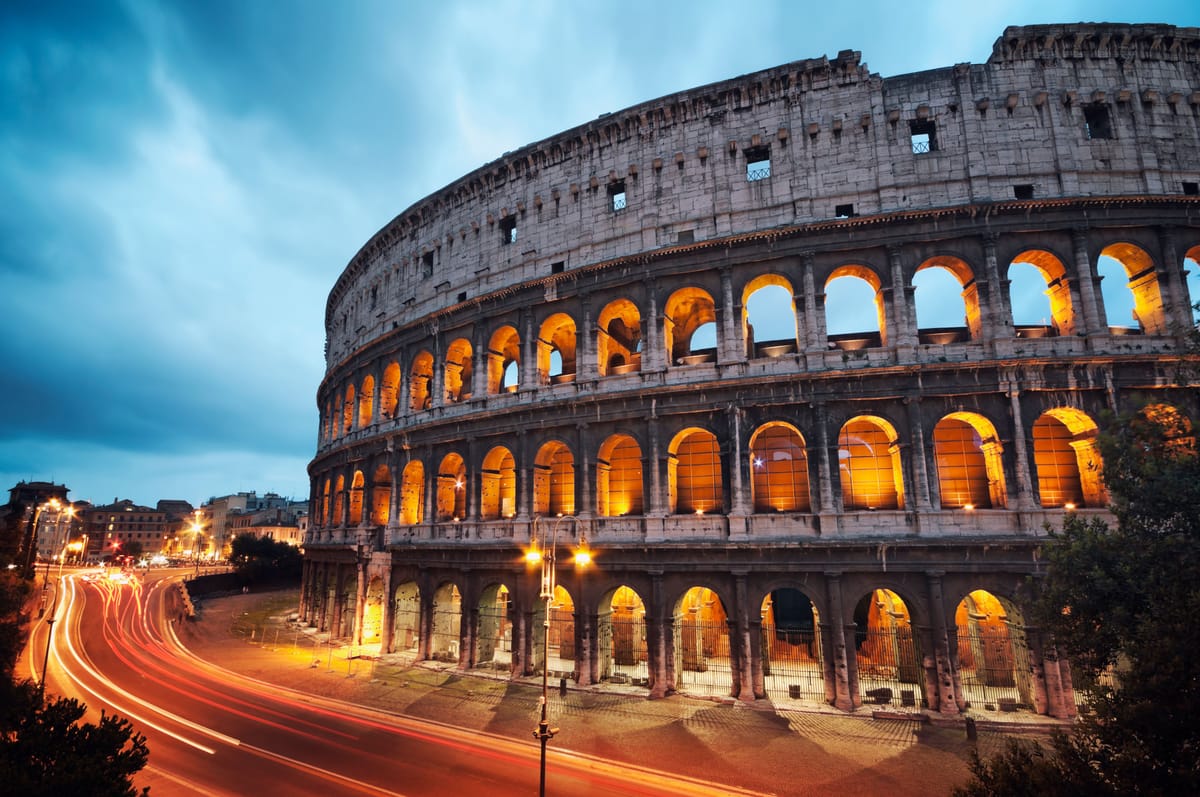
The bread-and-circuses analysis of all this is not new. Juvenal formulated it in Satire X around the early second century AD, and it has been rediscovered, reapplied, and reinscribed on every subsequent civilization that reached sufficient scale and inequality. The specific phrasing "Rome is the mob" comes not from Juvenal himself but from the film Gladiator, placed in the mouth of the senator Gracchus — a character whose name the screenwriters chose deliberately, Gaius Sempronius Gracchus having been the reformist politician who introduced the grain dole in 123 BC, the original entitlement program, deployed ironically by a populist to serve the people and subsequently repurposed as an instrument of control against them.
The inversion is worth dwelling on. Juvenal was not a patrician lamenting the masses from above. He was a client, a dependent of wealthier Romans, writing from something closer to the outside looking in, mourning the death of the Republic and the passivity of citizens who had surrendered political power to emperors in exchange for grain and games. The film puts the observation in the mouth of an insider-operator — a senator who understands the machine and runs it — which is arguably more dramatically honest about how power actually works. The observation travels across two thousand years without losing a syllable of its accuracy because the machine it describes has not changed in any essential way.
What has changed is the sophistication of the control mechanisms. The Romans had bread and circuses. The American equivalent has a considerably more elaborate architecture. At its center is debt, which is probably the most effective social control system ever devised by a complex civilization. A person carrying a mortgage, car payments, medical debt, and student loans — the standard load for an American household in the middle quintile — cannot afford to strike. Cannot afford to organize. Cannot afford, in many cases, to vote against their economic interests without immediate personal catastrophe. The Romans at least had no mortgage. Their passivity was purchased with grain. Ours is enforced by the monthly statement.
The big screen television and the Sunday game are real factors, but they are symptoms, not causes. The cause is that genuine political organizing requires time, energy, and risk tolerance, and the debt architecture systematically consumes all three. The person working sixty hours a week at minimum wage and returning home to collapse in front of a screen is not making a political choice. They are responding rationally to an environment that has removed all the inputs required to make a different one.
And then there is hunger. Most Americans have no reference point for hunger as a political force — not the kind that kills children and breaks governments elsewhere, and not even the domestic form it takes among low income households the homeless. Food insecurity affects tens of millions of Americans — somewhere between thirty and forty million, depending on how you measure it — but it does not look like the dramatic famine that has historically triggered revolt. It looks like skipping meals. It looks like food banks. It looks like choosing between utilities and groceries in February. That kind of grinding, invisible deprivation is extraordinarily effective at consuming every available unit of energy for daily survival, leaving nothing for political organizing, nothing for civic engagement, nothing for the kind of sustained collective action that has occasionally, in other times and places, actually changed things.
The prediction that when genuine mass hunger arrives in America, there will be no uprising — that the response will be capitulation rather than revolt — is dark but historically supported. Genuine mass revolts from hunger are rarer than the revolutionary mythology suggests. When food shortages hit Rome, crowds demonstrated and threw stale bread at emperors. The response was not negotiation. Antony sent in soldiers who massacred protestors. Commodus sent in cavalry. The Paris Commune was suppressed by mass execution — estimates range from ten to thirty thousand dead in a single week. The Ludlow Massacre. Tulsa 1921. These are not historical curiosities. They are data points in a consistent pattern: organize, get shot, and watch the narrative get reframed as the restoration of order.
The word "entitlement" deserves its own autopsy. The grain dole was the original entitlement program, and it was labeled that — with all the contempt the label implies — by people who were themselves extraordinarily entitled, in the non-pejorative sense of the word: people who held title to enormous amounts of land and wealth and power and whose access to all three was not described as an entitlement but as the natural order of things. The structure is identical today. Programs funded by payroll taxes that workers paid into their entire working lives — Social Security, Medicare — get described as entitlements, with the implication of unearned dependency, while carried interest tax treatment, oil depletion allowances, and agricultural subsidies to industrial farming operations generating billions in annual transfers from the public to the private do not receive the same label, despite being transfers to people who did not earn them through the labor covered by the programs being attacked.
The Social Security trust fund situation is a useful case study in how this works in practice. The depletion is real and projected, but the mechanism by which it occurred is rarely discussed in the forums where the crisis is most loudly proclaimed. Congress borrowed from the trust fund and replaced the cash with Treasury IOUs — standard intergovernmental accounting, technically defensible, but also a transfer of funds accumulated by the labor of ordinary workers to general revenue that financed, among other things, tax cuts concentrated at the top of the income distribution. Whether that constitutes "bankrupting" the fund or routine fiscal management is a legitimate technical dispute. What is not disputed is that the fix is arithmetically straightforward. The payroll tax cap currently sits at $168,600, above which no Social Security tax is collected. A person earning $168,601 pays the same Social Security contribution as a billionaire. Raise or eliminate the cap and the projected shortfall resolves. This is not a secret. It is not technically complex. It has not been done because the people who would pay more are the people with the most access to the people who decide these things.
The Electoral College conversation tends to get framed as a debate between competing democratic theories, which is one way to discuss it, and the less flattering but more historically accurate framing, which is that its designers were explicitly skeptical of direct democracy and built the buffer into the system to protect property-holding elites from majorities who might vote to redistribute. The two recent elections in which the winner lost the popular vote are not glitches. They are the system working as designed. Whether you call that a failed democracy or a democracy that never existed in the form it claimed depends on your definition of democracy, but the outcome is the same: structural features that concentrate power away from numerical majorities and toward smaller groups with disproportionate geographic or financial leverage.
The current effort to restrict voting access, to gerrymander districts into permanent partisan supermajorities, to eliminate or challenge the results of elections that produce the wrong outcome — these are not innovations. They are the latest iteration of a tendency that runs from the property-owning-male-only suffrage of the founders through every subsequent effort to narrow the electorate to the people most likely to ratify existing arrangements. The goal is not a particular party's victory. The goal is a particular class's insulation from accountability, and party is simply the instrument.
The differential response to ICE custody deaths in 2026 is the clearest available illustration of how all of this operates at the level of individual lives. As of March 2026, forty-six people had died in immigration detention since the beginning of the second Trump administration — roughly one death every six days, a rate exceeding anything seen in over two decades. Most of these deaths generated no national coverage, no protests, no expressions of institutional outrage.
Then two white American citizens were killed by federal immigration agents, and the country convulsed. The coverage was massive. The protests were real. The political fallout was significant. This is not a conspiracy. No one sat in a room and decided that brown-skinned non-citizens were worth less. The mechanism is more banal and more durable than conspiracy: it is simply how attention and moral outrage are culturally allocated in a society stratified by race and citizenship status. A death registers as a tragedy or as a statistic depending on variables that have nothing to do with the death itself and everything to do with who died and what category the dying person occupied in the social taxonomy.
This is the system working. This is not a failure mode. The forty-six deaths in detention are not an oversight; they are an outcome of a policy operating as intended in an environment where those deaths do not generate the political cost that would change the policy. The two deaths that generated outrage generated it precisely because they violated the rule — the wrong people died. The system's response to that violation will be to refine the targeting, not to question the enterprise.
Juvenal was not writing satire for entertainment. He was writing it because satire was the only register in which certain truths could be stated without immediately lethal consequences. The observation that the Roman mob had traded political power for grain and games was obvious to anyone paying attention, but stating it plainly, in the Senate or the Forum, would have been dangerous. So it got stated slant, in verse, under the cover of literary distance.
Two thousand years later the observation gets stated in similar registers — in conversation, in essays, in satirical news programs — and it lands with similar effect: widely recognized, rarely acted upon, absorbed back into the system it describes. The people who most need systemic change have the least capacity to pursue it. The people who have the capacity have, with notable exceptions, found accommodation with the existing arrangement more comfortable than the alternative.
This is not an argument for resignation. Resigned people write this kind of thing and conclude with something about how nothing changes and everything repeats and history is a wheel. That is its own kind of comfortable accommodation. The more honest conclusion is that the people who do have capacity — the time, the economic buffer, the access to information, the relative insulation from the immediate violence of the system — have a specific obligation, not a vague one, not a rhetorical one, to use it. Because the machine does not stop running because you have correctly identified how it works. It stops running when enough people with enough capacity decide to reach for something other than the bread.
The circuses, meanwhile, are very good this year.
Jonathan Brown writes about cybersecurity infrastructure, privacy systems, the politics of AI development, religion, magic, philosophy and many other topics at bordercybergroup.com and aetheriumarcana.org. Border Cyber Group maintains a cybersecurity resource portal at borderelliptic.com
If you wish to support our work, feel free to buy us a coffee! https://bordercybergroup.com/#/portal/support
Member discussion: