
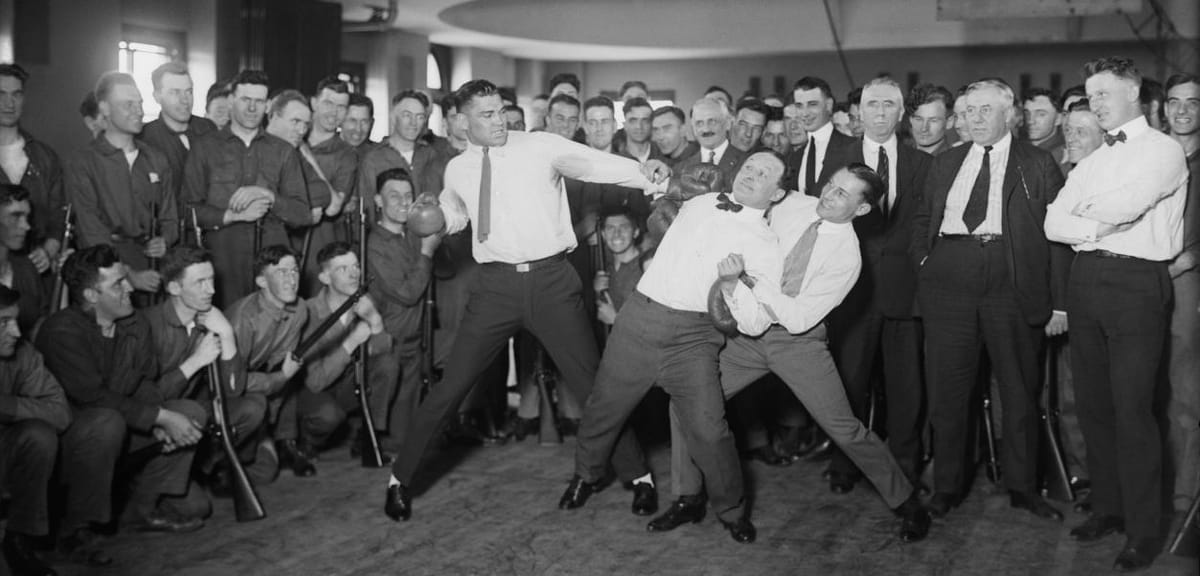
The Standing Offer
He held it up like a relic: ten New York State bonds, a thousand dollars apiece, fanned out under the spotlight where the audience could count them. Ten thousand dollars — a fortune in the 1920s — to any medium, anywhere, who could produce one unambiguous demonstration of genuine psychic power. No one ever took it. The offer stood for years, repeated at lecture after lecture, and it stood unclaimed not because Houdini was lucky but because he had already done the homework: years of infiltrating séance circles, memorizing the mechanics of slate-writing and spirit cabinets and floating trumpets, until he could walk into any darkened parlor in America and name the trick before the medium had finished performing it.
This was the contract Houdini offered the public, and it was a remarkably clean one for a man in the business of illusion: I will show you things that look impossible, and I will never lie to you about what they are. The trick is real. The wonder is real. The claim that it violates the laws of nature is the only thing that isn't — and that claim, Houdini insisted, belonged exclusively to the frauds preying on grieving widows and desperate parents, not to the entertainer who told you upfront that what you'd just watched was craft, not miracle.
It is a strange thing to build a life's reputation on policing a border, because borders attract test cases. Houdini spent two decades positioning himself as the world's foremost expert on the difference between the genuinely unexplainable and the merely well-performed — the man best equipped, of anyone alive, to tell you which side of that line you were standing on. What the record shows, examined closely, is that this same border kept reopening underneath him. He was accused, by a man he respected, of secretly standing on the wrong side of it. He paid, more than once, to manufacture a crossing of it under his own name. And in the end, he died testing it himself — not against the supernatural, but against a stranger's fist, asking the same impossible question he'd spent his career asking everyone else.
The Crusader
The crusade had a personal wound at its center, and Houdini never hid it. His mother, Cecilia Weiss, died in 1913, and what followed was not skepticism but its opposite: a desperate, sincere search for some way to reach her. He sat for legitimate readings. He hoped, the way grieving people hope, that someone somewhere could put him back in the room with her for five minutes. What he found instead were professionals who had turned that hope into a revenue stream — cold readers who fished his own biographical details out of newspaper clippings and handed them back to him dressed as messages from beyond.
That betrayal, more than any abstract commitment to rationalism, is what built the second half of his career. Houdini came to see the spiritualist medium as a thief of trust worse than any common criminal — he said as much, noting that a highway robber at least had the decency to rob you in the open, while the false medium robbed the bereaved of both their money and the truth, and let them walk away believing they'd touched something sacred. The crusade, in other words, wasn't about proving ghosts don't exist. It was about punishing the specific cruelty of telling a grieving person they do, for a fee.
He took the fight onstage with theatrical precision. He would plant investigators in the audience at séances, and when a medium's claims were exposed as fraud, Houdini would swing a spotlight directly onto the investigator, who'd confirm the accusation in front of the whole room — sending one medium after another fleeing in humiliation. Then came the standing offer, the bonds under the light, the years of nobody stepping forward to claim them. Wikipedia
For a time, even his fiercest opponent in this fight conceded the method worked. Conan Doyle initially admitted that Houdini's campaign did real good against the false mediums specifically — that unmasking frauds was, in fact, everyone's urgent duty. But concession is not agreement, and the two men's friendship survived this disagreement for only so long before it curdled into something closer to a public feud. Between 1923 and 1924 they toured the country in parallel, lecturing to opposite conclusions night after night — Houdini debunking, Doyle defending, two of the most famous men in the English-speaking world treating spiritualism as a battlefield wide enough for both their reputations to fight over in public. WikipediaWikipedia
This is the Houdini the newspapers understood: the rationalist, the wounded son turned professional debunker, a man whose authority on the subject of fraudulent wonder was paid for in his own grief. It is also the version of Houdini that makes everything that follows so difficult to reconcile — because the same man selling the public on the difference between real and staged miracles was, every night, standing on a stage manufacturing the exact sensation he claimed to be the cure for.
The Performer's Loophole
Strip away the labels for a moment and look only at what happened in the audience's body. A medium speaks in a darkened room and a grieving man feels the hair lift on his arms, certain — for one suspended second — that the natural order has parted just wide enough to let his dead wife's voice through. A magician is sealed into a locked tank, submerged, and the crowd holds its breath through a silence that stretches past what a human body should survive, until the curtain drops and there he stands, dripping, alive, having broken nothing but their expectations. Measure only the physiological event — the held breath, the prickled skin, the brief vertiginous sense that the rules everyone lives by do not, in this room, at this moment, fully apply — and the two experiences are not just similar. They are, for the ten or fifteen seconds that matter, identical.
This is the loophole Houdini lived inside for his entire career, and to his credit he never fully pretended otherwise — he simply built a moral architecture around it sturdy enough to hold his own weight. The difference between his locked tank and a medium's darkened cabinet, on his account, was a matter of disclosure rather than mechanism: he was producing the sensation of the impossible while explicitly refusing to claim it was impossible, whereas the medium produced the identical sensation and then signed her name to a lie about its source. One man sold wonder. The other sold wonder dressed as truth. Everything Houdini's reputation rested on depended on that distinction holding — on audiences understanding, even as their pulse spiked and their breath caught, that what they were watching was a man's hard-won craft and not a crack in the universe.
But the distinction is institutional, not structural, and that's the harder claim buried in here. Strip away who's standing at the front of the room — priest, medium, or escape artist — and the apparatus is the same one humans have used for the sensation of contacting the hidden since long before any of the three professions existed: a designated practitioner, a controlled setting, an object or body positioned as the conduit, a ritual sequence performed with exact and repeatable precision, and an audience primed to receive the result as significant. Whether you call that sequence magic, religion, or stagecraft has never been a question the ritual itself can answer. It's a question of which authority gets to put a label on it afterward — the church calling its rite sacrament while calling the same structure performed by a rival "magic," or Houdini calling his escape "craft" and a medium's cabinet "fraud," when the audience inside either room is having, by any measurement that matters to the nervous system, the same night.
Houdini understood this better than almost anyone alive in 1925, which is precisely why the border meant so much to him and why he spent so much of his fortune and his fame guarding it. He had built an entire identity on being the one man who could stand on both sides of that line at once — performer of the impossible, debunker of the impossible — and tell you, with total credibility, exactly where the seam was. What he could not control was what happened when other people decided they didn't believe the seam was where he said it was. That challenge came first from a friend, and it came in the form of an accusation.
The Accusation — Doyle's Reversal
For a few years the friendship was real, and stranger than either man's public role would suggest. Doyle, the creator of literature's most ruthless rationalist, and Houdini, the stage's most famous debunker of the irrational, corresponded for years and met in person more than once, each apparently delighted to have found in the other someone equally famous and equally certain. Neither ever managed to convince the other of anything — but for a while, that disagreement looked like the kind of thing two confident men could simply enjoy arguing about over dinner. Harryhoudinicircumstantialevidence
It stopped being enjoyable once Doyle decided he understood Houdini better than Houdini understood himself. Doyle began publicly siding with spiritualists who believed Houdini's greatest escapes weren't performed at all, but accomplished through actual supernatural means — and the theory those spiritualists had constructed to explain Houdini's lifelong denial was elegant in its own way: his exposure of fraudulent mediums was simply cover, because he was secretly a medium himself, "dematerializing" out of the traps he built to contain his own body. Houdini hadn't fooled anyone. He'd fooled himself — using a gift he refused to admit he had to perform stunts he insisted were craft. HarryhoudinicircumstantialevidenceHarryhoudinicircumstantialevidence
Doyle didn't soften this in private correspondence and walk it back in public. He put it in print, repeatedly, and built an entire argumentative structure around it. His logic ran like this: if you seal a beetle in a bottle and it escapes, you must conclude either that the laws of matter have been broken, or that the beetle possesses secrets beyond your understanding as an ordinary observer — and Houdini, water-tank-bound and triple-locked, was Doyle's beetle. He cited a leading psychical researcher's account of watching Houdini submerged in a locked iron tank, insisting the magician's body had been completely dematerialized within it for the better part of two minutes while the witness stood directly over the apparatus. Not a trick performed in darkness with sleight of hand. A body, gone, by Doyle's own witness's account, and returned. Google GroupsGoogle Groups
By 1930, four years after Houdini's death, Doyle had sharpened the accusation into something almost too clean to be accidental — a line built for exactly the kind of irony this essay is chasing. He asked, in print: who was the greatest medium-baiter of modern times? Undoubtedly Houdini. And who was the greatest physical medium of modern times? He left the second answer sitting in the same sentence as the first, daring readers to notice they were being told it was the same man. Foreword Reviews
What makes this worth dwelling on isn't that Doyle was credulous — that part of the historical record is well-worn. It's the specific shape of the accusation. Doyle wasn't claiming Houdini was a liar in the ordinary sense, the way Houdini accused mediums of lying. He was claiming Houdini's entire identity as a skeptic was itself the elaborate trick — that the rationalist mask was the performance, and the buried mystic underneath was the truth. It's the only available inversion of Houdini's worldview that doesn't require Doyle to abandon his own: rather than admit illusion can produce wonder without violating anything, Doyle simply moved Houdini from the side of the ledger marked craftsman to the side marked unwitting miracle, and left him there for the rest of his life, denying a gift Doyle was certain he possessed.
Houdini found this maddening for reasons that go to the heart of what he'd built. A fraud accusation he could refute with evidence, with confession, with a public demonstration of method. An accusation of secret authenticity refutes nothing, because every denial simply confirms, to the believer, how deep the cover-up runs. For the first time in his career, the world's foremost authority on distinguishing real wonder from staged wonder found himself with no available proof that would satisfy his accuser — because the accusation wasn't that he'd faked anything. It was that he hadn't.
The Forgery — Lovecraft's Two Commissions
The timing is what makes this section nearly write itself. In February 1924, Weird Tales founder J.C. Henneberger needed a name to save a failing magazine, and Houdini's was the biggest one he could attach to it. Henneberger sought out Lovecraft and commissioned him to write up a "supposedly true" experience Houdini claimed to have had in Egypt, for the then-enormous sum of a hundred dollars — the largest advance Lovecraft had ever been paid. Lovecraft did his homework first, the way he always did, and what he found waiting for him at the bottom of Houdini's "true" story was nothing. After listening to the account and researching its background, he concluded the tale was completely fabricated, and asked Henneberger's permission to simply invent the rest himself. WILD ABOUT HARRY + 2
So: Houdini handed a ghostwriter a personal anecdote that was, on inspection, manufactured from nothing, and asked him to dress it up as testimony. What came back was "Imprisoned with the Pharaohs" — Houdini descending into a chamber beneath the Great Sphinx, encountering something ancient and god-shaped in the dark, narrated in the first person, in Houdini's own voice, under Houdini's own name. It ran in Weird Tales credited solely to Houdini, with Lovecraft's authorship deliberately withheld because the publisher worried readers would be confused about whose first-person account they were reading. The whole architecture of the piece depended on the audience believing, even provisionally, that they were holding a magician's sworn account of brushing up against the genuinely impossible. Houdini liked the result enough that he kept Lovecraft on retainer for years afterward, and is even said to have thanked him with a signed copy of his own anti-spiritualism book, A Magician Among the Spirits — the debunker's masterwork, gifted in payment for a debunker's fabrication. WILD ABOUT HARRYWILD ABOUT HARRY
Two years later, in 1926, Houdini sent Lovecraft the opposite assignment. He hired him to write an article attacking astrology, paying seventy-five dollars for the work — a rationalist polemic, commissioned in the same year, from the same writer, by the same man who'd paid for the Sphinx story. Read the two commissions side by side and the contradiction stops looking incidental. It's not that Houdini occasionally indulged in inconsistency. It's that he ran both operations simultaneously, with the same collaborator, treating manufactured mysticism and manufactured rationalism as two services he could purchase from the identical vendor depending on which audience he was selling to that month. Movie Cultists
The final piece of this is the one that never got to exist, and its unfinished state turns out to be the most fitting ending the irony could ask for. Houdini's actual rationalist legacy project — the one meant to stand as his serious, lasting contribution to the cause he'd spent his grief building — was a book called The Cancer of Superstition, commissioned from Lovecraft and the writer C.M. Eddy, Jr. Lovecraft drafted a detailed outline tracing superstition's origins, growth, and fallacy, and Eddy expanded it into chapters meant to be assembled into a full-length book. Eddy completed three chapters; the first two had already been read and approved by Houdini, and the third was in the mail to him in Detroit at the exact moment he was stricken with the appendicitis attack that killed him. About a month after the funeral, Bess told Eddy she preferred to abandon the project entirely, and the manuscript scattered into private hands for the next ninety years. Amazon + 2
So the man who spent two decades building a public case against superstition died with that case literally in transit — an unread chapter on its way to him through the mail — having spent the same window of years quietly manufacturing a piece of superstition under his own byline and getting paid to retire it like a finished trick. He didn't live long enough to finish renouncing the false mystery. He'd already finished selling one.
The Reckoning — Whitehead's Affidavit
Strip away the legend that's accreted around October 1926 — the boxer-villain who supposedly ambushed a sick man, the McGill thug throwing punches in some grudge match — and what's left is smaller, stranger, and far more in keeping with everything that's come before it in this essay. A young man with a book and a question talks his way backstage, twice, on the strength of polite persistence. He gets an audience with the world's most famous skeptic. And the world's most famous skeptic, reclining for a sketch artist, invites him to test a claim.
That's the affidavit's actual shape, sworn under oath five months later for an insurance dispute, and it's worth sitting with how deliberately it's constructed. Whitehead doesn't describe an assault. He describes Houdini suggesting he feel his abdomen, comparing his own muscles to a washboard, and inviting the blow himself, repeating the invitation when Whitehead hesitated. He describes two witnesses present the entire time, neither of whom could even see where the blows landed from where they sat, and three further visits afterward in which, he insists, Houdini never once mentioned the punches as having caused him pain or inconvenience of any kind. Read uncharitably, it's a guilty man building himself an alibi after the fact. Read structurally, it's something closer to a transaction completed exactly as Houdini had always run it on other people: a claim of the impossible, stated out loud, followed immediately by a public, witnessed test. Quora + 2
This is the part of the story that's easy to flatten into myth and hard to actually hold onto: Houdini wasn't ambushed into proving his invincibility. He volunteered the demonstration the same way he volunteered, a hundred times, to walk into a séance and prove a medium's claim false on the spot. He had spent two decades perfecting exactly one move — you say it's real, I will test it in front of witnesses, right now — and on an October morning in a dressing room in Montreal, with a stranger's fist instead of his own raised spotlight, that move finally got run on him.
The medical record underneath all of this is messier than the legend wants it to be, and it deserves exactly one honest sentence rather than ten speculative ones: Whitehead was never charged with anything, the death was ruled accidental, and it's entirely possible Houdini's appendix would have burst with or without the blows — he'd been nursing an undiagnosed injury and a fever for days, performing through pain he refused to treat, the same stubborn refusal to stop the show that had defined his entire stage career. The punch may have been the final cause. It may have been incidental to a body already failing. Nobody alive has the standing to settle that argument, and the essay doesn't need to settle it either — what matters for our purposes isn't the precise mechanism of death, it's the shape of the encounter that preceded it. Medium
Because that shape is the whole essay in miniature. A man who spent his career forcing a binary choice onto other people's claims — real, or staged; prove it, or confess it — finally had the choice forced back onto his own body, by someone with no malice on record and no theory more sophisticated than curiosity about a stranger's boast. Whitehead wasn't a debunker in any formal sense. He never claimed the title, never published a manifesto, never stood under a spotlight holding bonds. But the test he ran was Houdini's test, performed with Houdini's own logic, on Houdini's own dare. The crusader who spent twenty years asking the world to show its work got asked, once, to show his — and for the first time, the answer wasn't a trick revealed. It was a body that simply failed.
He died nine days later, on Halloween, having spent his final hours doing what he always did: refusing to cancel the show.
The Unmarked Grave
He simply stopped existing in public after that. Not arrested, not charged, not named in any newspaper account that stuck — Whitehead walked out of the Princess Theatre dressing room in October 1926 and the historical record goes nearly silent on him for two years. When it picks him up again, it's not flattering. In 1928 he was charged twice for shoplifting books, the same object that had gotten him through Houdini's door in the first place, now turned into the thing he couldn't stop stealing. Somewhere in the years that followed, an accident left him with a metal plate fitted into his own skull — the details lost, the way most details about Whitehead's later life are lost, surfacing only as a fragment in someone else's research decades later. HoudinisghostWILD ABOUT HARRY
What's left of him after that is the portrait Don Bell spent twenty years assembling, chasing a man who'd made a career out of being impossible to find. The Toronto Star, reviewing Bell's book, described the puncher as a Dostoyevskian character — a tormented failure with no visible means of support beyond living off women, a shoplifter of books, secretive and sickly, possibly an addict. Another reviewer put the trajectory even more starkly: the vigorous, powerful young man who'd struck Houdini slowly devolved into a lugubrious, sickly loner who shunned society and his own past, as though the guilt of that one morning had spent thirty years eroding him from the inside. He died of malnutrition on July 5, 1954, alone, and was buried in an unmarked plot in Hawthorn-Dale Cemetery in Montreal — no stone, no name, nothing to mark the spot of a man whose one moment of historical significance was a fistfight he spent the rest of his life refusing to discuss. Blogger + 3
It would be tidier, and less honest, to call this justice. Nothing in the record suggests Whitehead set out that morning to kill anyone, or that any court, any institution, any authority beyond rumor and guilt ever held him to account for what happened nine days later. He was never tried. He never apologized — what survives instead is a sworn statement built to distance him from blame, not accept it. And yet the shape of his life afterward reads less like a man who got away with something and more like a man who never once believed he had. A shoplifter who couldn't stop stealing the very object that had bought him his fatal introduction. A recluse who vanished as completely from the world as Houdini, on stage, used to vanish from locked tanks — except no curtain ever rose again to reveal Whitehead standing there, restored, having proven it was only a trick.
Two men, each convinced he was exposing a fraud. One spent his life testing the claims of strangers and died testing his own. The other tested exactly one claim, exactly once, and spent the next twenty-eight years quietly consumed by what answering it had cost him. Neither of them, in the end, escaped anything.
Jonathan Brown writes on technology, security, and culture for bordercybergroup.com and aetheriumarcana.org.
To support our work, please subscribe or ... Buy us a coffee! Thanks!
Member discussion: