Zora Neale Hurston and the African-Diasporic Life of Black Christianity
by Jonathan Brown
To enter the Black churches recorded by Zora Neale Hurston is to enter a religious world at once familiar and startling. There are Bibles, pulpits, congregations and invocations of Jesus. There are baptisms, sermons, testimonies and saints. Yet the service may also become a collective drama in which rhythm alters consciousness, worshippers “catch the Spirit,” a preacher’s voice crosses from speech into song, and the congregation actively carries revelation into being. Healing may involve prayer, blessed water, touch, roots, household medicine and spiritual power without any sharp boundary separating them. The dead remain near. Dreams instruct the living. A woman with no formal ordination may establish a sanctuary, declare her authority received directly from God and gather around herself people whom conventional churches and respectable society have cast away.
Hurston did not encounter one uniform institution called the Black Church. She found Baptist and Methodist congregations, Holiness and Pentecostal “saints,” Gullah praise-house traditions, Spiritual Churches, storefront prophets, female healers and independent religious communities that borrowed whatever symbols proved spiritually useful. Some were unmistakably Christian. Some inhabited the borderlands between Christianity, conjure, Spiritualism, ancestral religion and personal revelation. Others used Christian names while transforming nearly every inherited assumption about where authority resided and how sacred power became known.
It is tempting to decide which of these communities were “really” Christian. Hurston leads us toward a more interesting question: What did Christianity become when Black Americans took possession of it, placed it inside their own bodies, rhythms, memories and communities, and made it answer needs that respectable religion had failed to meet?
The Preacher’s Daughter Who Kept Seeking
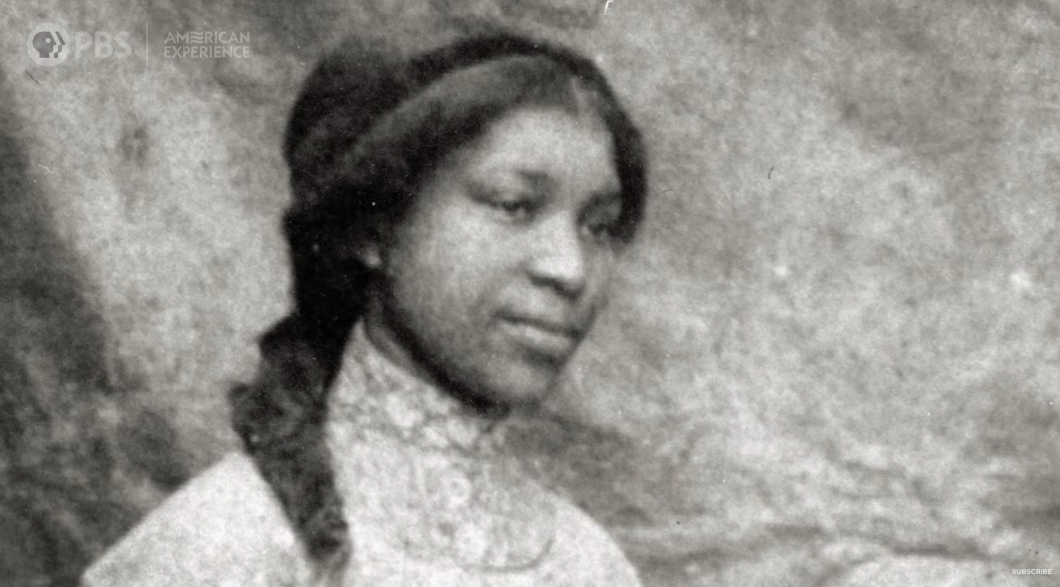
Hurston was born into the church. Her father, John Hurston, was a Baptist preacher, and she grew up in Eatonville, Florida, one of the first incorporated all-Black municipalities in the United States. Pulpits, prayer meetings, sermons and church disputes were therefore not exotic materials discovered during her anthropological education. They belonged to the acoustical and emotional landscape of childhood.
Yet familiarity did not produce unquestioning orthodoxy. In her autobiographical writing on religion, Hurston remembered entering life inside the Missionary Baptist Church, surrounded by people who seemed to know God’s habits, heaven and intentions with complete assurance. Everything had already been explained. Hurston, however, remained a seeker. She possessed a deep appetite for spiritual experience alongside a nearly mischievous resistance to finished doctrine.
That combination shaped her later work. Hurston could be skeptical of religious claims without reducing religion to stupidity. She could recognize manipulation by a preacher while admiring the artistry of his sermon. She could record a healing claim without either certifying a miracle or sneering at the person who believed one had occurred. She knew church life intimately enough to detect performance, but she also knew that performance and sincerity are not opposites. Ritual is performed because form gives power somewhere to arrive.
After studying at Howard University, Hurston entered Barnard College and trained in anthropology under Franz Boas. She graduated in 1928, Barnard’s first Black graduate. Boas taught careful observation and the importance of understanding cultures on their own terms. Hurston accepted those principles but remade the anthropologist’s role. The detached investigator with notebook in hand could not hear everything that mattered. People changed their speech before outsiders, guarded sacred knowledge and sometimes offered whatever spectacle they thought the visitor expected.
Hurston instead returned as someone both native and estranged: a Black Southern woman who knew the language and social codes but had acquired the equipment and institutional authority of anthropology. She danced, sang, traded stories, attended services and waited until people ceased performing “folk culture” for her and resumed living it with her. Her prose then refused to sterilize what she had encountered. The observer entered the scene, personalities remained vivid, and the forms of Black speech carried their own intelligence.
This method brought criticism. Hurston changed names, compressed time, arranged scenes and wrote with a novelist’s dramatic control. Her ethnography cannot always be read as a literal transcript. But its literary character also allowed her to preserve truths that conventional social-scientific prose routinely destroyed: timing, humor, gesture, atmosphere, danger, embarrassment, charisma and the transforming pressure of a congregation upon an individual body.
What Hurston Meant by the Sanctified Church
The title The Sanctified Church can mislead modern readers. Hurston did not publish a unified book under that name during her lifetime. The volume appeared posthumously in 1981, edited by Toni Cade Bambara, and assembled several writings on folklore, religious expression, Hoodoo and Black sacred life. Its title essay is brief, but its argument illuminates much of Hurston’s work.
By “Sanctified Church,” Hurston meant a family of Holiness and Pentecostal movements emphasizing sanctification, disciplined religious life and experiential evidence of the Holy Spirit. She specifically associated the tendency with such bodies as the Church of God in Christ and Saints of God in Christ, but she was describing a wider religious energy rather than a perfectly bounded denomination.
She regarded this movement as a protest against the “high-brow tendency” developing in upwardly mobile Black Protestant churches. Education, professional status and the pursuit of respectability could produce orderly services modeled upon white middle-class Protestantism. Music became polished. Sermons became decorous. Bodies remained contained. Practices that recalled slavery, rural life or African inheritance were treated as embarrassing relics.
The Sanctified churches reversed that direction. Hurston called them a “revitalizing element” because they restored forms of worship that refined congregations were abandoning. This was not simply conservatism or nostalgia. It was a struggle over who possessed authority to define progress. Must Black religion become more rational, restrained and European in order to demonstrate racial advancement? Or might spiritual advancement require recovering forms that slavery’s descendants had created for survival?
Hurston’s answer favored recovery. She believed the new Sanctified movement was, in an important sense, the reappearance of older Black religious expression: African-derived elements grafted onto Christianity now asserting themselves against cultural erasure.
Her language of “African survivals” sometimes appears too simple today. Cultural forms do not pass unchanged across oceans and centuries. Enslaved Africans came from numerous societies and created new practices under radically altered conditions. European revivalism, biblical narratives, Indigenous encounters and American social pressures all participated in the result. Nevertheless, Hurston recognized something many observers denied: Black Christian worship possessed an embodied intellectual history. Its differences from white worship were not evidence of immaturity. They were the products of cultural creation.
The Body as a Place Where Theology Happens
Hurston’s most provocative claim concerned shouting. To an unsympathetic observer, the worshipper who shook, danced, cried out or temporarily lost ordinary composure exhibited uncontrolled emotion. To Hurston, shouting preserved the structural memory of African possession.
She wrote that the implication remained the same: spiritual power temporarily displaced ordinary consciousness and used the body for expression. In Africa, she argued, possession might belong particularly to priests or trained acolytes; in African American Christianity, access had become more widely distributed. A worshipper was not necessarily ordained before being seized by the Holy Spirit. The Spirit chose its vessel.
This does not mean that every ecstatic Black Christian was secretly worshipping an African deity under a Christian name. Nor does it mean that “catching the Spirit” and possession by a Haitian lwa are identical. Their theologies differ significantly. But Hurston recognized a shared ritual proposition: the body can become direct evidence of sacred presence.
That proposition changes the meaning of worship. Religion is no longer principally assent to statements about God. It becomes an event. The congregation sings, claps, prays and moves; intensity gathers; the ordinary personality yields; and transcendence becomes visible through breath, voice and motion.
Hurston also understood that apparent spontaneity had form. “Beneath the seeming informality” of worship, she observed, lay recognizable structures. Sermons, prayers, moans and testimonies each possessed conventions. Individual creativity was welcomed, but it occurred through shared patterns the congregation knew well.
A preacher might begin conversationally, establish a scriptural theme, repeat and ornament a phrase, move gradually toward chant, and finally cross into song. The congregation did not sit as an audience evaluating completed propositions. It answered, encouraged, corrected the temperature of the room and supplied musical support. A gifted listener explained that whatever point the preacher reached, the people should “bear him up on it.” Revelation became collaborative.
Hurston therefore treated religious expression as art. A prayer could be judged beautiful; a sermon could display invention; a testimony could achieve dramatic perfection. The traditional form did not suppress originality. It made originality legible. Like jazz, the service depended upon the creative tension between a structure everyone recognized and an elaboration no one had heard in precisely that form before.
This helps explain why Hurston’s own prose sounds so unlike institutional anthropology. She did not merely analyze the Black sermon; she learned from it. Her narrators circle, digress, repeat, tease, summon witnesses and arrive at meaning through accumulation. Her writing is frequently preacherly because she understood preaching as a sophisticated technology of attention.
Spirituals That Were Never Merely Songs
Hurston extended the same argument to sacred music. In “Spirituals and Neo-Spirituals,” published in Nancy Cunard’s immense 1934 anthology Negro, she distinguished the living spiritual from arranged concert versions she called “neo-spirituals.” Her distinction was polemical and sometimes unfair. The concert tradition—including the Fisk Jubilee Singers—performed indispensable work in preserving Black music, challenging racist caricature and carrying spirituals to international audiences.
But Hurston was defending something that notation and concert arrangement could not capture. A spiritual in worship was not a fixed composition delivered by performers to listeners. It belonged to a situation and a community. Verses could change. A familiar secular melody could acquire sacred words. A worshipper could insert a line answering the immediate sermon or sorrow. Voices did not necessarily seek European choral unity; they created overlapping, jagged and individually ornamented sound.
For Hurston, an authentic spiritual had no external audience. Everyone present could become a participant. Its purpose was not to represent Black feeling artistically to observers but to do religious work among the people singing it.
This distinction bears directly upon Hurston’s documentary method. A staged ceremony was compromised not necessarily because its participants lied but because the ritual relationship had changed. The camera created spectators; payment created expectations; repetition detached action from its occasion. Hurston wanted the moment when a song was needed and nobody was listening from outside—an impossible desire once an anthropologist arrived, but one that made her unusually sensitive to context.
Mother Catherine and the Religion of the Manger
No figure better embodies the borderland Hurston explored than Mother Catherine Seals, leader of the Temple of the Innocent Blood in New Orleans. Some contemporaries called her a prophet, others a faith healer, cult leader or fraud. Her followers called her Mother.
Hurston visited her community repeatedly, spent approximately two weeks closely observing it and attended nightly and Sunday services. Her portrait, “Mother Catherine,” also appeared in Cunard’s Negro in 1934. It begins as a journey beyond ordinary boundaries: out St. Claude Avenue, below the Industrial Canal, across difficult ground to a walled enclosure flying flags. The compound was called the Manger.
One did not simply walk into Mother Catherine’s presence. A visitor first prayed in the chapel until the spirit instructed her to send for them. Hurston found an environment of what she called “barbaric splendor”—a phrase revealing both the aesthetic vocabulary of her era and her delight in sacred extravagance. Hundreds of lamps, banners, embroidery, handmade and purchased images, red-white-and-blue surfaces and serpentine designs transformed the chapel into a cosmos that no conventional denomination could have planned.
Mother Catherine presided in a large tent containing her bed, a piano, equipment for a ten-piece orchestra, cooking facilities, chairs, tables and benches. Animals moved through worship: birds called from cages, dogs settled near the heater, and goats, hens, a donkey and a sheep might enter without producing scandal. Children played nearby. Sacred ceremony, household life, food, animal presence and community government occupied one continuous space.
Hurston knelt before Mother Catherine, accepted blessed salt and allowed a veil to be placed upon her head. When asked why she had come, she answered that she sought knowledge. She did not initially announce that she intended to write about the Mother. Only after many visits did she request permission, which Mother Catherine granted along with permission to take photographs.
The services included sermons, visions, healing testimonies and communal meals. Mother Catherine personally served blessed bread, salt and coffee. Worshippers drank water from a consecrated barrel. Food was not incidental hospitality; it was communion, medicine, maternal provision and proof that the sacred community could feed bodies as well as souls.
The Manger possessed “a catholic flavor,” Hurston wrote, while being certainly not Catholic. Mother Catherine selected freely from every religion she encountered. Christian saints and the Sacred Heart appeared alongside original insignia, sympathetic magic and a cosmology revealed through Mother Catherine herself. She rejected conventional hell, taught that human breath returned to trees, grass and animals, and elevated the womb as creation’s primordial principle. She healed through the laying on of hands, blessed water, castor oil, Epsom salts and the authority of suggestion. She claimed power to bless the water running through followers’ household pipes without leaving the Manger.
Hurston concluded that Mother Catherine effectively stood as Christ’s equal. That judgment explains why calling the Temple merely Christian is inadequate. Mother Catherine used Christian materials but did not submit her revelation to a church, creed or male clergy. She had received her call directly. No institution stood between her and God.
Yet calling the community non-Christian is equally unsatisfactory. Christ mattered. Biblical geography mattered. Baptism, saints, prayer, sin, divine healing and sacred meals mattered. The Temple was not Christianity’s opposite; it was Christianity seized and reorganized by a Black woman whose authority respectable Christianity would scarcely have recognized.
Later historical research has identified Mother Catherine as Nanny Cowans and connected her development to Mother Leafy Anderson’s Black Spiritual Church movement. Accounts indicate that racial exclusion from a white healer helped shape her vow to heal without regard to race. Her following became interracial, drawing Black residents and white immigrants as well. The Manger provided refuge for unmarried pregnant women, abused women, sex workers, children, former prisoners and others treated as morally disposable.
Mother Catherine’s welcome was not modern liberal tolerance in familiar language. She could be severe, authoritarian and hostile to abortion. Her religious world had its prohibitions, disciplines and contradictions. But she proclaimed that saints, convicts, women who terminated pregnancies and women who walked the streets were all her children. If God possessed every kind of child, she asked, how could she refuse to love her own?
Here her radical theology became material. She did not simply preach that rejected people possessed souls. She housed and fed them. The community converted stigma into kinship. “Mother” was not merely a title of spiritual rank; it named the social work her religion performed.
Women Who Became Religious Worlds
Mother Catherine belonged to a broader eruption of Black female spiritual authority. Mother Leafy Anderson had brought her Eternal Life Christian Spiritualist Church from Chicago into New Orleans around 1920. Anderson combined Protestant and Catholic elements, mediumship, healing and devotion to the spirit guide Black Hawk, the Sauk leader who had resisted American expansion.
Black Hawk’s presence inside a Black Spiritual Church was not a random curiosity. He could signify resistance, protection, Indigenous power and solidarity among peoples subjected to conquest. Yet the relationship also requires care: African American religious adoption of Indigenous figures could generate meaningful identification without necessarily representing Native peoples on their own terms.
New Orleans Spiritual Churches eventually developed a distinctive religious system influenced by Pentecostalism, Catholic imagery, Spiritualism and the surrounding reputation of Voudou and Hoodoo. Scholars disagree about how directly these churches descended from historical Louisiana Voudou. Similarity does not automatically prove institutional continuity, and church members themselves sometimes insisted that mediumship should not be confused with Hoodoo. The most accurate description is not disguised Voudou but a creative Black religious formation produced where multiple traditions met.
Hurston’s interest in these Mothers complicates the familiar history of American religion. Standard histories privilege denominations, seminaries, male clergy and published theology. Hurston directs attention toward laundresses, healers, migrants and women whose revelations became institutions before institutions agreed they were respectable.
Their authority arose from results: a healing attributed to prayer, a vision that proved meaningful, a community assembled, a discarded person fed, a spirit recognized. They created religious offices by inhabiting them. Their churches were not failed copies of established denominations. They were laboratories of sacred and social possibility.
Gullah Worship and the Memory Carried by Form
Hurston’s documentary work eventually carried her to the Gullah Geechee communities of the South Carolina Sea Islands. The Gullah Geechee are descendants of West and Central Africans enslaved along the southeastern coast. Relative geographic isolation helped preserve a distinctive Creole language and especially visible continuities in foodways, crafts, stories, music and religious practice.
“Gullah worship” does not name a denomination. Gullah congregations could be Baptist, Methodist, Holiness or independent. The phrase refers to the cultural forms through which Christianity was lived: call-and-response singing, lined hymns, dreams, spiritual healing, local prayer meetings and the praise houses that supplemented formal Sunday churches.
The ring shout is the best-known form. Worshippers move, traditionally counterclockwise, in a circle or ring while singers, handclappers, foot-stompers and stick-beaters create interlocking rhythms. The feet commonly shuffle rather than cross. Intensity accumulates, and participants may experience unity with the Holy Spirit, the ancestors and one another. Smithsonian documentation describes the ring shout as one of the oldest continuing Gullah Geechee worship traditions, maintained into the twentieth century even as its elements entered spirituals, gospel and other musical forms.
The praise house itself carried historical meaning. During slavery and after emancipation, these small buildings allowed Black communities to gather beyond the dominating architecture of the white church. Scripture could be interpreted through the experience of bondage. Exodus ceased to be a distant ancient episode and became a grammar of survival. Jordan could mean death, freedom or geographic escape. Christian worship created a protected environment in which African-derived rhythm, circularity and relation to the ancestors could persist and change.
In May 1940, Hurston filmed services at the Commandment Keeper Church in Beaufort, South Carolina. Working with audio recorder Norman Chalfin, she documented communal singing and revival-style sermons. There was no electrical power in the building; illumination came from kerosene lamps, and image and sound were recorded separately. The surviving film is therefore technically imperfect and historically invaluable. It preserves bodies, faces and worship gestures that prose alone cannot carry.
The film also expresses Hurston’s deepest methodological conviction. Black religion was not reducible to its doctrines or lyrics. Motion mattered. Timing mattered. The relationship between solo voice and congregation mattered. Even an unsynchronized soundtrack tells us that worship existed simultaneously as visible embodiment and communal sound.
Hurston was among the earliest anthropologists to use motion-picture recording in fieldwork and the first Black filmmaker known to have made ethnographic footage. Her camera did not eliminate the problem of observation, but her long preparation and participatory method differed profoundly from the extraction practiced by many outsiders. She worked to obtain trust before filming and tried to record events important to the community rather than impose a ready-made spectacle.
Christianity With Quotation Marks
Why, then, are we tempted to place quotation marks around the word “Christian” when describing some of Hurston’s subjects?
The quotation marks register a real problem. Mother Catherine altered Christian cosmology, claimed unmediated divine authority and surrounded biblical forms with practices conventional churches might call magic. Spiritual Churches communicated with the dead and honored nonbiblical guides. Sanctified worshippers entered states Hurston interpreted through the language of African possession. Rootwork, dreams and ancestor consciousness could coexist with church membership.
But quotation marks can also reproduce the exclusion imposed by white theology and Black respectability. If Christianity is defined only by creeds authorized in Europe, then enslaved and colonized peoples appear perpetually as imperfect converts. Their innovations become contamination rather than theology.
Hurston’s evidence supports a different interpretation. These communities were not necessarily suspended between Christianity and something else. They were creating African American Christianity as an original religious civilization. The Bible provided persons and narratives; African-diasporic memory provided modes of embodiment and relation; American oppression supplied the emergency; Black communities made the synthesis.
The result was not uniform. A Gullah Baptist praise house and Mother Catherine’s Manger were not the same religion. A Church of God in Christ congregation did not necessarily accept mediumship or conjure. Hurston sometimes grouped phenomena more boldly than current scholarship permits. Yet across these differences she heard a recurring insistence: sacred truth must become livable, visible and effective.
This explains why healing occupies such a central place. A theology proving itself only through correct doctrine was insufficient for people facing violence, illness, poverty, segregation and exclusion from medical care. Religion had to regulate fear, restore relationship, protect the household, interpret dreams, reconcile the dead and give suffering a voice. It had to create beauty with limited materials and community where official institutions created abandonment.
What Hurston Preserved—and What She Could Not
Hurston’s accounts demand admiration without canonizing every conclusion. Her terminology sometimes bears the racial and evolutionary assumptions of early twentieth-century anthropology. She could romanticize “the folk,” draw direct lines to Africa that were historically more complicated, or declare one musical form authentic at another’s expense. Her portraits are shaped art, not neutral windows. Mother Catherine’s imposing charisma reaches us through Hurston’s equally imposing literary intelligence.
Nevertheless, Hurston accomplished something rare. She did not translate Black religion into the language of deficiency. She did not ask why these communities failed to resemble respectable white Protestantism. She asked what their forms knew.
The shout knew that the body could carry a truth unavailable to detached reason. The sermon knew that meaning could be built cooperatively. The spiritual knew that a song belonged to the changing needs of its singers. The praise house knew that oppressed people required sacred space under their own authority. Mother Catherine knew that rejected persons needed not only forgiveness in heaven but food, shelter and kinship on earth.
Hurston also perceived that religion could be art without being “merely” art. A skeptic might explain possession as dissociation, healing testimony as suggestion, a preacher’s crescendo as performance and Mother Catherine’s magnificence as theatrical authority. Hurston would probably have appreciated each observation—and then asked why the word “performance” was being used to make the event less real. Human beings perform marriages, trials, funerals, elections and declarations of war. Form does not cancel consequence. It organizes consequence.
The same is true of religious hybridity. Borrowing does not necessarily indicate confusion. An oppressed community may adopt a saint, hymn, root, flag, drum pattern or biblical hero because the object works within a new field of relationship. Hurston called this originality through modification: inherited materials altered until they answered the imagination and circumstances of Black life.
That creative process is the true subject of her documentary work. Christianity entered Black communities through conquest, forced conversion, mission, literacy, hope and sincere conviction. It did not remain the property of those who carried it there. Enslaved and free Black people interpreted it, argued with it, danced it, healed through it, hid older memories inside it and sometimes used it to condemn the civilization that claimed to have given it to them.
What emerged could look like a Baptist service, a ring shout, a Spiritual Church or an animal-filled Manger ruled by a Black Mother in a red cape. The name “church” covered an astonishing range of sacred invention.
Catching the Spirit
Hurston’s achievement was not simply to document marginal religious curiosities before they disappeared. She revealed that the margins were intellectually central. In storefronts, praise houses, tents and rural churches, Black Americans were answering some of religion’s oldest questions: How does invisible power become known? Who may speak for God? Can a damaged body become a sacred instrument? What does a community owe the person whom society calls sinful, mad or unworthy? How can inherited religion be made truthful under conditions its official guardians refuse to understand?
Her subjects answered through practice. The congregation bore up the preacher. The circle generated rhythm. The worshipper caught the Spirit. The healer laid on hands. The Mother fed her children. Their theology happened in bodies and relationships before anyone wrote it into systematic form.
This is why Hurston’s documentary work remains so powerful. She approached people whom outsiders might have treated as survivals, deviants or embarrassments and found artists, metaphysicians, healers and founders of worlds. She neither dissolved their Christianity into African continuity nor erased Africa in order to make their Christianity respectable. She watched the traditions seize, transform and illuminate one another.
The result was a sacred culture in which the transcendent was expected to move. It moved through a sermon passing from speech into song, through feet tracing an ancestral circle, through a woman trembling beneath the Holy Spirit, through blessed food handed to a rejected child, and through Mother Catherine announcing that God’s breath returned to grass, trees and animals.
Hurston preserved these moments because she understood that a religion cannot be known only by what it claims to believe. It must also be known by what it allows people to become.
And in the Black “Christian” worlds she entered, people became more than congregants. They became witnesses, collaborators, vessels, healers, Mothers and—when the Spirit chose them—living evidence that the sacred had arrived.
Jonathan Brown for AetheriumArcana
© 2026 AetheriumArcana. All rights reserved.
Member discussion: