
The Anatomy of Modern Fragility
The Intellectual Friction
To observe modern civil engineering is to witness a profound and persistent friction between human ego and the laws of thermodynamics. We have entered an era defined by a peculiar form of "intellectual friction," wherein the success of a structure is measured by its ability to defy its environment rather than harmonize with it. The most glaring monument to this folly is the glass skyscraper rising from the floor of a sun-scorched desert. In these environments, we use high-performance glazing and massive, energy-hungry HVAC systems to battle a sun that provides an abundance of free energy, all to maintain an interior climate that could be achieved naturally if we simply looked three meters beneath our feet. This is not merely an architectural choice; it is a systemic pathology. It represents a belief that brute-force technology—powered by a fragile and distant grid—can indefinitely substitute for basic ecological literacy.
This friction creates a hidden tax on human existence. When we build against physics, we incur a "maintenance debt" that must be paid in constant infusions of capital, fuel, and specialized labor. If the heartbeat of the electrical grid falters for even a few days, these glass towers become uninhabitable greenhouses, turning into traps for the very people they were meant to shelter. We have traded resilience for aesthetics, and independence for the convenience of a thermostat. This design philosophy assumes that the complex web of global trade and resource extraction required to power these machines will never break. It is a gamble taken by a species that has forgotten that the most durable technologies are those that require the least amount of intervention to remain in equilibrium.
The "dumbness" of our current trajectory is rooted in this decoupling. We treat the home as a consumer product rather than a life-support system. By relying on thin-walled envelopes of wood and drywall, we are forced to spend the majority of our life’s energy—literally and financially—fighting the passage of time and the shift of the seasons. We have ignored the Earth’s natural thermal battery, a massive and free reservoir of stability, in favor of a copper-and-silicon life support system that is as fragile as it is expensive. To achieve true sovereignty, we must first recognize that the modern way of living is an anomaly of cheap energy that cannot last. We must begin to value the "intellectual lubrication" of working with gravity, thermal mass, and the sun, rather than the friction of trying to conquer them.
The Dependency Trap
The modern human exists in a state of high-altitude suspension, tethered to survival by a thousand invisible threads, none of which they hold in their own hands. This is the essence of the dependency trap: a total reliance on a "just-in-time" supply chain that prioritizes corporate efficiency and immediate profit over the fundamental resilience of the species. In our drive to optimize the logistics of the grocery store shelf and the electrical substation, we have engineered a system with zero margin for error. We live in cities that are consistently three days away from starvation, managed by a digital architecture that can be paralyzed by a single line of malicious code or a solar flare. This is not merely an inconvenience of the modern age; it is a terminal inefficiency that turns every citizen into a hostage of the infrastructure.
Centralized utilities represent the peak of this fragility. By consolidating power generation, water purification, and waste management into massive, distant nodes, we have created a singular point of failure for millions of people. The energy required to pump water uphill across hundreds of miles of desert or to transport a head of lettuce across three time zones is a thermodynamic absurdity. We pay for this inefficiency through a hidden erosion of our autonomy. When the source of your heat, your water, and your light is controlled by a billing department or a state-run utility, you are no longer a sovereign being; you are a tenant of the grid. This centralization creates a psychological atrophy where the individual no longer knows how to interact with the primary elements of life. They do not know where their water comes from or where their waste goes, and thus they cannot see the coming crisis until the tap runs dry.
The "just-in-time" philosophy has stripped the human environment of all its buffers. In nature, a healthy ecosystem possesses redundancy—multiple paths for energy and nutrients to flow. In the modern industrial world, redundancy is seen as "waste" to be cut by a spreadsheet. By removing the silos, the local granaries, and the backyard wells, we have built a world that is incredibly fast but dangerously brittle. We have traded the slow, steady security of the homestead for the frantic, fragile convenience of the delivery truck. To exit this trap, one must recognize that true efficiency is not measured by the speed of a transaction, but by the ability of a system to maintain itself when the trucks stop moving and the lines go dead. We must move back toward the local, the mechanical, and the immediate, rebuilding the buffers that the cult of efficiency has spent a century tearing down.
The Strategy of Persistence
The path forward is not found in the romanticized chaos of the revolutionary nor the doomed isolation of the hermit. Instead, it lies in the Strategy of Persistence: a calculated, quiet withdrawal from the gears of a failing machine. We define this as Systemic Sovereignty. It is the art of existing within the established legal and social framework of the modern state—"rendering unto Caesar"—while simultaneously ensuring that one's biological and technological survival is entirely independent of Caesar's infrastructure. It is a dual-layered existence. On the surface, one may hold a deed, pay a property tax, and maintain a non-profit charter; but beneath that surface, the umbilical cords of electricity, water, and data have been severed and replaced by localized, physics-based loops.
This sovereignty is not an act of aggression, but a realization of autonomy. By decoupling from the terminal flaws of the grid, the individual or the community becomes a "black start" node—a pocket of functionality that remains lit when the surrounding world dims. To achieve this, we leverage the very tools the modern world has perfected—specialized materials, high-efficiency optics, and decentralized communication protocols—to build a life that no longer requires the modern world to sustain it. We use the master’s tools to build a house the master cannot switch off. This requires a shift in focus from political activism, which often seeks to repair the irreparable, toward "technical secession." When you no longer need the utility company to stay warm or the global supply chain to eat, you possess a level of political and social agency that cannot be coerced.
Persistence, in this context, also refers to the durability of the systems themselves. A sovereign system must be designed to outlast its creator. While a modern smart home is a labyrinth of proprietary sensors and software destined for obsolescence, a sovereign home is built on the "hard physics" of thermal mass, gravity-fed water, and mechanical energy storage. By adhering to the legal structures of land trusts and non-profit foundations, we provide a protective shell for these experiments in survival. This legal shielding allows the work to proceed without the friction of constant conflict with local authorities. We are not looking to burn the old world down; we are simply building the replacement in its shadow, ensuring that when the "just-in-time" illusions finally vanish, a more intelligent, cooperative, and sovereign way of life is already standing, fully operational and ready to receive those who have finally tired of the folly.
Shelter
Thermal Mass vs. HVAC
The fundamental error of modern architecture is the belief that comfort must be manufactured rather than harvested. We have replaced the thick, protective skins of historical dwellings with thin membranes of timber and synthetic insulation, relying entirely on the brute force of Heating, Ventilation, and Air Conditioning (HVAC) systems to maintain a habitable interior. This creates a state of "thermal fragility," where a structure's livability is tethered to a continuous supply of high-voltage electricity and the complex mechanical health of a compressor. To move toward sovereignty, we must return to the physics of thermal mass—the ability of a material to absorb, store, and slowly release heat. By shifting our perspective from the surface of the earth to the interior of its crust, we tap into a subterranean battery that has been charged by the sun over millennia.
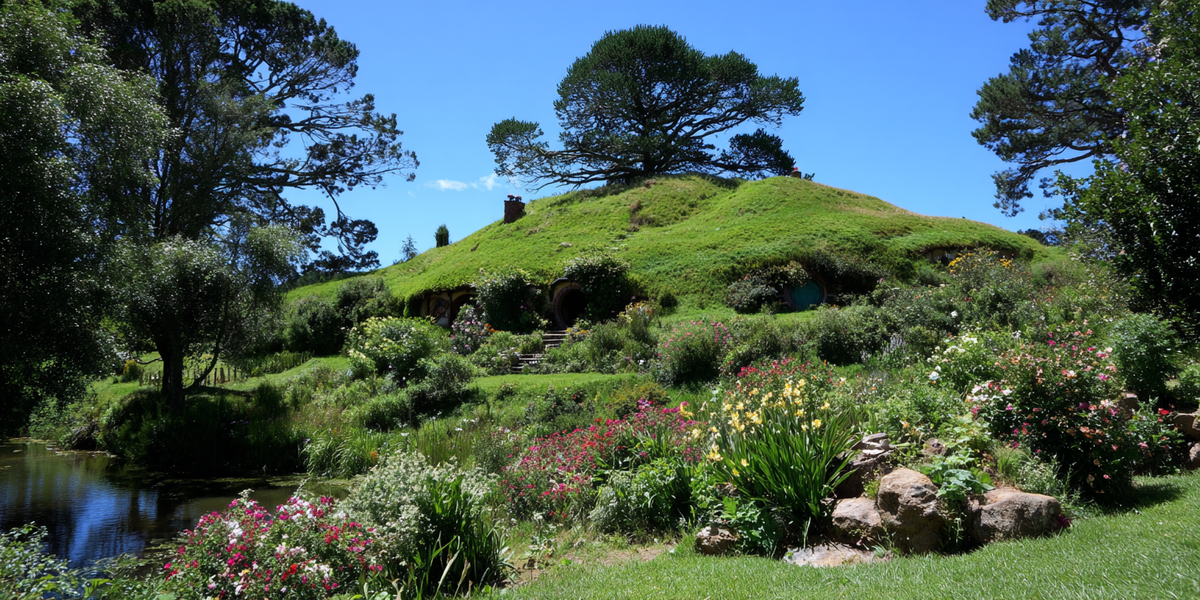
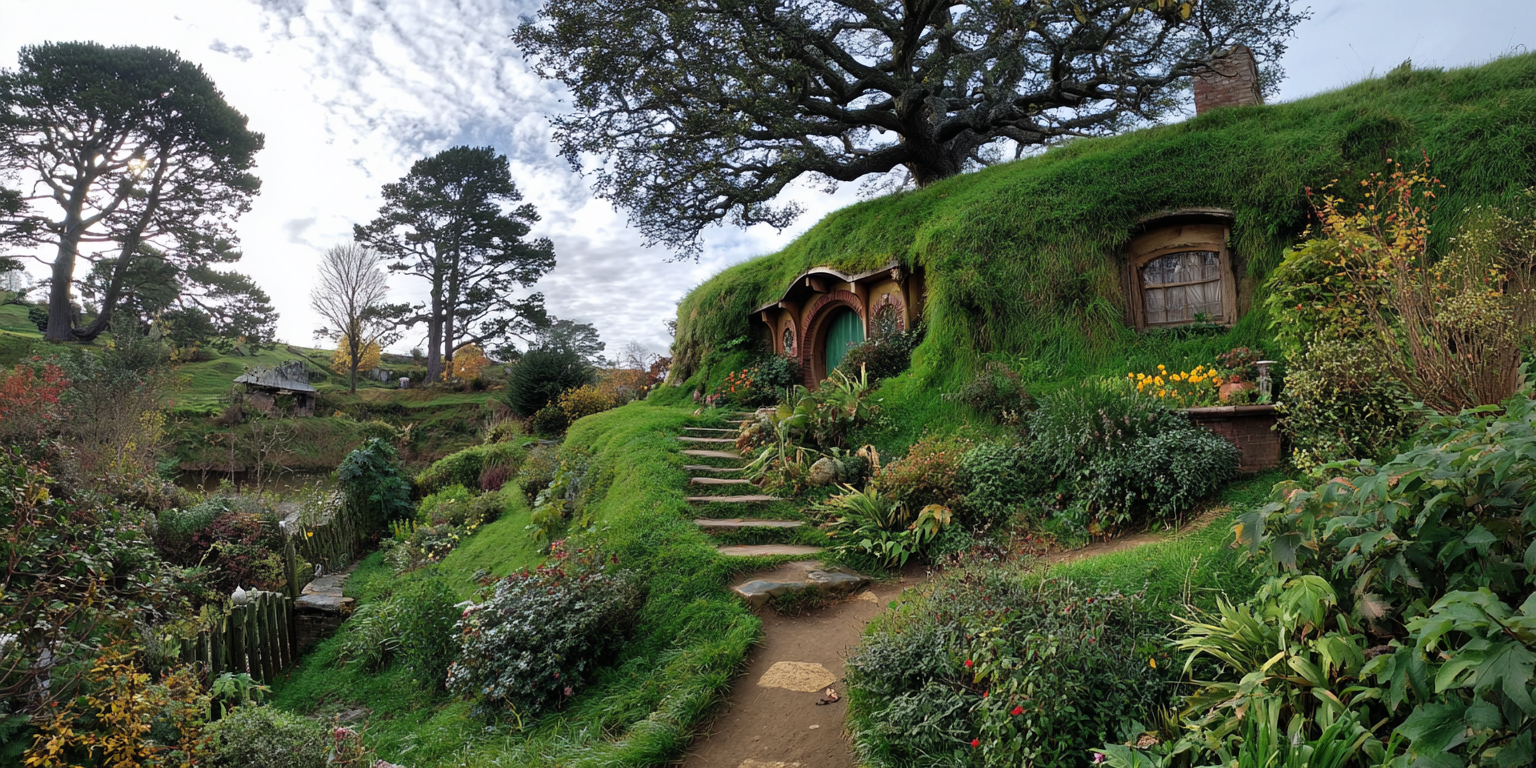
At a depth of roughly two to three meters, the earth ceases to react to the volatile swings of the daily or even seasonal weather cycle. While the surface may be lashed by sub-zero winds or scorched by a midday sun, the deep soil remains at a constant, tempered equilibrium—typically the annual average temperature of the local climate. By building subterranean or earth-sheltered structures, we are not "heating" or "cooling" in the traditional sense; we are simply situating the human body within a pre-stabilized environment. The massive weight of the surrounding earth acts as a thermal flywheel, smoothing out the peaks of summer and the troughs of winter. In such a dwelling, the "intellectual friction" of fighting the seasons disappears, replaced by a steady, quiet permanence that requires zero fuel to maintain.
This approach demands a departure from the "box on a slab" mentality of suburban development. It requires the use of materials like rammed earth, stone, or high-density geopolymer concrete that can interface directly with the ground's energy. In an earth-sheltered home, the walls themselves become a battery. During the heat of the day, they soak up any excess warmth without significantly changing temperature; at night, they radiate that stored energy back into the living space. This is a system of "passive resilience" that functions regardless of the state of the power grid. While the neighbor’s HVAC unit represents a constant drain on resources and a future mechanical failure, the thermal mass of an underground dwelling is a one-time investment in the immutable laws of thermodynamics—a silent, un-killable engine for human comfort.
The Passive Airflow Strategy
To dwell underground is to solve the problem of temperature, but it introduces the challenge of respiration. In the traditional "dumb" model, an underground space would be ventilated by electric fans, creating yet another dependency on the mechanical grid. However, by observing the "indigenous tech" of the prairie dog or the ancient wind-catchers of the Persian plateau, we find a far more elegant solution: the Earth-Tube, or Earth-to-Air Heat Exchanger. This system utilizes the pressure differentials of the wind and the thermal constancy of the deep soil to create a self-powering lung for the home. By burying a network of intake pipes several meters deep and extending them far from the house, we can draw fresh air through a subterranean journey before it ever enters the living space.
As the external air—whether it is a blistering $40^\circ\text{C}$ or a frigid $-10^\circ\text{C}$—travels through these buried conduits, it exchanges its thermal energy with the surrounding earth. By the time it reaches the interior, the air has been tempered to the earth’s constant $15^\circ\text{C}$ to $18^\circ\text{C}$. This is the "Passive Airflow Strategy" in its purest form. When combined with a solar chimney or varying outlet heights, the system requires no moving parts. The rising warm air inside the home creates a natural vacuum that pulls fresh, earth-cooled air through the tubes. It is a continuous, silent, and free exchange that provides both climate control and air quality without the hum of a compressor or the cost of a kilowatt.
Furthermore, this strategy addresses the "biological friction" of living in sealed environments. Most modern homes are airtight boxes that trap VOCs, carbon dioxide, and humidity, requiring energy-intensive recovery ventilators to keep the occupants conscious. The Earth-Tube system, by contrast, relies on the atmospheric pressure of the planet itself to provide a constant refresh of the interior volume. It is a system that grows more efficient with age as the thermal plume around the pipes stabilizes. For the sovereign individual, this represents a final decoupling from the "air as a commodity" model. By engineering a dwelling that breathes in harmony with the ground's temperature, one moves beyond the fragility of artificial climates and into a space where the very act of breathing is supported by the geography.
Geological Constraints
While the thermal advantages of subterranean living are universal in principle, their application requires a sophisticated understanding of local geology to avoid the "dumb" mistake of applying a single template to a diverse planet. The most significant adversary to the earth-sheltered home is not the cold or the heat, but the movement of water. In regions with high water tables or active floodplains, a poorly engineered underground structure is merely a swimming pool in waiting. Sovereignty in these environments demands a shift from total immersion to "earth-mounding" or "bunding." By building at or slightly above the grade and then hauling the earth to the house, we can achieve the same thermal mass benefits while keeping the living space safely above the saturation line.
In the extreme cold of permafrost zones, the engineering challenges invert. Here, the ground is not a stabilizing battery but a fragile foundation that must remain frozen to maintain its structural integrity. Building a heated human residence directly into the permafrost is a recipe for disaster; the heat from the home melts the ice-rich soil, leading to catastrophic subsidence. In these northern latitudes, the strategy of persistence requires the use of thermosyphons—passive heat pipes that extract heat from the ground to keep it frozen—or elevating the structure on "chilled" pilings to allow the arctic wind to pass beneath the home. It is a reminder that systemic sovereignty is not about imposing one's will on the land, but about a high-fidelity observation of the local physics.
Managing these constraints also involves a strategic approach to materials. Where traditional basements rely on toxic membranes and plastic liners that eventually fail, the sovereign builder looks to "bentonite" clay—a natural, self-healing waterproofing material that expands when wet to create an impenetrable seal—or the use of "hygrothermal" wall assemblies that allow for the safe passage of vapor. By engineering for the worst-case geological scenario, such as seismic shifts or radon gas seepage, the home becomes more than a shelter; it becomes a fortress of durability. We acknowledge the reality of the site, whether it is the swampy soil of a coastal plain or the shifting rock of a fault line, and we build with a persistence that ensures the structure will remain standing long after the industrial systems that initially facilitated its birth have faded.
Water
Molecular Capture
In the most arid environments on the planet—places where rain is a memory and the "just-in-time" water infrastructure is a brittle lifeline—modern humanity treats the lack of liquid water as an insurmountable wall. We pump water across mountain ranges or burn fossil fuels for desalination, ignoring the fact that even the driest desert air is a reservoir of moisture. To achieve true water sovereignty, we must look to the molecular level. Molecular capture, specifically through the use of Metal-Organic Frameworks (MOFs), represents a paradigm shift from "hunting" for water to "harvesting" it from the very atmosphere that surrounds us. These nano-engineered materials act as a molecular sponge, possessing a massive internal surface area that can trap water molecules even when the relative humidity is as low as ten percent.
The beauty of this technology lies in its reliance on the solar-thermal cycle rather than the electrical grid. At night, when the desert air is cooler and slightly more humid, the MOF material passively adsorbs water molecules into its pores. As the sun rises, the solar-thermal energy heats the material, "squeezing" the moisture out into a condenser chamber where it becomes liquid, potable water. This is a system of "zero-energy" extraction that bypasses the need for massive pumps or chemical treatments. By integrating these harvesters into the architecture of a sovereign homestead, a family can secure a baseline of drinking water that is entirely independent of local wells or municipal pipes. It is a victory of physics over geography, turning the sky itself into a permanent, decentralized utility.
Furthermore, the advancement of hydrogel-based "adsorption-desorption" cycles has lowered the barrier to entry for this technology. These materials can be "shaken" by tiny, solar-powered ultrasonic vibrations to release their water payload multiple times a day, increasing the yield without increasing the footprint. In a world of "systemic stupidity," where we fight wars over river rights and deplete ancient aquifers, the ability to pull water from the air using nothing but the heat of the sun is the ultimate act of secession. It ensures that the sovereign individual can survive in the "stupid places"—the high deserts and the parched plains—by utilizing a source of water that no government can tax and no corporation can turn off.
The Zero-Waste Loop
The modern "waste management" system is perhaps the most glaring example of a linear, broken logic that characterizes modern systemic fragility. In the current paradigm, we take a high-value biological resource—human metabolic output—and immediately contaminate it by mixing it with gallons of purified, energy-intensive drinking water. This slurry is then propelled through miles of centralized, subterranean piping to a facility where it is treated with a cocktail of harsh chemicals, only to be dumped back into a river system as a sterile, useless liquid. To the sovereign individual, this is not a public service; it is a profound theft of fertility. The transition to a zero-sum reality begins with the realization that there is no such thing as "waste," only misplaced resources. By utilizing high-end composting toilets and anaerobic digesters, we move from a disposal mindset to one of fertility management.
These dry systems are not the primitive pits of the past; they are sophisticated biological reactors designed to separate liquids from solids at the source. This separation is critical for the thermophilic breakdown of pathogens. In the solid chamber, aerobic bacteria and fungi work to decompose carbon-rich material—sawdust, peat, or forest floor duff—into a stable, nutrient-rich humus. Meanwhile, the liquid fraction, when properly diluted, serves as a high-nitrogen fertilizer. After a period of stabilization, this "waste" is transformed into the very soil that feeds the roots of the food forest. By reclaiming this loop, the homestead ceases to be a drain on the environment and becomes a contributor to it. We close the metabolic circle, ensuring that the nutrients harvested from the land are returned to the land, bypassing the chemical-heavy and fragile infrastructure of the municipal sewer entirely.
The Folly of the Flush
A deeper critique of the "flush" reveals a staggering inefficiency that modern urbanism has normalized as a luxury. The flush toilet is the primary engine of water scarcity in many regions, effectively turning the most precious resource on the planet into a vehicle for filth. From an engineering perspective, using potable water to transport solid waste is a thermodynamic absurdity. In a sovereign community, the water that would have been wasted on a single flush—roughly six to fifteen liters—is instead preserved for the molecular harvesting cycles or the irrigation of calorie-dense crops. This rejection of the flush is both a spiritual and technical act of secession; it recognizes that the centralized "convenience" of waterborne sewage is actually a hidden shackle.
This shackle binds the citizen to a global supply chain of chlorine, high-voltage pumps, and massive civil debt incurred by the maintenance of aging pipes. To reject the flush is to regain control over one's primary relationship with the planet's water cycle. It requires the "hard work" of managing one's own systems, but the reward is a home that is physically incapable of "backing up" or being shut down by a municipal failure. In the "People's History of Stupidity," the 20th-century water closet will likely be viewed as one of the most destructive inventions of the era—a device that taught billions of people that they could make their problems disappear with the pull of a lever, while in reality, they were simply poisoning the future. By reclaiming this cycle, we replace a fragile dependency with a robust, localized abundance.
Calories
Permaculture Food Forests
The industrial agriculture model is a factory-system that relies on the "brute force" of fossil-fuel-based fertilizers, synthetic pesticides, and massive, centralized irrigation. It is a system that treats the earth as a sterile substrate to be injected with chemicals, resulting in a monocrop that is genetically fragile and dependent on a global market for its very survival. The sovereign alternative is the permaculture food forest—a self-sustaining, multi-layered ecosystem that mimics the structure and resilience of a wild forest but is curated for human nutrition. By planting an overstory of nut trees, an understory of fruit trees, and a ground cover of perennial vegetables, herbs, and berry bushes, we create a biological machine that builds its own soil and manages its own pests.
The beauty of the food forest lies in its "set it and forget it" long-term logic. Unlike a traditional farm that requires annual tilling, which destroys the soil’s fungal networks and releases carbon, the food forest grows stronger and more autonomous with each passing year. The leaf litter from the trees creates a natural mulch that retains moisture and feeds the soil microbiome, eventually eliminating the need for external irrigation. In this system, the "work" shifts from repetitive labor to high-level observation. The sovereign individual becomes a system administrator of a biological engine. When the global supply chain for fertilizer breaks, or when the cost of diesel makes industrial tilling impossible, the food forest continues to produce, providing a permanent harvest that is immune to the fluctuations of the "dumb" world’s economy.
The Aquaponics Loop
To supplement the food forest with high-quality protein, we integrate the aquaponics loop, a synergistic relationship that operates as a high-tech version of an ancient pond cycle. In this system, fish such as Tilapia, Perch, or Catfish are raised in tanks. Their waste, which is naturally high in ammonia, is pumped through grow beds where vegetables are planted in a soil-less medium. Specialized nitrifying bacteria living in the medium convert the fish waste into nitrates, which the plants then absorb as fertilizer. The plants effectively act as a biological filter, cleaning and oxygenating the water before it is returned to the fish tanks. This cycle is a masterpiece of efficiency, using up to 90% less water than traditional soil-based agriculture because the water is never "lost" to the ground; it is simply moved in a circle.
For our sovereign protagonist, aquaponics provides a reliable source of fresh protein and nutrient-dense greens regardless of the external environment. Even in a "stupid place" like a rocky desert or a contaminated urban lot, a greenhouse-enclosed aquaponics system can produce a massive amount of food in a tiny footprint. The energy required to move the water is minimal and can be provided by a single solar-coupled DC pump. By closing this loop, we remove the need for grocery-store protein that is flown halfway around the world. We also solve the "fertility" problem of the greenhouse: the fish provide a constant, internal supply of organic fertilizer, ensuring that the plants are always fed by the system's own metabolic activity. It is a controlled, high-output micro-environment that stands as a testament to what is possible when we stop fighting nature and start facilitating its loops.
Calorie Density
One of the most common failures of modern "homesteading" is the salad trap—the mistake of growing low-calorie vegetables like lettuce and radishes that provide vitamins but cannot sustain the high energy requirements of a human doing "hard work." True independence requires a cold, mathematical focus on calorie density. Our focus must shift to perennial calorie staples that provide the carbohydrates and fats necessary for long-term resilience. This includes the sunchoke, a tuber that is nearly impossible to kill and produces massive amounts of carbohydrates in even poor soil, and the air potato or perennial leeks. We must look to the "underground" calories that the earth hides and protects.
Fats, however, are the most difficult resource to secure in an independent system. To solve this, the food forest must be anchored by high-yield nut trees—hazelnuts, walnuts, and chestnuts. These trees are effectively solar-powered oil factories. Once a hazelnut grove reaches maturity, it provides a dense source of protein and fat that can be harvested and stored for years with zero refrigeration. These crops do not require the yearly cycle of tilling, planting, and seed-purchasing that keeps the industrial farmer in debt. They are the "caloric fortress" of the sovereign individual. By planting for density rather than variety, we ensure that even in the harshest winter, our biological stores are full, and our dependency on the global industrial food system is zero.
Waste-to-Protein
The final link in the calorie chain is the biological recycler, a system designed to ensure that no scrap of organic energy is ever lost. By utilizing chickens and Black Soldier Fly (BSF) larvae, we turn the "inevitable waste" of the kitchen and garden back into high-grade protein. Chickens in a food forest act as mobile system maintainers; they scratch the soil to manage pest populations and provide high-nitrogen fertilizer in exchange for eggs. However, the BSF larvae are the true heroes of the zero-sum reality. These larvae can consume almost any organic matter—including food waste that would be toxic to other animals—and transform it into a high-fat, high-protein larval body in a matter of days.
These larvae are then fed to the fish in the aquaponics tanks or to the chickens, creating a perfect circularity of nutrients. This is the ultimate "Ghost Node" engineering: the "waste" of the house becomes the food for the flies, the flies become the food for the fish, and the fish become the food for the human. Every step in this process is powered by biological energy, not the electrical grid. By managing these micro-livestock, the sovereign individual eliminates the need for industrial feed bags and synthetic inputs. We create a redundant, resilient, and effectively free source of nutrition that operates with the quiet, relentless efficiency of nature itself.
Power
The Native DC Household
The modern electrical grid is a monument to historical compromise and systemic waste. We live in an era where nearly every device that defines our existence—from the LED bulbs overhead to the computers on our laps and the motors in our high-efficiency appliances—operates natively on Direct Current (DC). Yet, we continue to feed them through an infrastructure designed for the nineteenth-century requirements of Alternating Current (AC). In a standard solar-powered home, the sun’s energy is captured as DC, forced through a complex and fragile inverter to become AC, sent through a breaker panel, and then forced through a "brick" or transformer to be converted back into DC for the device to use. Each of these conversions acts as a "tax" on our limited energy, hemorrhaging between 10% and 25% of the total harvest as wasted heat.
For the sovereign individual, this is an unacceptable inefficiency. The solution is the "Native DC" household. By eliminating the central inverter, we remove the most common point of failure in an off-grid system and drastically reduce the complexity of the home’s "nervous system." A native DC home operates on a 12-volt, 24-volt, or 48-volt backbone, mirroring the resilient architecture used in maritime and aerospace engineering. This allows for the use of ultra-efficient brushless motors and solid-state lighting that can run directly off a battery bank with zero conversion loss. It is a quieter, cooler, and more robust way of living. By simplifying the electrical flow, we move away from "black box" technology that requires a specialized technician and toward a system that can be maintained with a basic understanding of physics and a pair of wire strippers.
Storage Beyond Lithium
While the industrial world is currently locked in a desperate scramble for lithium and cobalt—materials mined at high human and environmental cost and shaped into batteries with a built-in "death date"—the sovereign builder looks toward the permanence of mechanical physics. Chemical batteries are, by their nature, consumable; they begin to degrade the moment they are manufactured. To achieve true generational independence, we must utilize energy storage methods that do not rely on fragile chemistry. Gravity batteries represent the ultimate expression of this logic. By using surplus solar energy during the day to winch a massive weight—perhaps a skip of earth or a concrete block—up a tower or a hillside, we store potential energy. When the sun sets, the weight is slowly lowered, spinning a generator to provide a steady, reliable stream of electricity.
Complementing this is the sand battery, a technology that addresses the largest energy drain in any climate: the need for thermal regulation. Instead of storing electricity to run a resistive heater—a highly inefficient process—we use solar-thermal collectors or excess PV power to heat a massive, insulated silo of common sand to temperatures exceeding 500°C. Sand is an incredible thermal insulator; once heated, it can hold that energy for months. When the winter winds arrive, we simply pump air or water through heat exchangers embedded in the sand to provide radiant warmth or hot water for the home. This is "High-IQ" energy management: it is cheap, made of earth-abundant materials, and possesses a lifespan measured in decades rather than years. It allows the individual to cut the cord not just from the electric company, but from the industrial battery complex itself.
The Bio-Fuel Hybrid
No matter how efficient the storage, a resilient system must account for the "edge case"—the week of heavy cloud cover or the unexpected mechanical failure of a primary bank. To bridge this gap, the sovereign individual maintains a bio-fuel hybrid system. This is not the high-tech, sensitive "biodiesel" found in modern gas stations, but rather the utilize of raw, filtered vegetable oil in a mechanical, computer-free diesel engine. Engines like the venerable Lister-type or the pre-1990s mechanical diesels are the pinnacle of "resilient tech." They were designed to operate in remote outposts with minimal maintenance, and their low-speed, high-torque nature makes them the perfect candidates for stationary power generation.
By growing high-oil crops like sunflowers or rapeseed in a corner of the food forest, the homestead becomes its own oil refinery. The seeds are pressed using a simple mechanical expeller, and the oil is filtered to remove impurities. Because these "dumb" engines lack the delicate common-rail injectors of modern vehicles, they can burn this straight vegetable oil (SVO) with zero issues, provided it is slightly pre-heated to reduce its viscosity. This creates a closed-loop energy cycle where the sun’s energy is stored in the chemical bonds of a seed, harvested by hand, and converted into mechanical or electrical work on demand. It is the final insurance policy against systemic collapse, ensuring that as long as the seasons turn and the soil is healthy, the homestead will never be without power.
Information
Decentralized Mesh
The modern internet is a masterpiece of centralized vulnerability. It relies on a sprawling infrastructure of undersea cables, satellite links, and massive server farms, all of which are subject to censorship, surveillance, and catastrophic failure. To the sovereign individual, the "live" web is a luxury that cannot be trusted for essential communication. The alternative is the decentralized mesh network, utilizing protocols like LoRa (Long Range) and Reticulum. These are not just "backups" for the internet; they are a completely parallel way of sharing information. By deploying small, low-power radio nodes across the landscape, a community can create a private, encrypted data web that functions entirely without a central authority or a monthly subscription.
These mesh networks are "self-healing," meaning that if one node is destroyed or taken offline, the data simply finds a new path through the remaining nodes. Because they operate on unlicensed radio frequencies and consume less power than a single LED bulb, they are virtually impossible to "shut down." While they lack the bandwidth for the "dumb" consumption of 4K video, they are perfectly suited for the essential data of a resilient society: text messages, GPS coordinates, weather data, and technical manuals. This is communication reduced to its most robust form. It ensures that even in the event of a total grid failure or a "digital iron curtain," the sovereign community remains connected, coordinated, and informed. It is a voice that cannot be silenced by a switch in a distant boardroom.
Library of Alexandria 2.0
Information is the only resource that increases in value as it is shared, yet we have allowed our collective knowledge to be locked away behind digital paywalls and fragile servers. The sovereign individual recognizes that in a period of "systemic stupidity," the most important asset is a localized copy of human civilization’s greatest hits. We call this the "Library of Alexandria 2.0." Using a system like Internet-in-a-Box (IIAB) or Kiwix, we host a local "mirror" of the world’s most critical data. This includes the entirety of Wikipedia, the massive Project Gutenberg library of classic literature, and WikiMed’s comprehensive medical database. Stored on high-capacity SSDs and served via a local, 5-watt server, this library provides an instant, offline curriculum for an entire community.
This is "Resource Access without Dependency." Your children can read Camus’s The Myth of Sisyphus or Faulkner’s As I Lay Dying not because a corporation granted them access, but because the data is physically present on-site. This library serves as the intellectual heart of the homestead, providing the blueprints for everything from centrifugal water pumps to the "History of Human Stupidity." By decoupling information from the internet, we protect it from the "memory holes" of digital censorship and the decay of link-rot. We ensure that the hard-won knowledge of the past remains available to the future, providing a bridge across the dark ages of systemic collapse. It is a repository of human genius that requires nothing more than a few hours of sunlight to remain accessible forever.
Educational Sovereignty
The ultimate goal of decentralized information is educational sovereignty. The modern school system is designed to produce compliant cogs for an industrial machine that is already breaking. In contrast, the sovereign curriculum is built on "Systems Literacy" and critical thought. We teach our children that the world they see is not a collection of "subjects" but a web of interconnected systems. They learn physics through the construction of gravity batteries, biology through the management of the food forest, and literature through the raw, unedited texts in the offline library. They are encouraged to read the "People's History of Stupidity" to understand the recurring patterns of human folly, from the collapse of the Bronze Age to the energy crises of the twentieth century.
This is a "Foundation" model of education. We are not just teaching them how to survive; we are teaching them how to rebuild. By reading the classics alongside modern technical manuals, they develop the spiritual depth to endure a crisis and the technical skill to solve it. They learn that their value as a human being is not measured by their consumption or their "social credit," but by their ability to maintain the systems that sustain life and the culture that makes life worth living. This is the final act of secession: raising a generation of people who are intellectually and physically immune to the "dumbness" of the crowd, individuals who possess the sovereignty of mind required to lead a new era of human persistence.
Transportation
The Velomobile
The modern car is a four-thousand-pound steel cage designed to move a two-hundred-pound primate at speeds that the human nervous system was never evolved to handle, using an energy source that is a geopolitical nightmare. From a systemic perspective, it is the peak of mechanical "dumbness"—a machine that loses 80% of its fuel’s energy to heat waste and friction. To the seeker of sovereignty, the solution lies in the radical efficiency of the velomobile. A velomobile is essentially a recumbent tricycle encased in a carbon-fiber or fiberglass aerodynamic shell called a "fairing." This shell reduces the air resistance—the primary enemy of motion—to such an extent that a human being outputting the same energy as a leisurely stroll can maintain speeds of thirty to forty-five miles per hour.
When we add a small, solar-charged electric hub motor to this equation, we create a vehicle that can traverse a thirty-mile radius on the "cost" of a few cents worth of sunlight. Unlike the electric cars pushed by global corporations, which require a massive, fragile charging infrastructure and proprietary software, the velomobile is a tool of pure physics. It is light enough to be carried by two people, simple enough to be repaired with a standard bicycle toolkit, and resilient enough to operate on crumbling roads that would destroy the suspension of a luxury sedan. It represents the "intellectual lubrication" of working with the wind rather than fighting it. In a sovereign community, the velomobile becomes the primary means of transport, allowing for rapid, low-impact connection between homesteads without a single drop of imported oil or a single "over-the-air" software update.
Mechanical Diesel
While the velomobile handles the transport of people, the heavy work of a community—hauling timber, moving stone, or transporting bulk harvests—requires a machine with more visceral power. However, the modern diesel engine has been "dumbed down" by layers of electronic complexity, sensors, and exhaust-treatment systems that make it impossible to repair in the field and entirely dependent on ultra-refined, high-sulfur fuels. The sovereign alternative is the legacy mechanical diesel engine. Machines like the pre-1990s Cummins, Mercedes, or Lister-type engines are the pinnacle of resilient engineering. They are built with massive tolerances and, crucially, they possess no "brain" that can be bricked. They are purely mechanical systems that operate on the heat of compression.
These engines are the "polyglots" of the fuel world. Because they lack delicate common-rail injectors, they can be easily modified to run on a variety of biological oils. As discussed in our calorie and power cycles, the sovereign homestead produces its own nut and seed oils. With a simple pre-heating loop to reduce the oil's viscosity, these legacy engines can run on straight vegetable oil (SVO) indefinitely. This is not a "hobbyist" experiment; it is a tactical necessity. It ensures that the heavy machinery of the homestead—the tractors, the trucks, and the generators—is powered by the sun-drenched fields of the property rather than a vulnerable global pipeline. It is a machine that recognizes no sanctions and no shortages, running on the persistent chemistry of the food forest.
Bypassing Infrastructure
The final movement in sovereign transportation is the realization that, eventually, the "dumb" world’s roads and bridges will become impassable. Whether through neglect, catastrophe, or the "Caesar-esque" control of checkpoints, the sovereign individual must prepare to bypass traditional infrastructure entirely. This is where the ultra-light eVTOL (Electric Vertical Take-Off and Landing) craft enters the framework. These are essentially giant, human-carrying drones. While the industrial world sees them as toys for the elite, the sovereign sees them as "tactical leap-froggers." In many jurisdictions, these craft qualify as "ultralights," meaning they require no pilot's license and can be operated from a small patch of grass.
Charged by the same solar array that powers the home, a small eVTOL can leap over a washed-out bridge, a blocked mountain pass, or a hostile urban perimeter in minutes. Their range is limited—often only twenty to thirty miles—but in a decentralized network of homesteads, that is all that is required to maintain the flow of critical information, medicine, or people. This technology, combined with the velomobile for ground travel and the mechanical diesel for heavy work, completes a transportation "triad" that is entirely independent of the global logistics machine. It is a system designed for the "broken world" where the ability to move regardless of the state of the pavement is the ultimate form of freedom. It is a way of saying that the earth is our territory, but we are no longer bound by its obstacles.
Medical Independence
The Biotic Stack
Medical independence is not about performing surgery on one’s own kitchen table; it is about a fundamental shift from "reactive repair" to "proactive systems maintenance." The modern medical complex is a high-bandwidth, high-dependency system designed to manage chronic illness rather than foster baseline health. The sovereign individual rejects this by building a "Biotic Stack"—a layered approach to bodily resilience that starts with the "terrain" of the person. This stack is built on the daily practice of functional movement, specifically Tai Chi and Qigong. These are not merely "exercises"; they are internal engineering practices designed to lubricate the joints, strengthen the fascia, and maintain the "fluidity" of the nervous system. By treating the body as a high-precision machine that requires regular tuning, we eliminate the need for 90% of the pharmaceutical interventions that the modern world relies on.
This stack is reinforced by the "low-impact" lifestyle we have engineered. By eating nutrient-dense food from the aquaponics tanks and the hazelnut groves, the body is fueled by the same energy that sustains the homestead. We avoid the inflammatory "industrial diet" that serves as the primary driver for modern heart disease, diabetes, and autoimmune collapse. Furthermore, by living in earth-sheltered homes, we are naturally "grounded" and exposed to the beneficial microbes of a healthy soil ecosystem, which has been shown to modulate the immune system and reduce systemic stress. In this model, health is the "default" setting of the system, not a service we purchase from a hospital. We are no longer patients; we are the primary technicians of our own biology, maintaining a level of resilience that makes us "expensive" for the old world to control and "impossible" for the new world to break.
The Living Pharmacy
For the inevitable injuries and illnesses that occur in a life of "hard work," the sovereign individual utilizes the living pharmacy. This is the application of ethnobotanical knowledge—the "indigenous tech" that humanity used for millennia before it was obscured by the profit motives of synthetic chemistry. In the understory of our food forest, we grow the primary tools of our care: Elderberry for its potent antiviral properties, Willow Bark for its salicin (the precursor to aspirin), and Turmeric for its systemic anti-inflammatory effects. This is not "woo-woo" or pseudoscience; it is high-fidelity pharmacology practiced in a decentralized way. By understanding the active compounds in our plants, we can create tinctures, salves, and extracts that are as effective as their laboratory counterparts but require zero industrial supply chain.
The living pharmacy also incorporates the use of "wide-spectrum" natural antibiotics that do not foster the "super-bugs" created by industrial overuse. Manuka honey, for example, is a powerful topical antimicrobial that can manage even the most stubborn wound infections, while colloidal silver and oregano oil provide internal support. By mastering these extractions, the community becomes medically sovereign. We are no longer dependent on a pharmacy that might run out of stock or a doctor whose license is tied to a centralized "standard of care" that may not prioritize our survival. We regain the ancient human right to heal ourselves and each other, using the very earth we stand upon as our dispensary.
First Aid 2.0
The final layer of medical sovereignty is "First Aid 2.0"—the integration of low-power, localized diagnostic technology. While we avoid the "dumb" dependency on massive hospital systems, our wealthy protagonist has ensured that the community has access to basic solar-powered diagnostic tools. This includes centrifuges for blood analysis, microscopes for identifying parasites or infections, and even simple, locally hosted AI-assistants (running on our offline servers) that can help cross-reference symptoms with our medical mirrors. This allows us to perform our own urinalysis, monitor our inflammatory markers, and catch systemic issues before they escalate into crises. It is "telemetry" for the human machine.
This diagnostic capability, combined with a deep knowledge of emergency trauma care (stabilizing breaks, suturing wounds, and managing shock), ensures that the community is not helpless in the face of accidents. We treat the medical cabinet as we treat the seed bank: as a critical repository of resilience. By combining the best of ancient botanical wisdom with the most robust of modern diagnostic tech, we create a healthcare system that is entirely "zero-sum." It costs us nothing but our time and attention to maintain, and it provides a level of security that the "dumb" world—with its rising costs and crumbling insurance schemes—can no longer offer its citizens. We are healthy, we are informed, and we are independent.
The Foundation
Rendering to Caesar
To build a sanctuary of high-tech independence in the modern world is to navigate a minefield of zoning laws, building codes, and tax assessments designed to enforce dependency. The sovereign individual recognizes that open rebellion is a "low-intelligence" move that invites the very friction we seek to eliminate. Instead, we utilize the Strategy of Persistence by "rendering to Caesar"—using the established legal and bureaucratic tools of the state to shield the work of the future. By establishing the homestead or community as a 501(c)(3) Non-Profit Foundation, a Land Trust, or a Religious/Educational Sanctuary, we create a legal membrane that is difficult for centralized authorities to pierce. This is not tax evasion; it is the strategic allocation of capital toward a "Public Good" that happens to be our own survival.
This legal shielding allows for "non-conforming" engineering—such as our subterranean earth-tubes or decentralized water capture—to be classified as experimental research or spiritual infrastructure rather than code violations. It places the property in a protected category where the land is held in perpetuity for a specific mission, making it resistant to seizure, eminent domain, or the whims of a local developer. We provide the state with the paperwork it requires while ensuring the "umbilical cords" of utility dependency are never truly connected. By maintaining a thin veneer of institutional compliance, we buy the peace and time necessary to perfect the systems of autonomy. We are playing a long game, using the master’s own legal library to write a deed for a life that is fundamentally beyond his control.
The Power of Sweat Equity
The construction of a sovereign community is not a project for contractors and crews; it is a manifestation of collective human energy. We look to the monks of Nipponzan Myohoji, who built the Peace Pagoda in New England with nothing but handsaws, wire, and tireless devotion. This is the power of "Sweat Equity"—the realization that human labor, when fueled by a shared vision, is a more resilient currency than the dollar. By inviting a network of volunteers and small contributors to the project, we create a "Human Energy Battery." We provide them with food from the food forest, shelter in the earth-tempered dormitories, and an education in systemic literacy. in return, they provide the "Hard Fkng Work" required to mix the concrete, plant the hazelnut groves, and winch the gravity weights.
This labor model is immune to inflation, market crashes, and labor strikes because it is based on mutualism rather than extraction. When a volunteer helps lashing the timber scaffolding or digging the aquaponics trenches, they are not just "working"; they are learning a trade that will serve them in the coming collapse. They become part of a "human mesh network" that carries the blueprints for this way of life back to their own communities. The stupas and homesteads we build are not just structures; they are anchors of social gravity. They prove that a community can be built on the "zero-sum" reality of shared effort and local resources, creating a social fabric that is more durable than any industrial contract. We are building a monument to human persistence that no machine could replicate.
The Foundation Model
We envision this effort as a literal "Foundation"—a repository of civilization designed to endure the "History of Human Stupidity" that is currently unfolding. Like the scholars in a science fiction epic, we recognize that when systems become too complex and too brittle, they must eventually fail. Our goal is to ensure that the "dark ages" that follow are as short as possible. We treat every homestead as a node in a decentralized archive. Our offline libraries, our seed banks, and our technical manuals are the "seed crystals" of a new culture. We aren't just surviving for our own sakes; we are safeguarding the best of human knowledge—from the poetry of Faulkner to the physics of the thermosyphon—so that it is not lost in the digital dust of a crumbling internet.
This is a generational mission. We teach the children of the community that they are the keepers of the flame. They are not raised to be consumers, but to be "Systemic Historians" and "Biological Architects." They understand that the yacht-hoarding elites of 2026 were a historical anomaly—a brief, "dumb" flash of planetary mismanagement. By documenting the errors of the past while living the solutions of the future, the Foundation becomes a living history. We are the ones writing the manual on how to restart a civilization without the terminal flaws of the old one. This is the ultimate act of sovereignty: the refusal to let human intelligence die out alongside the industrial machines that momentarily housed it.
Defense
Defense through Obscurity
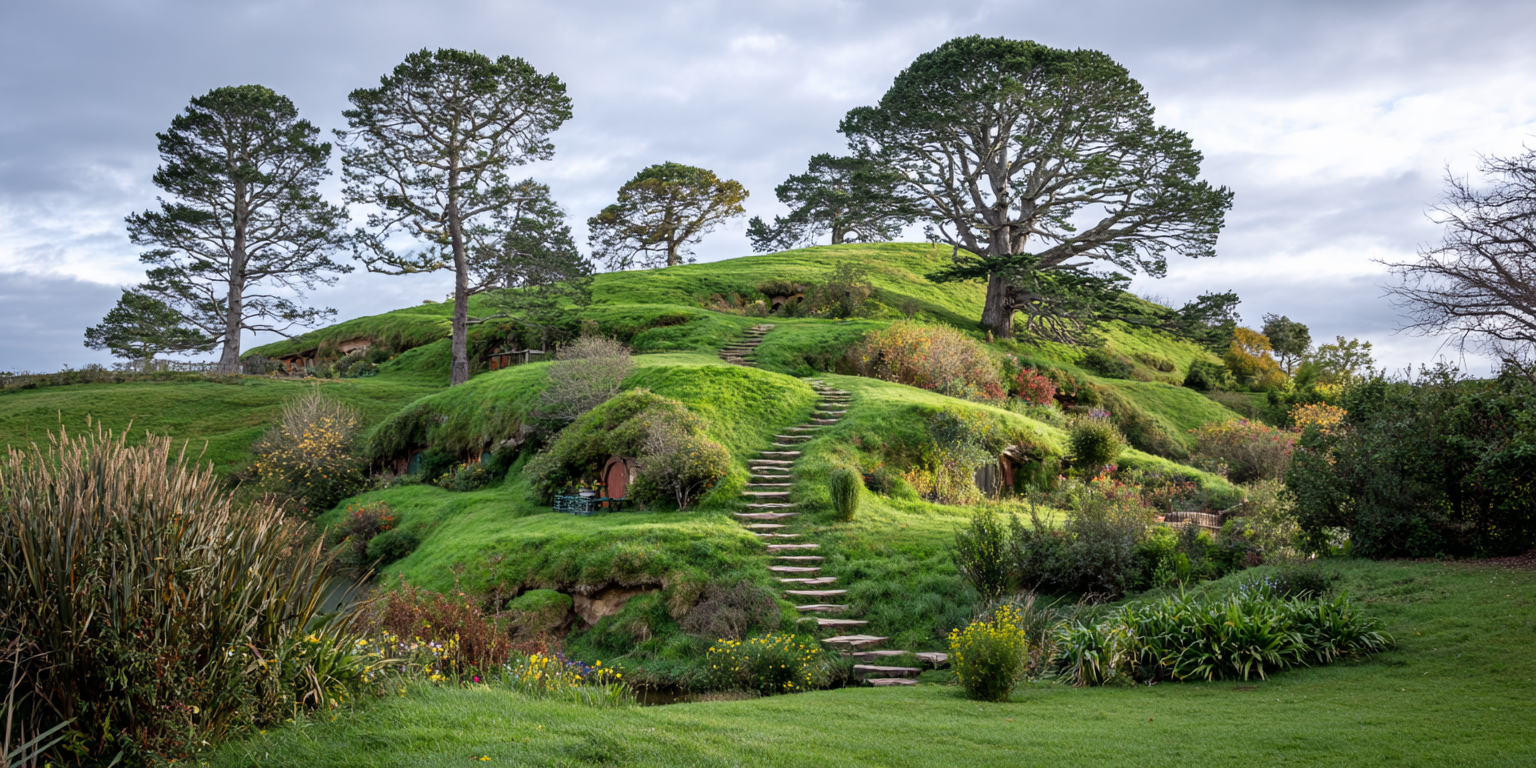
In a world where desperation leads to conflict, the most effective defense is to be invisible. We do not build high walls or armored gates, as these are merely "gravity wells" for the attention of the desperate and the hungry. Instead, we utilize Defense through Obscurity. By integrating our homes into the earth and our gardens into the forest, we achieve a thermal and visual "low signature." From the sky, an earth-sheltered home covered in native grasses and berry bushes looks like a natural landform. Our solar-thermal collectors and water harvesters are designed to blend into the topography. To the "dumb" world’s satellite imagery and tax drones, the homestead simply doesn't exist as a target.
This obscurity extends to our electronic footprint. By using LoRa mesh networks that operate on low-power, "spread spectrum" frequencies, our communications look like background static to anyone not specifically tuned to our encryption keys. We have no power lines leading to our property, no plumes of smoke from industrial chimneys, and no "digital heartbeat" connected to the global web. We are a "Ghost" in the literal sense: a pocket of high-functioning civilization that leaves no trace in the archives of the state. This is tactical engineering for the twenty-first century. We win not by winning a battle, but by ensuring the battle never finds us. We are the un-mapped, the un-taxed, and the un-reachable.
The Sovereign Invitation
Eventually, even the most obscured community may be discovered by those who have lost everything in the collapse of the old systems. When the "zombies"—the broken refugees of a "just-in-time" world—arrive, we meet them with the Sovereign Invitation. This is the application of non-violence as a spiritual and systemic defense. Instead of fighting for our stores, we offer a bowl of stew and a shovel. We recognize that their aggression is a product of their dependency; they are "fighting" because they believe resources are scarce and centralized. We show them that resources are abundant and decentralized for those willing to do the "hard work."
We neutralize the threat by incorporating the "attacker" into the maintenance of the system. We give them a stake in the food forest and a node in the mesh network. This is the "Aikido" of community defense: you redirect the desperate energy of the intruder into the productive labor of the farm. By the time they have eaten our fish and slept in our earth-tempered rooms, they are no longer "zombies"; they are participants. This is the only way to "win" a social collapse. You cannot shoot your way out of a global crisis; you can only "grow" your way out by building a system that is objectively more attractive and more viable than the one that failed them. We expand the farm until the "outside" world has been entirely absorbed into the sovereign loop.
The Behavioral Shift

The final victory of systemic sovereignty is the fundamental behavioral shift it triggers in the human race. For centuries, we have been trained in the "scarcity mindset" required to fuel corporate and warfare interests. We have been told that we must hoard, compete, and kill to survive. The Sovereign Blueprint proves this is a lie—a "systemic stupidity" designed to keep us dependent. When people see that they can have water from the air, heat from the ground, and food from a forest for the "cost" of cooperative labor, the psychological chains of the old world break. The lust for yachts, Ferraris, and global influence vanishes when it is compared to the quiet, durable freedom of a sovereign homestead.
This is the end of the "Dumb Era." We move into a world of functional community where loving cooperation is recognized as the highest form of technology. The elite who hoarded their gold and their digital tokens are left alone in their glass towers, holding the keys to a world that no longer exists. They die not from a revolution, but from irrelevance. The Sovereign Blueprint has made them obsolescent. We have created a viable, invisible, and un-killable way of life that values the human soul over the industrial machine.
We have completed the manual. From the thermal mass of the earth to the molecular capture of water, from the velomobile to the offline library, we have mapped a path through the debris of the 21st century. This is not a dream of the future; it is a realization of the present. The technology exists, the legal shields are ready, and the physics are immutable. All that is required is the persistence to begin. We are the Sovereign, the builders of the Foundation, and the architects of the shift. The "History of Human Stupidity" is coming to a close, and the era of the Sovereign Blueprint has begun.
Member discussion: