
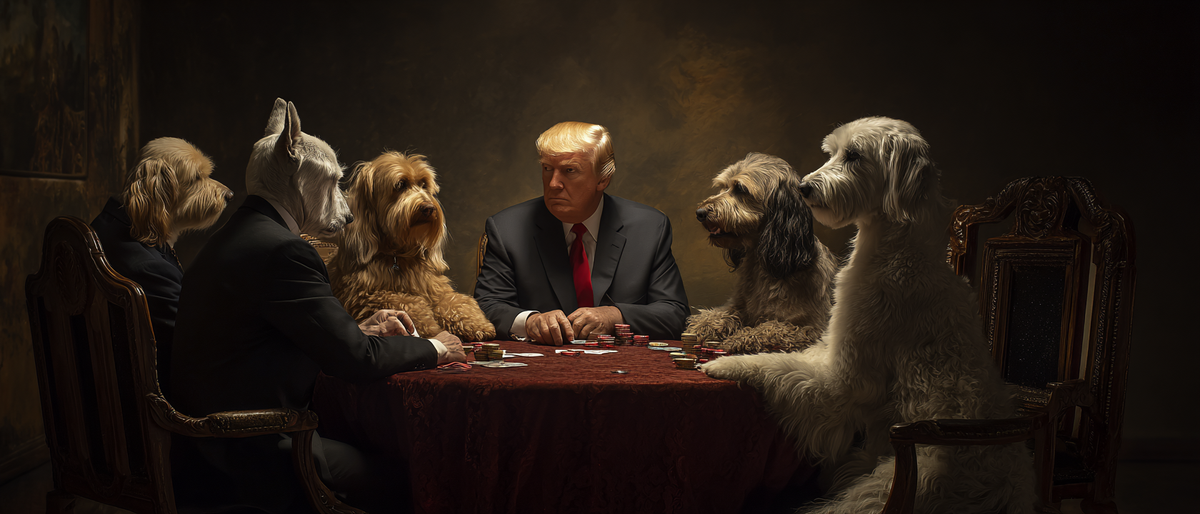
There was a time — a simpler, more innocent time — when you could use the word "trump" without half the room reaching for their MAGA hats and the other half reaching for their blood pressure medication.
That time is dead. We killed it. Well, someone killed it.
A Once-Proud Word
"Trump" used to be a fantastic word. A noble word. A word with centuries of honest labor behind it. In card games, to trump meant to play a winning card — to outmaneuver, to clinch the hand with elegant finality. Shakespeare used it. Your grandmother used it. It appeared in bridge columns without anyone's uncle launching into a forty-minute monologue about the border.
"Trumpets" were instruments of glory and fanfare. Now try saying "I love a good trump" at a dinner party and watch the room cleave in two like Moses parting the Red Sea, except angrier and with more wine stains.
The Casualties
Let us pour one out for the specific victims:
Bridge players have been devastated. Imagine being 83 years old, sitting in your cardigan at the community center, and saying "I'll trump your ace" only to have Doris gasp and knock over her decaf. The National Bridge League hasn't known peace since 2015.
British people have it worst of all. In British English, "trump" has long been a polite way of saying "fart." That's right — for an entire nation, this word already meant an expulsion of hot air that clears the room. The irony was too perfect, too on-the-nose, and the British have been quietly imploding about it ever since. Every British child who announces "I just did a trump" at the dinner table now triggers an involuntary political discussion between mum and dad. The word has become a Russian nesting doll of awkwardness.
Trumpeters — actual, literal trumpeters — can no longer introduce themselves at parties. "What do you do?" "I'm a trumpeter." [uncomfortable silence] "...the instrument." "Sure, buddy."
The Phrase "Trump Card" is basically in witness protection. Once a staple of everyday English meaning "secret advantage," it now sounds like you're either pledging allegiance or filing an indictment. Corporate trainers who used to say "customer service is our trump card" have been furiously updating their PowerPoints since the escalator ride.
The Linguistic Diaspora
People have been fleeing the word like it's a collapsing real estate venture. Thesaurus sales are up. "Surpass," "outdo," and "exceed" are doing the work of ten words. Card players now say things like "I'll... defeat your hand with my superior card" which, you have to admit, doesn't have quite the same snap to it.
Some have tried to reclaim it. These people are heroes. They are also consistently misunderstood.
The Irony of It All
Here's the thing that really stings: "trump" meant to win decisively, to beat all comers, to be the highest card in the deck. It was aspirational. It was triumphant. It was — and I cannot stress this enough — just a word.
Now it's a Rorschach test. A loyalty oath. A conversation ender. A conversation starter you didn't want. It's the linguistic equivalent of stepping on a rake — you never see it coming, and it always hits you right in the face.
The English language has roughly 170,000 words in current use, and this man managed to take one hostage and make it entirely about himself. Say what you will — and people do, constantly — but that might be the most impressive branding achievement since Kleenex made everyone forget the word "tissue."
In Memoriam
So here's to you, "trump" — the word, not the... you know. You served the English language faithfully for over five hundred years. You elevated card games. You gave the British a genteel word for flatulence. You made trumpeters feel important.
You deserved better than this.
We all did.
ओम् तत् सत्
Member discussion: